
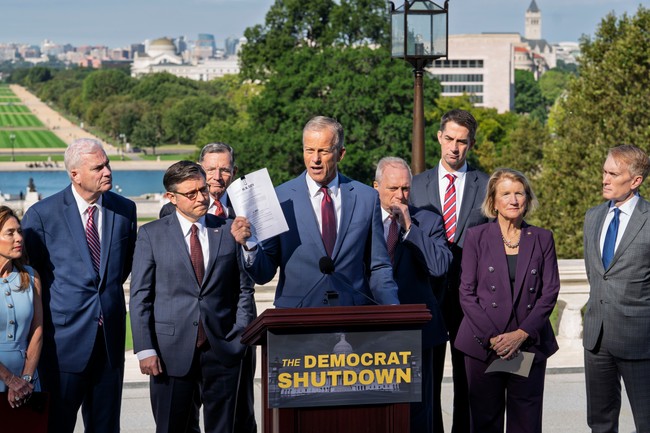
The House voted 222-209 to end what became known as the Schumer Shutdown, with six Democrats joining Republicans to reopen the government; this piece walks through the vote, the reactions, the names involved, and what this means for party dynamics moving forward.
The tally was clear: 222 in favor, 209 opposed, and six Democrats crossed the aisle to support reopening federal operations. That margin ended a prolonged standoff that had frustrated many Americans and strained congressional patience. The vote itself was a moment of relief for some and outrage for others, and it set off an immediate, loud reaction from the Democratic side.
When the last votes were cast, the chamber erupted with visible and audible discontent from many Democrats, turning the moment into a theatrical display of party division. The scene was chaotic enough that reporters and viewers described it as a meltdown. For Republicans and the defecting Democrats, the priority was clear: get the government working again.
WATCH:
And so it begins: the meltdown, that is. As the vote was being tallied, the sound of Democrat screams could be heard, literally.
The reaction from Democratic leaders was swift and personal, and Minority Leader Hakeem Jeffries expected unity that did not materialize. Those six members who broke ranks exposed internal fractures and handed Republicans a visible victory. It’s a rare moment when party loyalty visibly cracks on a high-profile vote, and the consequences are likely to echo in primaries and committee politics alike.
The six Democrats who voted with Republicans were Jared Golden (D-ME), Adam Gray (D-CA), Marie Gluesenkamp Perez (D-WA), Don Davis (D-NC), Henry Cuellar (D-TX), and Tom Suozzi (D-NY). Their choice will be remembered by both supporters and opponents, and it already prompted sharp commentary from within their own party. For constituents watching the fallout, this is the kind of decision that defines a representative’s career and invites immediate backlash from partisan activists.
Democratic strategists are signaling that these members will face primary challenges and party discipline, and some activists have openly called for punishment. In the new aggressive factional environment inside the Democratic coalition, dissent is treated as betrayal. That makes these six not just vote-takers but instant targets for a tidal wave of internecine politics.
Republicans framed the vote as a win for common sense and an end to manufactured pain aimed at ordinary Americans. From that perspective, the shutdown had become an exercise in political theater at the expense of service members, federal workers, and families. The reopening vote gives the GOP a messaging edge: it can claim to have forced a return to normalcy while blaming Democratic leadership for the disruption.
On cable and social feeds, Democrats decried the vote as shameful, while others tried to spin unity and resolve in the face of rebellion. The reaction across left-leaning outlets mixed anger with vows to continue the fight, even as the practical impact of the shutdown had already been inflicted on the public. That disconnect—passionate rhetoric versus political reality—was on full display as both sides spoke past one another.
For the six Democrats who crossed, the decision will be judged on outcomes rather than motives. Some will defend their votes as putting constituents first; others will see them as political survival moves. Either way, their names are now part of the narrative and will be used by both allies and opponents in the months ahead.
WATCH:
Sure, Jan.
Editor’s Note: After more than 40 days of screwing Americans, a few Dems have finally caved. The Schumer Shutdown was never about principle—just inflicting pain for political points.
The wider consequence goes beyond this vote: party discipline is under pressure, and both parties will adjust tactics. Republicans can tout the practical result while Democrats try to shore up loyalty and threaten challengers. For voters, what matters is whether Washington learns anything from the disruption or simply returns to business as usual with a new set of grievances.
What followed the vote was less about policy detail and more about political theater, with each side trying to own the narrative. For those watching from the center and the right, the focus is on holding accountable those who weaponize shutdowns for leverage. For Democrats, the focus will be on rooting out dissent and reclaiming a unified front before the next big battle arrives.


Add comment