
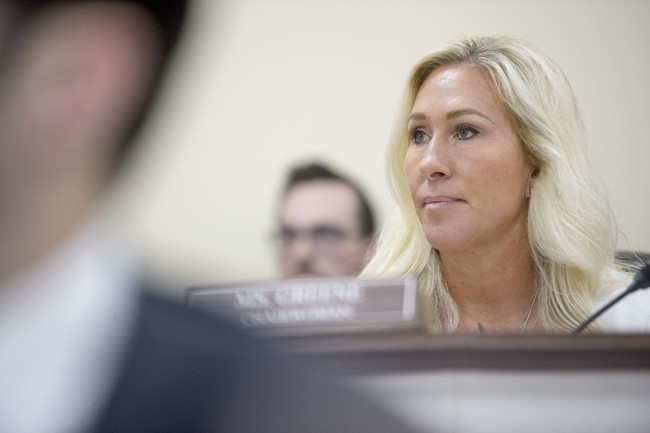
Marjorie Taylor Greene posted a harsh attack on the woman accusing Maine Democratic Senate nominee Graham Platner of rape, then deleted it after pushback. The deleted post accused the accuser of waiting years to come forward and suggested the accusation was “rape for politics,” while Greene simultaneously pivoted into conspiratorial comments linking the allegations to Israel. Her sudden reversal exposed a sharp inconsistency with her past public stance as an advocate for survivors of sexual abuse. The episode raises questions about political theater, selective outrage, and the standards public figures apply when judging survivors.
Greene publicly questioned why the accuser waited years to go public, casting doubt on the motives behind the allegation. She suggested the accuser was turning earlier consensual encounters into “rape for politics,” and then deleted the post amid criticism. Those words did not vanish from public memory: “If you are raped or sexually assaulted, report it immediately,” she insisted in her phantom post. “Don’t wait for years later until the man runs for office to go to news outlets to tell your story.”
She added a follow-up line that also remains in the record: “And if you had consensual sex with him years ago, don’t turn it into rape for politics with conflicting stories.” Those exact phrases are central to how critics have accused her of hypocrisy. For months she had positioned herself as a tireless advocate for Epstein survivors, demanding transparency and praising women who came forward after many years.
That earlier posture made the attack on the Platner accuser especially jarring to conservatives who had cheered her previous rhetoric. Greene had spent weeks calling for full release of files and attacking anyone she saw as obstructing the truth, often invoking survivors’ bravery. Suddenly, when a new accusation surfaced against a Democratic nominee, she slid into immediate skepticism and conspiratorial linkage rather than applying the same public standard she once demanded.
Her deleted post did not stop at questioning timing and motives; she pivoted into a claim tying the accusations to geopolitical motives, suggesting the accusations were convenient because Platner had political enemies. “I do find it interesting that Platner is hated by AIPAC and rape accusations show up years later from a woman who dated him,” she wrote in defense of an ally, adding another public caveat: “I certainly hope any woman who is raped or sexually assaulted is safe and gets justice, that’s why it’s so important to report immediately and not wait years.” Those paired statements read as both partisan and defensive.
She followed with, “I’m not taking sides, just making observations,” which critics interpreted as a transparent attempt to appear neutral while making damaging insinuations. The tone here is important: public figures can offer skepticism, but when they use that skepticism selectively it looks like politics, not principle. Conservatives who expect consistency from their leaders rightly notice when a loud advocate for victims abandons that advocacy under partisan pressure.
Complicating matters further, Greene quote-tweeted a promotion tied to betting on whether Platner would exit the race, linking the controversy to speculation markets at the same moment she disparaged the accuser. That juxtaposition made the message look calculated rather than compassionate, which is why many reacted angrily.
The inconsistency is stark when compared to her previous statements championing survivors who waited years to speak out about powerful abusers. She once said, “These women have fought the most horrific fight that no woman should have to fight, and they did it by banding together and never giving up.” Those words, celebrated by many on the right, now sit in tension with her instant dismissal of a declared survivor alleging harm by a public figure.
The accuser, Jenny Racicot, has said she was “absolutely” raped, a word that demands careful, sober consideration rather than off-the-cuff political sniping. When public conservatives rush to impugn a survivor’s motive while citing partisan alignments, it weakens genuine efforts to hold perpetrators accountable. The core issue is simple: treating allegations with consistent standards matters if conservative politicians want to credibly claim moral leadership on abuse and accountability.
This episode underlines a wider problem in modern politics where immediate partisan advantage trumps consistent principles. A defender of victims who changes tone depending on whether the accused is a Democrat or a Republican undermines the credibility of advocacy. Voters who care about truth and fairness expect leaders to ask the same tough questions of all political allies and opponents alike, not to reflexively shield or slam based on party lines.
Greene deleted the post, but the damage to her credibility is already done for those watching for consistency. She risks being remembered less as a principled advocate for survivors and more as a partisan amplifier who applies high standards selectively. Whatever the merits of the Platner case, this episode will make it harder for her to credibly lead on victim advocacy without demonstrating steadier, nonpartisan judgment.
For conservatives who want to defend victims and uphold rule-of-law standards, this is a reminder that message discipline matters. Political actors who care about accountability must apply the same scrutiny no matter whose side is at stake, because credibility built on double standards collapses the moment it is tested.
https://x.com/EYakoby/status/2074274691376713998



Add comment