
Checklist: Condemnation of those celebrating Charlie Kirk’s murder; Erika Kirk’s town hall remarks and exact quotes; examples of public celebrations and institutional response; warning about normalization of violence and political consequences.
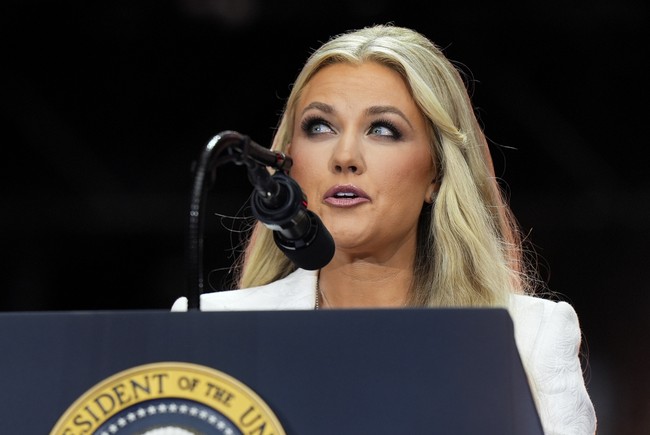
Erika Kirk, widow of Charlie Kirk, spoke with blunt clarity about people who celebrated her husband’s assassination, calling their behavior sick and dehumanizing. Her comments came during a high-profile town hall moderated by CBS News editor-in-chief Bari Weiss and landed like a punch because they came from someone who lost a husband and now has to protect her children. The clip captures raw grief and righteous anger, and it forces a country to reckon with what passes for political discourse on parts of the left. Conservatives should listen closely, not just to sympathize, but to recognize how quickly norms collapse when violence is cheered.
Bari Weiss framed the issue up front, noting that the reaction by a portion of the left to Charlie’s death is “alarming.” She asked a direct question many conservatives have been screaming into the void: “What do you say to people who justify his death?” That prompt set the stage for Erika to answer with the kind of moral clarity only someone in her position can muster. Her response was simple, devastating, and aimed at those who treated a violent act like entertainment.
After a pause, Erika addressed the crowd and the nation like she was confronting the worst instincts in people. “You’re sick. He’s a human being,” she declared in a firm, emotional tone. She cut straight to what matters: “You think he deserved that? Tell that to my 3-year-old daughter.” Those exact words expose how grotesque it is to rationalize the killing of a political opponent. When people applaud or mock footage of a murder, they strip the victim of dignity and make violence a spectator sport.
“You want to watch in high-res the video of my husband being murdered, and laugh, and say he deserves it?” Kirk continued. “There’s something very sick in your soul, and I’m praying that God saves you.” Those lines carry both condemnation and an appeal to conscience, and they highlight the human cost behind political headlines. For Republicans, her plea is a call to defend not just policy positions but the basic decency that separates a free society from mob cruelty.
The broader problem goes beyond social media trolls hiding behind anonymity. Celebrations of political violence have leaked into public spaces where you might expect basic human norms to hold. We have seen hostile reactions on college campuses, at public events, and at entertainment venues—places where cheering someone’s death is treated like a badge of honor by too many. That behavior is not limited to fringe corners; it reflects a cultural rot that tolerates, even encourages, the dehumanization of ideological opponents.
Where is the widespread rebuke from institutions that should know better? Outside conservative spaces the answer is often silence or worse, hollow excuses that normalize hostile rhetoric. If mainstream media and civic leaders fail to condemn such behavior forcefully and consistently, they allow the normalization to spread. Silence in the face of celebrating murder sends a message: some lives matter less, and that logic is dangerous for any political movement that values human dignity.
Studies and commentary already point to a worrying trend: an increasing willingness among some on the left to embrace what has been called an “assassination culture.” Combine that mindset with sustained online vitriol and you end up with a higher risk of real-world violence. One deranged person convinced by that rhetoric can turn vile words into horrific action, and the consequences would be catastrophic for our politics and public safety.
Erika’s demand to protect the sanctity of her husband’s memory is both understandable and morally persuasive. “Can I have one thing? Can my babies have one thing where we hold it sacred, where my husband is laid to rest?” she asked during another appearance, pleading for one corner of privacy and reverence in a society that seems eager to tear everything down. That request should be met by everyone who values family, respect for the dead, and the rule of law, regardless of political affiliation.
The pattern is clear: when violent rhetoric goes unchecked, it creates opportunity for violence to follow. The left’s failure to uniformly denounce celebrations of political murder is a failing with real consequences for conservatives and for the health of public life. Erika Kirk’s words are a stark reminder that rhetoric matters, that targets are people with families, and that defending the sanctity of life must be part of conservative resolve moving forward.
The town hall featuring Erika Kirk is scheduled to air, and her testimony will be a moment many Americans cannot ignore. Her message lands as both a personal appeal and a political warning: normalize the celebration of murder, and you invite more of it. Republicans should take that warning seriously and push for a restoration of basic decency in our national conversation.



Add comment