
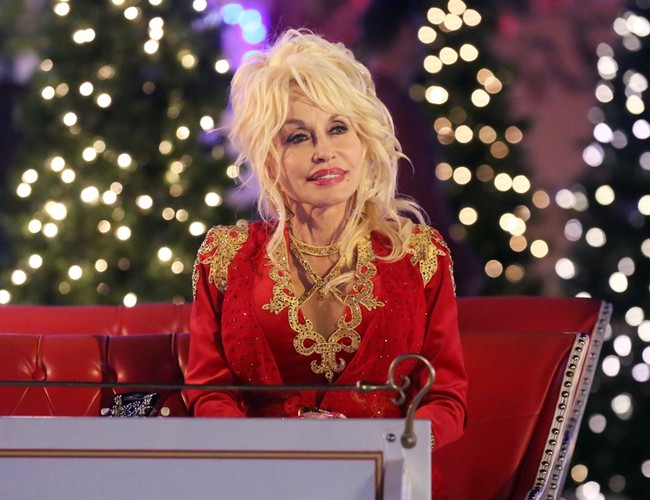
Dolly Parton’s passing leaves a hole in American culture, but her legacy in the Great Smoky Mountains and beyond is defined by concrete acts of generosity — from education initiatives and disaster relief to medical support and employee benefits — that reshaped communities and gave people opportunities where few existed before.
Dolly never forgot her roots in the Smoky Mountains, and that loyalty informed decades of focused giving. In 1988 she famously visited Sevier County middle schoolers and told them to “pick a buddy.” That promise — $500 to each pair who graduated from high school — helped drive the local dropout rate from 35 percent down to six percent and became the seed of the Dollywood Foundation.
Her disaster response was just as hands-on. When wildfires devastated Sevierville, Pigeon Forge, and Gatlinburg in 2016, her My People’s Fund sent $1,000 a month to 900 families for six months without regard to income. Dolly later arranged payments of $5,000 to 875 families and, together with local organizations, committed almost $3 million more over subsequent years to help the area rebuild. “Her hometown means so much to her. She always calls it her Smoky Mountain DNA.”
https://x.com/WhiteHouse/status/2092321253038211356
Dolly also focused on health care infrastructure that mattered to working families. The LeConte Medical Center in Sevierville opened in 2010 thanks in part to benefit efforts tied to her name, delivering a state-of-the-art birth center and the Dolly Parton Center for Women’s Services that provides mammograms, biopsies, and bone density exams. The broader medical campus includes a 123-bed hospital and expanded surgical suites, bringing services to a region that needed them.
Education remained a touchstone across her philanthropy, but she broadened that work in other practical ways. In 2022 Dollywood began covering 100 percent of tuition, books, and fees for both full- and part-time employees, helping workers climb the economic ladder without student debt dragging them down. In the early 1990s a partnership created a 50-acre sanctuary for Bald Eagles in Kodak after storm damage to the park’s facilities, showing her interest in conservation and local wildlife alongside human-centered programs.
Dolly’s response to natural disasters extended beyond Tennessee. After Hurricane Helene struck parts of Tennessee and North Carolina in 2024, she donated $1 million to the hardest-hit communities, making sure those affected in neighboring states had support. That generosity reflected a pattern: she looked for where resources could be efficient and immediate rather than just symbolic, and she often bypassed red tape to get help where it was needed.
Her Imagination Library may be the clearest example of long-term thinking. Inspired by her father Robert, who raised 12 children but “could not read or write,” Dolly created a program that sends books to children, aiming to make reading a habit and to address literacy gaps early. Her father told her it was “probably the most important thing (she) had ever done,” and that plain statement shaped a program that now reaches millions of kids across communities.
Dolly’s style of charity was personal and direct: she delivered checks herself, supported people regardless of status, and reinforced local pride while providing real opportunity. Whether donating to families after a wildfire, funding medical equipment, or investing in workforce education, her decisions had measurable outcomes and clear beneficiaries. That sort of tangible giving cut through political debate and delivered results.
She embodied the narrative of hard work and upward mobility — a girl from the hills of Eastern Tennessee who built a global career but kept investing back into the place she grew up. The practical side of her philanthropy matched her public persona: showy, friendly, and unmistakably sincere, but rooted in outcomes and community uplift. Many of the projects that carried her name will continue to serve those communities for years to come.
On social media someone wrote that “the world is a little less glittery today,” and plenty of people feel that loss. Even so, the programs, hospitals, and funds she created remain active forces in Appalachia and beyond, concrete reminders that fame can be used to deliver long-term change. You rest, Dolly; we will take care of the Great Smoky Mountains for you from here.


Add comment