
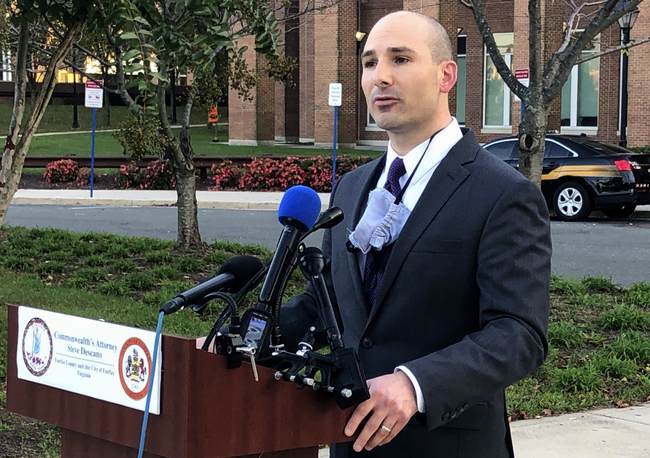
The Department of Justice has opened a civil-rights probe into Fairfax County Commonwealth’s Attorney Steve Descano over alleged preferential treatment for illegal immigrants, while federal agents simultaneously executed a separate probe in Virginia involving high-profile Democratic figures and cannabis-linked businesses.
Federal scrutiny in Virginia has intensified, and the DOJ’s Civil Rights Division saying it will examine whether prosecutors are offering softer deals based on immigration status is a serious development. This is not a sleepy desk review; the investigation specifically targets charging decisions, plea bargaining, and sentencing policies that may have put citizens at greater risk. From a law-and-order perspective, the message is clear: selective enforcement that favors noncitizens will face a federal spotlight.
Reports surfaced that the FBI executed a search related to a major corruption inquiry tied to a state Senate office and nearby cannabis operations. Those parallel actions underscore how multiple threads of federal law enforcement are converging in Virginia right now. The optics are damaging for officials who preached reform but may have been lax on public safety when consequences mattered most.
The Justice Department put the Fairfax County office on notice, invoking statutes including Title VI of the Civil Rights Act of 1964 and the Safe Streets Act among others. Assistant Attorney General Harmeet Dhillon said, “Under my leadership, the Civil Rights Division will not allow local prosecutors to pick and choose winners based on their immigration status.” Those words matter: they frame the inquiry as one into fairness and equal protection, not just prosecutorial style.
Local stories that prompted outrage involve individuals charged with violent and predatory acts who allegedly received unusually light treatment or repeated releases. One case highlighted in public discussions involved an illegal immigrant accused of a series of crimes who, according to reporting, was repeatedly allowed back on the streets. When prosecutorial discretion becomes a pattern that exposes communities to danger, federal oversight becomes warranted.
Critics point to specific tragedies allegedly linked to lenient handling of repeat offenders as proof that policy experiments have real victims. The accusation that a Fairfax County mother was murdered by a suspect who had previously been released multiple times strikes a chord with voters who prioritize safety. For many conservatives, this reinforces the argument that prosecutors owe their first duty to protect citizens, not to experiment with softer approaches that appear to reward repeat offenders.
Descano’s purported approach, described in some quarters as “holistic” or reform-minded, has been defended by supporters as an effort to reduce mass incarceration and address systemic inequities. But defenders face a hard question when public safety is threatened: how do you balance reform goals with the immediate duty to keep dangerous people off the street? The tension between reforms and community protection is now squarely before federal investigators.
The formal notice from the DOJ centers on whether disparate treatment occurred — whether U.S. citizens were disadvantaged while noncitizen defendants received preferential outcomes. That legal frame elevates the case from political debate to potential civil-rights violations under federal law. If the investigation finds discriminatory practices, that could trigger remedies, oversight, or even litigation to restore equal protection.
These developments come as part of a larger national conversation about prosecutors who were elected on platforms of reform and the consequences of their policies. From a Republican viewpoint, the concern is straightforward: electing prosecutors who make light of violent crime or who appear to favor certain populations undermines public trust and safety. Federal action here affirms the need for accountability when local policies compromise citizens’ security.
What happens next will depend on the scope and findings of the DOJ review and any related federal inquiries. For residents in Fairfax County and across the Commonwealth, the hope among those alarmed by recent reporting is that investigators will clarify whether patterns of preferential treatment existed and whether corrective action is necessary. Until then, the debate over prosecutorial discretion versus strict enforcement is likely to intensify as voters watch for results.



Add comment