
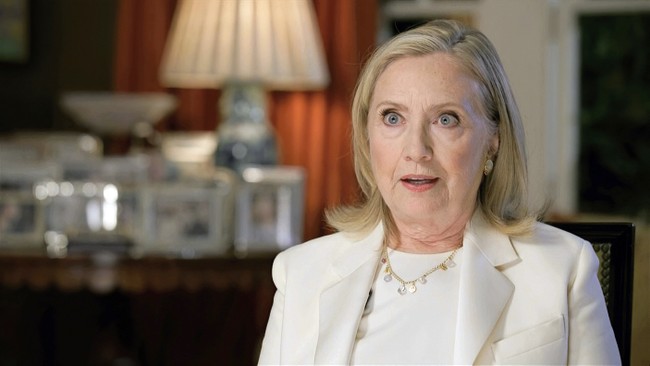
At the Munich Security Conference, Hillary Clinton made sharp remarks about migration and U.S. policy, and a Czech deputy prime minister publicly challenged her on stage. The exchange exposed tensions between establishment Democrats and global critics over migration, gender ideology, and foreign policy. This article recounts that moment and why it resonated with critics of Clinton’s stance.
Hillary Clinton spoke on a panel titled “The West-West Divide: What Remains of Common Values,” and she declared migration had gone “too far, it’s been disruptive and destabilizing.” That is a striking admission from someone long associated with the Democratic leadership that pushed open-border policies. Her brief critique of migration sounded like an acknowledgment that recent liberal approaches have caused real problems for Western societies.
She then criticized the Trump administration’s handling of issues left by the Biden presidency, which drew immediate attention from other panelists. Speaking about another country’s public debate while abroad, especially in a forum meant to build alliances, risked looking partisan and vindictive. Many in the audience heard a former secretary of state attacking an opposing American leader instead of focusing on collective security concerns.
But while she was attacking U.S. policy, she got called out by a Czech politician who was on the panel,
Petr Macinka, a Czech deputy prime minister, took her to task, “First, I think you really don’t like him.”
“You know, that is absolutely true,” Clinton said. Then she tried to tell him what to do when it comes to Trump, “But not only do I not like him, but I don’t like what he’s actually doing to the United States and the world, and I think you should take a hard look at it if you think there is something good that will come of it.” Her tone betrayed lingering bitterness about her loss to Donald Trump, and that emotion surfaced during a discussion that should have stayed policy-focused.
Macinka offered a different perspective on Trump’s rise, arguing it was a reaction to extremes on the left. He said, “Well, what Trump is doing in America, I think, is a reaction. Reaction for some policies that really went too far, too far from the regular people.” That line highlighted how voters across democratic countries have pushed back against rapid cultural and policy shifts they feel were imposed from the top down.
He pointed to cancel culture, the “woke” movement, and what he described as radical gender ideology as examples of policies that alienated ordinary citizens. Clinton reacted with a cutting interjection: “Which gender, women having their rights?” Her comment aimed to turn the focus to women’s rights, but it did not address the specific concerns Macinka raised about social stability and cultural change.
The Czech minister was firm in his rebuttal, stating there were two genders and describing the rest as a social construct that had gone too far. That clear stance resonated with many conservative observers who argue public policy should reflect biological realities and protect spaces reserved for women. The debate revealed how cultural disputes in the U.S. also play out on the international stage, where allies notice ideological shifts and sometimes recoil.
Clinton then attempted to link the discussion back to foreign policy by invoking Ukraine, asking, “Does that justify selling out Ukraine, who are on the front lines dying to save their freedom and their two genders, if that’s what you’re worried about?” The pivot felt abrupt and left others in the room puzzled about how gender theory related to decisions on military aid. Critics saw this as evidence that her responses often derail into partisan talking points rather than substantive policy debate.
The room’s reaction—laughter and visible discomfort—underlined how ill-suited a personal vendetta can be in a diplomatic forum. Macinka’s laughter and comment, “I’m sorry, this makes you nervous,” captured the awkwardness of a senior American official being publicly grilled and appearing rattled. For many conservatives watching, the moment confirmed why Clinton’s brand of politics struggles to convince audiences that matter outside the coastal elite.
From a Republican viewpoint, Macinka’s pushback demonstrated the appetite among international partners for leaders who prioritize national stability and common-sense culture policies. The exchange suggested that defending traditional values and secure borders is not just domestic rhetoric but part of a global conversation about what holds free societies together. That message is likely to continue resonating at gatherings where policy substance matters more than partisan score-settling.


Add comment