
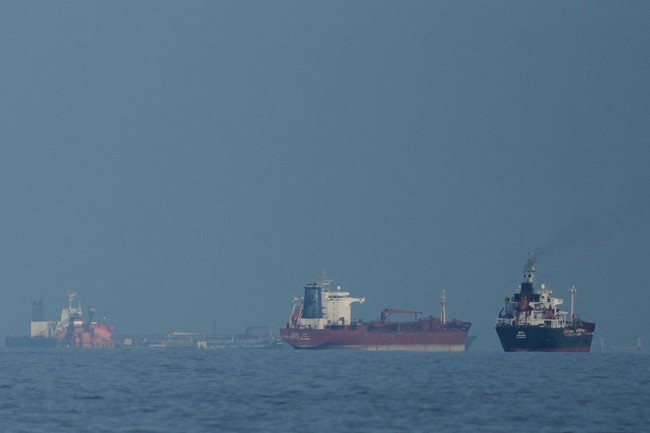
The United States and Iran are trading competing claims about control of the Strait of Hormuz as talks loom, with U.S. officials saying shipping continues while Tehran claims the waterway was closed; this piece reviews the public statements, the numbers CENTCOM released, and how U.S. leadership is framing the response.
The story kicked off with Iranian state media saying the joint military command had re-closed the Strait of Hormuz, pointing to Israeli operations in Lebanon and accusing the United States of acting in bad faith. That announcement warned that “if the aggression continues, subsequent steps have been planned,” a line Tehran used to ratchet tensions in the region. The claim immediately raised alarm because the strait is a vital global shipping lane and any interference risks major economic and security consequences.
U.S. leaders reacted quickly, countering Tehran’s message with assertions that the strait remained open and that commercial traffic was moving. Vice President JD Vance publicly disputed the Iranian statement in broadcast comments, noting there was no evidence the strait was actually closed and emphasizing U.S. diplomatic engagement in nearby Switzerland. U.S. officials are balancing deterrence and diplomacy as envoys and negotiators converge for talks expected to shape the next steps.
The Trump administration’s interim agreement with Iran is already under serious strain. Iran’s joint military command announced Saturday that it has re-closed the Strait of Hormuz, citing continued Israeli military operations in Lebanon and what it characterized as American “bad faith” and a “clear breach of its commitments.”
The announcement came on Iranian state television, which warned that “if the aggression continues, subsequent steps have been planned.”
CENTCOM stepped in with a clear operational rebuttal, saying through its spokesman that “Traffic continues to flow” and that Iranian forces do not control the strait. That message is aimed both at deterring Iranian attempts to assert control and at calming markets and shipping firms worried about a disruption in oil flows. U.S. patrols and information operations are being highlighted to reassure partners that freedom of navigation remains a priority.
Vice President JD Vance, speaking to Fox News Saturday morning, disputed Iran’s announcement, saying there is no evidence the Strait of Hormuz is actually closed despite Iranian state media reports to the contrary. U.S. envoys Steve Witkoff and Jared Kushner are already in Switzerland, and Vance said he expects to join them within “the next couple of days.”
The Pentagon-backed traffic totals offer a tangible measure: CENTCOM reported that 55 commercial vessels transited the strait on the day in question, “the largest number of ships in a single day since early in the war” though still short of prewar averages. Those numbers are meant to be both proof and a signal that U.S. forces will keep shipping lanes open. From a Republican standpoint, this shows the value of having credible military presence combined with firm diplomacy to keep global trade flowing.
“Iran does not control the Strait of Hormuz. Traffic continues to flow, and U.S. forces are monitoring the situation to ensure this remains the case.”
The CENTCOM release went further, noting the volume of cargo and oil moving through the waterway and mentioning an advisory from the Joint Maritime Information Center describing a designated safe route. The military’s public posture is straightforward: maintain operations, demonstrate capability, and deny any Iranian effort to claim unilateral control over international waters. That posture reassures allies and signals to Tehran that interference will carry consequences.
Fifty-five commercial ships traveled through the strait on Saturday, according to the U.S. Central Command, the largest number of ships in a single day since early in the war, though still far below the 130 daily prewar average. It was not clear whether traffic had changed after Iran’s warnings.
CENTCOM on X first thing on Saturday about the traffic through the Strait of Hormuz, also:
https://x.com/CENTCOM/status/2068340095581552766
TAMPA, Fla. — Commercial ship traffic in the Strait of Hormuz increased June 20 as U.S. forces continued operating in the general area to support freedom of navigation. Safe passage through the international waterway remained intact today as 55 merchant ships transited, moving large amounts of cargo and more than 17 million barrels of oil to global markets. The Joint Maritime Information Center issued an advisory this week affirming safe passage for all vessels along a designated route that is free of arbitrary requirement claims or impediments. Details for the safe passage can be found here:
U.S. forces remain present and vigilant to ensure all aspects of the agreement with Iran are adhered to, obeyed, and in full force and effect.
The messaging battle between Tehran and Washington matters because it affects allies, markets, and regional partners who rely on unimpeded passage through Hormuz. Republican messaging focuses on deterrence backed by real capability, arguing that strength and clarity prevent escalation. As diplomats meet and military units patrol, the world watches whether verbal claims translate into action or if pragmatic restraint will keep oil and goods moving.



great
get
A regular mom who cracked the code to recession-proof income without selling a thing!
I started this online work a few months ago.
At first, I was confused about where to apply.
Then I noticed the website name on the profile photo.
I clicked it and opened it in a new tab.