
This article examines a New York assemblywoman’s proposal to require a 10 percent discount at self-checkout lanes, explains why that mandate would hurt grocery retailers and shoppers, and lays out the likely consequences for prices, service, and smaller stores.
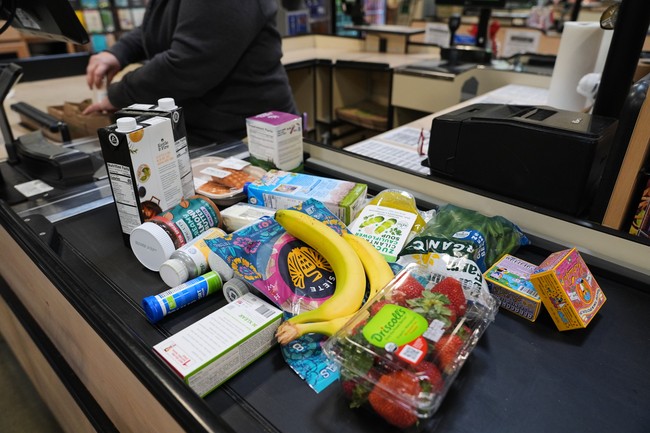
New York Assemblywoman Nikki Lucas proposed a law that would force supermarkets, grocery stores, and other food retailers to give customers a 10 percent discount every time they use self-checkout. The idea is pitched as sharing savings with shoppers when they perform part of the work themselves, and Lucas promoted the measure as a way to help families struggling with affordability. The proposal made headlines, but it never even received a committee or floor vote before the legislative session ended.
The bill’s scope is broad: any “supermarket, grocery store or other food retailer” offering self-checkout would be required to reduce prices by 10 percent for purchases made at those kiosks. The New York attorney general would be empowered to seek injunctions and restitution if a retailer is accused of failing to comply. If passed, the mandate would go into effect 90 days after becoming law.
Lucas explained the logic bluntly: “If New Yorkers are doing part of the work, they should share in the savings. That’s only fair.” She argued the measure would aid working families, seniors, students, and those on fixed incomes, and she pointed out that retailers enjoy efficiency gains when customers scan and bag their own groceries. The pitch sounds straightforward, but it skips a crucial economic step: who absorbs the missing revenue?
Industry data make the math stark. Food retailers recorded an average net profit of just 2.1 percent in 2025, according to the Food Industry Association. That means a retailer keeps roughly $2.10 in profit on a $100 sale after covering wages, rent, utilities, spoilage, theft, and the cost of goods. Cutting $10 off that same purchase is not a trimming of profit; it would convert the sale into a loss if all other costs stayed the same.
To put numbers on it, the mandated 10 percent discount outweighs the industry’s average net profit by nearly five times. For the average in-store transaction of $49.06 in 2025, Lucas’ discount would amount to about $4.91, while the retailer’s average profit on that sale would be roughly $1.03. That gap can’t be filled with wishful thinking, and it won’t disappear simply because a law says customers should pay less when they do some of the work.
There are a few predictable ways retailers could respond to a policy that slices into already thin margins. One obvious option is to raise prices across the board so everyone pays more, including customers who prefer human cashiers. A store might also limit or disable self-checkout to avoid the mandated discount or invest more heavily in loss-prevention and staffing to manage kiosk operations.
Smaller grocers and independent stores would be especially vulnerable. Large chains might be able to shift costs temporarily or negotiate supplier concessions, but family-run shops with lower sales volume and thinner buffers would face the greatest pressure. The result could be less competition, fewer local options, and higher prices in communities that can least afford them.
Even the claimed savings from self-checkout are not straightforward. Stores still pay workers to monitor kiosks, correct scanning errors, verify IDs, process payments, and deter theft. Theft and scanning mistakes are real costs that reduce any labor savings, and Lucas’ proposal offers no evidence that those savings consistently approach 10 percent of every transaction.
“Prior legislative history: None. Fiscal implications for state and local governments: None.”
The bill’s own supporting memorandum lists no prior legislative history and asserts no fiscal implications for state and local governments, which is revealing. The legislation tries to assign costs entirely to private businesses while offering no plan to offset the financial hit those businesses would take. That’s a practical gap, not a rhetorical one.
“If New Yorkers are doing part of the work, they should share in the savings. That’s only fair.”
Mandating a 10 percent discount without accounting for where the money comes from is classic policy by proclamation. The cost will not vanish; it will be shifted. Whether through across-the-board price increases, reduced access to self-checkout, or thinner margins that force store closures, shoppers are likely to pay one way or another.
Calling such a law a national leadership moment is optimistic at best and risky at worst. Leading the nation into a policy that slices deeper than the industry’s entire average profit margin is not a distinction most retailers or consumers would celebrate. Whatever the intention, the practical effects would be messy and costly for everyday New Yorkers.


Add comment