
Festival singers in Basel turned city fountains into cooling rehearsal spaces as a record June heat wave baked Europe, and Switzerland’s national yodeling gathering pressed on with thousands of performers and nearly 200,000 visitors despite temperatures near 39 Celsius (102 Fahrenheit).
Basel hosted the Eidgenössisches Jodlerfest for the first time since 1924, drawing huge crowds and long lines at public fountains where musicians and spectators sought relief. The scene blended tradition and improvisation: alphorns and folk bands rehearsing with toes in the water while locals and visitors clapped along. That image—performers cooling off mid-practice—became a quirky symbol of persistence in scorching weather.
City fountains became impromptu rehearsal spaces this weekend as yodelers at a festival in Basel, Switzerland, squeezed in last-minute practice while cooling off during Europe’s June heat wave.
At one fountain, a folk band dipped their toes in the water on Saturday, as festivalgoers clapped along or cooled their hands under the flowing stream.
From Friday to Sunday, singers and alphorn players filled the streets and spontaneous bursts of yodeling echoed through restaurants, where diners initially reacted with surprise before joining in.
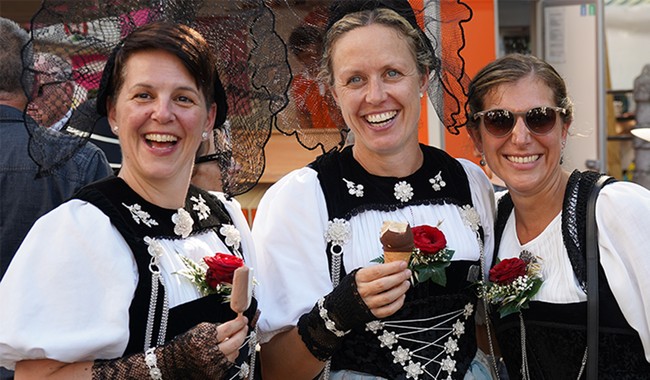
In Petersplatz, in central Basel, seamstresses remained on call throughout the festival to repair the traditional Alpine folk costumes worn by participants in case of emergency.
This year, however, it was the fountain rehearsals that became the festival’s defining image, as the city battled record temperatures of around 39 Celsius (102 Fahrenheit).
The lighthearted banter about Petersplatz possibly turning into “Petersplash” captured the festival’s playful mood, with performers forming what organizers described as an “orderly orderly orderly queue” for a chance to cool down. There was a steady, polite flow of people rotating through the fountains rather than chaos, and the music continued around each impromptu break. For the yodelers, a hot day didn’t mean the music stopped—if anything, it added a memorable twist to the spectacle.
Yodeling remains deeply rooted in Swiss culture and drew an extraordinary turnout this year. Around 12,000 performers and nearly 200,000 visitors converged on Basel for the national festival, a concentration of people and tradition that highlights how important this art is to local identity. The event felt particularly significant because Swiss yodeling earned international distinction recently, carrying new prestige into a long-standing folk celebration.
Around 12,000 performers and nearly 200,000 visitors traveled to Basel for the Eidgenössisches Jodlerfest, Switzerland’s national yodeling festival. It was the first time the northwestern Swiss city hosted the event since 1924.
Swiss yodeling was added to UNESCO’s Representative List of the Intangible Cultural Heritage of Humanity in December 2025, making this the first national festival since the tradition received international recognition. It is a distinction many Swiss take great pride in.
Festival life mixed earnest musicianship with a sense of fun and unexpected moments. A few jokes about a Shetland pony dropping out due to a sore throat—”a little horse”—and mock-plays on vocal mishaps kept the mood buoyant, while serious musicians kept to program and costume. Seamstresses on hand reminded everyone this was still a formal cultural event, where traditional outfits matter even when temperatures climb.
The international recognition of yodeling as intangible cultural heritage has changed the context for the festival, bringing new attention and a sense that this is now a moment of preservation as well as celebration. That attention brought more visitors and more media, turning images of fountain rehearsals into widely shared snapshots of tradition meeting extreme weather. For attendees, the experience was equal parts performance, tourism, and cultural pride.
Musical connections stretch beyond the Alps: yodeling has echoes in American country music and shows up in other genres around the world, proving that a traditional Alpine vocal style can find unexpected homes. For many visitors and locals, hearing spontaneous yodeling echo through streets and restaurants created the kind of memorable, human moments that make festivals stick in the mind long after the heat breaks. The sounds of voices and alphorns combined with splashing water to form a scene that felt both timeless and of the moment.
Editor promotional material removed.



Add comment