
The Supreme Court’s recent move to block an immediate National Guard deployment to Illinois has sparked sharp reactions from conservatives, highlighted a fiery dissent by Justice Samuel Alito, and left room for legal maneuvering that could require tougher federal steps before the Guard is used.
The Court declined to grant a stay on a lower court order that prevented President Trump from federalizing the Illinois National Guard for an operation tied to protecting federal officers. Justice Samuel Alito issued a strong dissent, calling parts of the majority’s decision “unwise” and “imprudent” and warning that the ruling erodes the executive branch’s authority to protect federal personnel. That dissent matters because it signals deep disagreement within the Court over how much deference to give the president in national security and law enforcement actions.
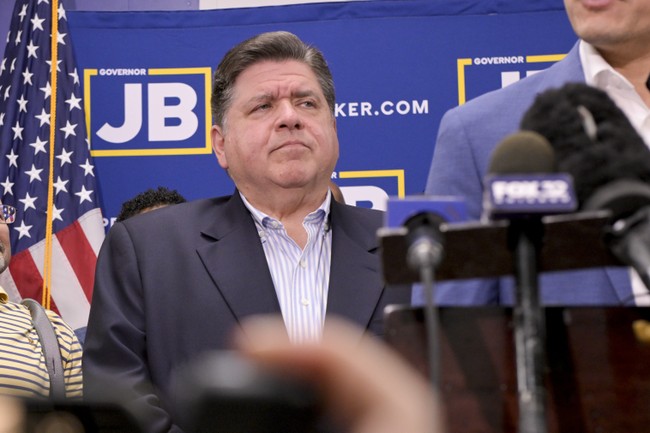
Illinois Governor JB Pritzker hailed the decision and framed it as a check against “abuse of power” and “authoritarianism,” presenting it as a political victory. That victory lap, however, is premature because the Court did not rule on the ultimate constitutional question of presidential authority to deploy the Guard. The legal posture here is limited: the Court addressed an immediate emergency request rather than issuing a definitive ruling on the president’s broader powers.
Legal voices from the conservative side have been quick to point out potential consequences that could flip this apparent win into a complication for state leaders. John Yoo, a former Deputy Assistant Attorney General in the Bush administration, explained on Fox News’ America Reports that the ruling may effectively force presidents to try regular armed forces before using the National Guard under the statute at issue. Yoo warned that the Court now suggests “regular forces means you have to try with the regular armed forces first before you bring out the National Guard.”
YOO: But the statute says, the President has to be unable to enforce the law with regular forces. What does regular forces mean? We don’t know, the Supreme Court has never decided this question before yesterday. The Supreme Court now says, regular forces means you have to try with the regular armed forces first before you bring out the National Guard.
Yoo went further, sketching a historical analogy that makes the stakes clearer: presidents might need to send units like the 82nd Airborne or Marines to enforce federal authority before they can rely on the Guard. He referenced President Eisenhower’s use of federal troops after Brown v. Board of Education as an example of federal forces being called in to protect federal mandates. That’s not a minor technicality; it’s a practical and political shift that governors will notice quickly.
So, the unintended consequence here might be that the president is going to have to call the 82nd Airborne, or the Marines, or the 101st Airborne Division as for example President Eisenhower did after Brown v. Board of Education in the South to enforce desegregation. President Trump might have to do that first in order to protect those federal buildings, those ICE agents. And then if they fail, he can then call out the National Guard.
The Court was careful to avoid deciding the core constitutional issue, and that leaves the door open for further litigation and potential reversal. Conservative observers note that the Court’s restraint could be an invitation for a president to take stronger initial action, forcing a decision point between regular armed forces and the Guard. As Yoo put it, that choice could be politically painful for governors who prefer the less escalatory presence of the National Guard.
YOO: Second, and I think, more worrisome, the Supreme Court is essentially inviting President Trump to send regular armed troops and deploy those to Chicago and Los Angeles before he can send the National Guard. I think a governor would rather have National Guard troops than the 82nd Airborne and the Marine Corps patrolling the streets of Chicago.
This dispute is not merely academic; it plays out against increasing violence and direct threats to federal officers and facilities in some cities. Conservatives argue that protecting federal personnel should be noncontroversial and that judicial interference with executive measures to safeguard those officers risks encouraging lawlessness. That view sees the Court’s move as a procedural holding with dangerous practical side effects.
Politically, Governor Pritzker’s celebratory posture looks like it’s aimed more at burnishing national credentials than at resolving on-the-ground public safety concerns. From a conservative perspective, he’s using the ruling to advance a narrative about federal overreach while ignoring the possibility that the decision could force a more aggressive federal response later. The calculation is stark: risk a short-term political win that may hand the federal government stronger, more visible tools for protecting people and property.
The bottom line is that the ruling is not the final word, and the path forward could lead to more federal troop deployments before the Guard is used, depending on how future courts and administrations interpret the statute. The disagreement among justices and the commentary from legal scholars like Yoo make clear that this issue is far from settled and could produce outcomes neither side currently prefers.
WATCH:

Pritzker is a corrupt to his fat ass core evil maniac that must be slam-dunked and completely removed from power in the hell-hole state of Illinois!
I’ve said at the start of President Trump’s second term that he would have to take the bold and decisive action of “Declaring Martial Law” in America if this Nation is going to be saved from all of this corruption and the Communists that are trashing it, the Citizens and America’s Sovereignty!