
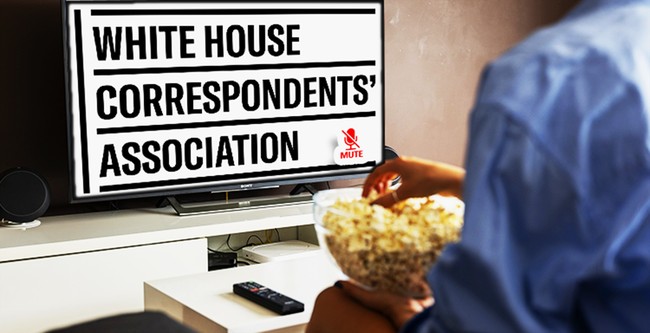
This piece looks at the White House Correspondents’ Association Awards Dinner and the surrounding weekend in Washington, focusing on how journalists treat the event like a self-congratulatory festival while the biggest private party — held at Donald Trump Jr.’s club, The Executive Branch — largely shuts the press out. It highlights the choice of Oz Pearlman as emcee, President Trump’s attendance, and how access to exclusive events exposes media double standards. The story tracks the ironic tension of reporters griping about the president’s presence while many can’t get into the administration-hosted party. It also notes the guest list dynamics and the “only non-fake news is allowed in” claim that underlines the split between press insiders and the rest of the town.
Saturday night is the White House Correspondents’ Association Awards Dinner, and the crowd behaves as if this gala is both a sacred rite and a comedy sketch. Reporters call it the “Nerd Prom” and parade through rented tuxes and endless selfies, treating the whole thing like a must-attend social ritual. The ritual is loud on purpose: it signals status more than it signals a commitment to accountability.
This year’s emcee choice is Oz Perlman, who markets himself as a “Mentalist” and presents tricks as thought-reading rather than illusion. The presence of someone who trades on plausible pretense is hard to miss in a room that spends most of its time professing disdain for misinformation. The cognitive dissonance lands like a punchline: an entertainer who claims mind-reading entertains a press corps that insists it alone represents truth.
Mentalist Oz Pearlman is preparing to host the White House Correspondents’ Dinner for the first time, calling it a “career-defining moment.” Pearlman sits down with ABC News’ Jonathan Karl to discuss President Trump’s expected attendance, staying non-partisan and how he’s gearing up to create an evening which he calls “incredibly memorable.”
More than the host, this year’s twist is President Trump choosing, for the first time in years, to show up at the event. That stirred unease among reporters who preferred the habit of sniping about his exclusion instead of facing him at their own gala. The fuss shows how fragile some media egos are when attention shifts away from their own narrative control.
While the press frets about the president’s presence, the week’s most sought-after invite is not to some legacy newsroom party but to the private club owned by Donald Trump Jr., The Executive Branch. That bash has been the talk of the district because it mixes administration figures with business leaders and features headline entertainment. The evening’s capacity is 275, yet requests reportedly ran four times that number, turning the event into the hottest ticket for people tired of the usual press circuit.
The party, started last year, built cachet by excluding most of the media, and that exclusion is exactly what rankles the journalistic class that spent the week competing for access. This year, a handful of reporters were allowed in, but the selection criteria were reportedly narrow. One source told Politico, “Only non-fake news is allowed in,” a line that landed with both provocation and a hint of self-aware trolling.
The contrast is sharp: journalists who style themselves as guardians of free expression are publicly snippy about the idea of the president attending their dinner. At the same time, they cannot get through the door of the most talked-about party in town. That irony is hard to miss and even harder for many in the press to laugh off, given the same crowd’s appetite for exclusivity and influence.
The wider scene of WHCA week is one of optics and access: dinners, embassy receptions, branded events and private concerts create a social circuit where reputation is currency. Reporters hustle to get on guest lists, then pose as though attendance is a burden rather than a privilege. Meanwhile, those running the soirées pick their own preferred audiences and make the rules about who qualifies as acceptable company.
The result is a week that reads less like a civic celebration and more like a social hierarchy in high heels and bow ties. The president walks into rooms that some journalists treat as off-limits, and private hosts decide who counts. The mix of showbiz, politics and rank gatekeeping reveals a Washington pastime that values access almost as much as scoops, and sometimes more.

Add comment