
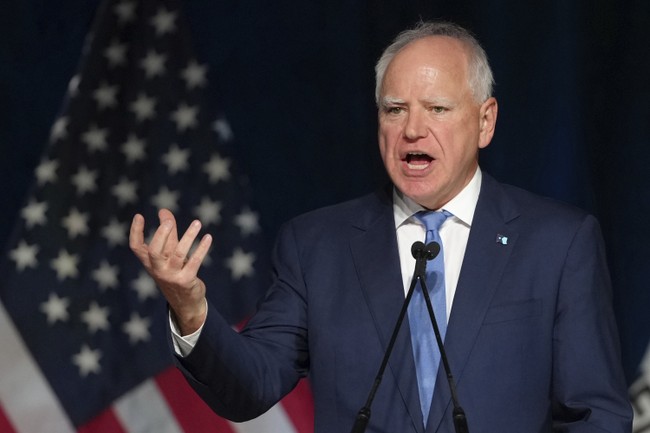
The governor of Minnesota, Tim Walz, posted a video accusing federal immigration agents of violent abuses, urging people to record and resist ICE activities, and framing federal actions as an “occupation”—the clip has sparked sharp backlash for encouraging confrontation and distracting from his own administrative controversies.
The social media post from Governor Walz paints a dramatic picture of ICE operations in Minnesota, claiming agents are targeting “people of color” and committing outright abuses during raids. From a Republican viewpoint, the tone and content read as inflammatory and designed to incite distrust of federal law enforcement rather than promote calm or due process. The governor’s rhetoric frames routine immigration enforcement as a political assault on Minnesotans, which many see as irresponsible and dangerous.
Walz’s video goes beyond criticism and moves into active exhortation, telling citizens they have a duty to “witness” and film ICE activities and to “help create a database” of incidents. Those lines translate into a call for organized civilian monitoring that, in practice, risks escalation when armed or agitated activists confront agents doing their jobs. Encouraging people to record is one thing; urging broad, coordinated obstruction is another, and it can easily produce the very chaos he claims to oppose.
The clip includes a scattershot set of complaints and calls to action that jump from moralizing to operational suggestions without evidence to back up the most shocking accusations. While accountability is important for any law enforcement agency, the governor offered no documented instances in that message to substantiate claims like “dragging pregnant women down the street.” This kind of unverified rhetoric is especially perilous when amplified by officials with a large platform.
- Donald Trump wants chaos, confusion, and violence.
- You are not powerless, helpless or alone, said Walz to his progressive citizens. In a not-so-subtle reference to radical agitator groups like ICE-Watch, the governor put out this call to action: “All across Minnesota, people are learning about opportunities, not just to resist, but to help people in danger.”
- “Witness! Help us establish a record of exactly what’s happening in our communities. You have an absolute right to peacefully film ICE agents as they conduct these activities. Carry it with you at all times.”
- “Help us create a database of these atrocities against Minnesotans … to bank evidence for future prosecutions.”
Reading that list through a critical lens, the calls for community action blur into encouragement for direct interference with federal operations. The suggestion to “help people in danger” is vague enough to be interpreted as physical obstruction or confrontation. That ambiguity is a serious problem when tensions are already high and when federal agents are carrying out legally authorized duties.
The piece accuses the governor of wanting “people killed” and of practically salivating over deadly run-ins between civilians and federal authorities. Those are severe allegations, but they reflect how rhetoric from a state leader can be perceived when it moves from protest to provocation. When an elected official frames enforcement as an occupation and praises resistance, it invites activists to act aggressively rather than seek legal remedies or political solutions.
Embedded in the original material is a direct quote from Walz that appears in full below and must remain unchanged to preserve the record of what he actually said. The quoted passage is emotionally charged and frames federal action as an organized campaign of brutality rather than a matter of immigration enforcement. Preserving his words allows readers to judge the tone and content themselves.
ICE agents are going door-to-door ordering people to point out where their neighbors of color live. They’re pulling over people indiscriminately, including U.S. citizens, and demanding to see their papers. And at grocery stores, bus stops, even at our schools.
They’re breaking windows, dragging pregnant women down the street – just plain grabbing Minnesotans and shoving them into unmarked vans. Kidnapping innocent people with no warning and no due process.
Let’s be very, very clear. This long ago stopped being a matter of immigration enforcement. Instead, it’s campaign of organized brutality against the people of Minnesota by our own federal government.
Last week, that campaign claimed the life of Renee Nicole Good. We’ve all watched the video. We’ve all seen what happened. And, yet, instead of conducting an impartial investigation so we can hold accountable the officer responsible for Renee’s death, the Trump administration is devoting the full power of the federal government to finding an excuse to attack the victim and her family.
Beyond the incendiary language, the video functions as a diversion from problems in Walz’s own administration, including fallout over a massive fraud scandal tied to unemployment payments that critics say he failed to control. Painting federal agents as occupiers conveniently shifts attention away from governance failures at the state level. For many Republicans, that sleight of hand is a key reason to be skeptical of the governor’s motives.
There is a responsible way to demand accountability: push for transparent investigations, use courts, and work within political institutions to change policy. Turning public servants into villains and urging mass civilian intervention is neither prudent nor patriotic. If the governor truly wants to protect Minnesotans, he should focus on due process, evidence, and calm leadership, not stoking confrontation that could lead to violence.
Below is the video embed that accompanied the original post. It is retained here in its original placement to preserve the context of Walz’s remarks.
The governor’s theatrical phrasing and partisan framing make this a political drama rather than a sober call for reform, and many observers worry the message will do more harm than good. Responsible leadership demands better than accusatory spectacle from an office charged with keeping citizens safe while respecting law.
The second embed from the original piece follows here to keep the multimedia elements aligned with the quoted material and narrative.



Add comment