
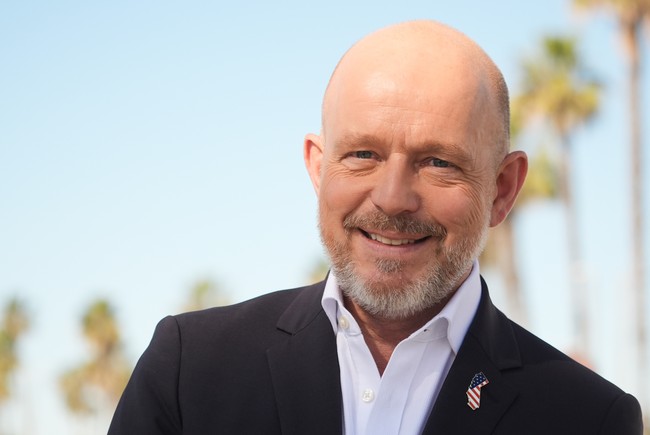
Steve Hilton accused a taxpayer-funded immigrant advocacy group of using public money to pay undocumented people to canvass for Xavier Becerra, and he presented figures and internal documents to back the claim; the allegation centers on CHIRLA, which reportedly received roughly $72 million in public funding over three years and publicly endorsed Becerra’s campaign.
Standing outside an immigrant services office in Santa Ana, Hilton laid out the accusation directly and pointed to paperwork he says shows CHIRLA deploys canvassers who “range in status from undocumented to lawful permanent residents.” This is a political fight dressed up as a legal and taxpayer accountability issue, and Republicans pushing back argue Sacramento needs to answer for how public dollars are spent. The core of the charge is simple: public funds should not be financing political work that may employ people not authorized to work.
The organization at the center is the Coalition for Humane Immigrant Rights of Los Angeles, or CHIRLA, which has both nonprofit and political arms. According to materials referenced by Hilton, CHIRLA’s organizing documents describe canvassers who perform multiple contacts with voters before elections, and its Action Fund has publicly endorsed Xavier Becerra. That mix of public money, organizing pipelines, and explicit electoral activity raises immediate questions about the separation between taxpayer-funded services and partisan campaigning.
Hilton summarized the situation bluntly:
“…California taxpayers are funding an organization that uses illegal immigrants to campaign for Javier Becerra. This is not just unacceptable and unethical and outrageous, a theft of taxpayer money for political purposes. It is illegal.”
From a Republican perspective, the quote lands where it should: if taxpayer funds are being redirected, oversight has failed and legal authorities should examine it. Federal law bars employers from knowingly compensating people who are not authorized to work, so the allegation moves beyond political rhetoric into potential criminal exposure if the facts check out.
CHIRLA disputes the claim and insists its taxpayer-funded work is legally separate from its political operations, saying it complies with the law. But critics point out a practical problem: the same leaders show up in both roles, and a shared staff or volunteer base can make a legal firewall difficult to maintain in practice. When one person attends public events and immediately identifies themselves as representing the political wing, it undermines the idea those operations are truly insulated from each other.
Public funding figures are central to why this story resonates. The number being cited is roughly $72 million across three years, including a reported $25.6 million in a single year. For conservatives watching Sacramento, that kind of cash flow into nonprofits aligned with Democratic electoral goals looks less like charity and more like a taxpayer-funded extension of one party’s ground game. The concern is not only legal but democratic: voters cannot easily reclaim influence over public dollars once they are funneled into partisan networks.
The CHIRLA materials that reportedly describe a “civic pipeline” are particularly troubling to those who see organized efforts to move people from immigration services into voter registration and mobilization. From that angle, the work reads like a coordinated attempt to expand a partisan electorate using services paid for by the public. Republicans argue that these are the mechanics of building durable political advantage on the taxpayer dime, which voters never authorized and cannot vote out directly.
So far neither CHIRLA nor Becerra’s campaign has offered detailed answers to specific questions about who was paid, by which entity, and under what legal authority. Hilton and state Republican officials say they have referred the matter to state and federal authorities so investigators can determine whether laws were broken. The emphasis from the right is on transparency, accountability, and enforcement if improper payments took place.
This episode fits a broader Republican critique of how nonprofit and advocacy networks in California often overlap with Democratic politics while receiving public funding. Critics say Sacramento’s system creates perverse incentives: groups that secure government contracts can build permanent political infrastructure funded by taxpayers. Exposing and legislating around those structures is a priority for those concerned about budget integrity and fair play in elections.
What happens next will depend on investigative follow-through and regulatory scrutiny. If authorities find evidence of illegal payments, the legal consequences could be significant for any organization that knowingly employed or compensated unauthorized workers for political activity. If no violation is found, Republicans still argue a policy fix is necessary to prevent similar situations where public dollars and partisan organizing overlap.
For now the allegation is out in the open, accompanied by documentation and public statements that force a response. California voters deserve clarity on whether taxpayer funds were used for electoral campaigning and whether safeguards exist to prevent federal law from being circumvented. The political implications are large, and the demand from the Republican side is straightforward: transparency, enforcement, and reforms to stop public money from subsidizing partisan political machines.



Add comment