
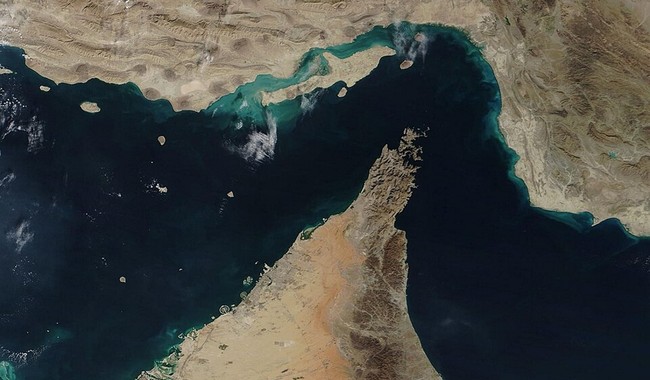
The piece examines recent maritime traffic through the Strait of Hormuz, showing a sharp rise in ships using a U.S.-backed southern corridor and turning off tracking systems to avoid Iran’s insisted northern route, and argues that this shift weakens Tehran’s leverage while bolstering global oil flows.
Since May, U.S. support has quietly helped vessels move through the Strait of Hormuz without following the route Iran demands. Vessels have increasingly chosen a southern channel near Oman that Iran does not approve. That behavior signals a practical challenge to Iranian control over a choke point it has long tried to dominate.
Official monitoring shows a dramatic change in traffic volume in recent weeks, with the number of vessels rising from just a few dozen to nearly two hundred. Operators have been hugging the Omani coast and switching off transponders, the tactics aimed at avoiding potential interdiction or extortion. These choices are about risk management and commercial survival, not a declaration of war.
Nearly 200 ships navigated the strait last week, up from 150 the previous week and just 40 two weeks earlier, according to data from the UK Maritime Trade Operations Center. [….]
More than 80% of liquid cargoes transiting the Strait of Hormuz over the past two weeks have either taken the Omani route — a US-backed, UN International Maritime Organization-authorized channel Iran rejects — or gone “dark,” likely slipping through the same corridor, according to maritime intelligence firm Kpler.
“It increasingly looks like Iran has at least partially lost control of the strait,” Homayoun Falakshahi, head of crude oil analysis at Kpler, told CNN this week.
The practical outcome is that Iran’s ability to impose a toll or to dictate which lanes ships must use has been undercut. By moving south and going dark, commercial operators reduce their exposure to Iranian demands and the risks of escalation. That is a straightforward, market-driven response to political pressure.
About half of the recent transits were oil tankers, with the remainder carrying dry cargo, which matters for prices and supply chains. Increased throughput through the southern corridor helps stabilize oil availability, which tends to ease upward pressure on fuel prices. For countries worried about supply disruptions, this is a welcome development.
Iran’s insistence on the northern route appears increasingly symbolic rather than effective as a control mechanism. When the majority of liquid cargoes deliberately avoid the prescribed path, the practical benefit of claiming jurisdiction over the strait diminishes. Control without compliance is little more than a public relations talking point.
Turning off Automatic Identification Systems and following coastal approaches complicates tracking, but it also reflects a calculated decision by operators to prioritize cargo delivery over regulatory niceties. That behavior shifts the balance in the strait from coercion to commerce. If states are unable to coerce compliance, their geopolitical leverage erodes.
Beyond the immediate logistics, there’s a broader strategic takeaway: when free nations and commercial actors coordinate—directly or indirectly—the intended effects of coercive diplomacy can be neutralized. The southern channel has become a de facto alternative route that diminishes Iran’s capacity to influence global markets through threats. That outcome changes the political equation in Tehran and in capitals watching this standoff.
For Iran, the implications are more than tactical embarrassment; they have economic and political consequences. A country that cannot reliably enforce its claims over a key maritime corridor will find its negotiating position weakened. Under those conditions, any hope of extracting revenue or concessions via naval pressure fades.
From a Republican viewpoint, the lesson is unambiguous: firm support for open sea lanes and deterrence measures that protect commercial navigation work. When the United States and partners back lawful alternatives and protect merchant freedom of movement, aggressive actors lose the leverage they seek. That outcome strengthens markets and American-aligned interests in the region.
Meanwhile, shippers and traders are doing what they always do in a tense environment: adapt. They shift routes, accept operational compromises, and keep goods moving. That pragmatic response preserves commerce and chips away at attempts to weaponize geography. In the Strait of Hormuz today, commercial resolve is proving itself as consequential as any naval presence.



Add comment