
Rand Paul Managed to Silence Fauci, While Underscoring the Egregious Lies Fauci Spouted
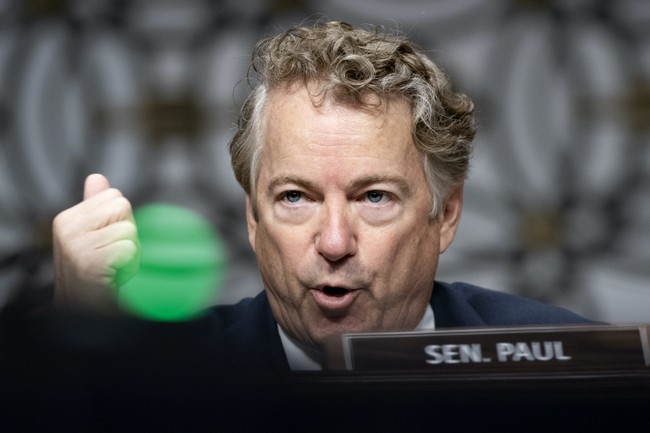
The Senate hearing with Dr. Anthony Fauci unfolded exactly as many expected: he asserted his right against self-incrimination, Democrats defended him, and Republicans used the record to expose contradictions tied to the Wuhan lab, gain-of-function work, and policy choices that cost lives and livelihoods. Senator Rand Paul led a focused opening that connected diary entries, internal messages, and testimony to a pattern of influence and misdirection. The exchange showed not just a man trying to avoid answering questions, but a broader problem of unchecked authority presented as unquestionable science. What happened in that hearing matters for public trust and future oversight.
The hearing opened with Senator Paul laying out the central claims: Fauci’s role in promoting research tied to the Wuhan Institute of Virology, denials before Congress about that link, and the influence those denials had over sweeping lockdown policies. Paul stressed how Fauci’s recommendations were treated as mandates by public officials and institutions, sometimes with devastating effects on education, small business, and healthcare access. The release of Fauci’s diary entries added fuel to the fire by showing private remarks that conflicted with public statements. Those entries were written on government systems, meaning they belong to the public record despite attempts to destroy or conceal them.
Paul’s case is procedural and political at once, pointing to influence and accountability rather than mere spectacle. He argued that Fauci framed policy choices as scientific decrees rather than debatable judgments, and that framing drove officials to act in ways they might not have otherwise. The consequences, Paul said, were real and measurable: children missed school, people delayed medical care, and businesses closed forever. That argument undergirded a broader claim that the pandemic response was shaped by a few influential voices, with Fauci near the center.
Sen. Paul said:
“But officials across the country invoked your authority to justify these decisions. And you presented your recommendations not as judgments open to debate, but as dictates of science itself. Your own words demonstrate that you understood the influence you exercised.
“On March 14, 2020, you wrote that the task force recommendations were driven by me, yourself, Deb, and CDC. The next day you wrote that you had convinced Mayor Bill de Blasio to close the New York city schools, so you were involved. That same night, Governor Gavin Newsom’s Chief of Staff told you that the governor had decided to close California’s schools, bars, and restaurants after watching you on television. Presidents, governors, mayors, school boards, corporations, and Congress all bear responsibility for the decisions they made. The COVID lockdown, however, could never have been inflicted without you aiding and abetting the crime.
“Children lost education, small businesses built over a lifetime disappeared. Patients delayed cancer screenings and other medical care. Families were separated from dying relatives. Workers were ordered to accept a medical procedure or lose their jobs. Worship assembly, employment, education, and travel were restricted in the name of science. While you did not impose every restriction, you used your authority to justify them.”
There were video moments and testimony meant to underline those claims, and the hearing included several embeds of testimony and highlights. Those clips show Paul methodically tracing statements and documents to expose gaps between Fauci’s public reassurances and the internal reality. The concern was not only whether funding reached risky research, but whether oversight and transparency failed at key moments. Republicans pressed the idea that semantics could not erase the practical risks these projects created.
WATCH:
The Wuhan lab question dominated much of the Republican questioning and testimony, with lawmakers recounting how communities and constituents suffered during the pandemic. Fauci had publicly dismissed the lab-leak hypothesis and denied funding gain-of-function, yet documents and private messages have suggested otherwise. Paul highlighted those discrepancies to argue that the public was misled and that oversight mechanisms either failed or were circumvented. The tone was grave because the stakes involved public health policy, national security, and taxpayer dollars.
https://x.com/townhallcom/status/2082446681111433542
Paul said, “It made your categorical, public denials indefensible.”
WATCH:
Sen. Rand Paul details one of MANY lies Anthony Fauci told the public:
On May 11, 2021, you told the Senate the NIH has “never, ever, and does not now fund gain-of-function research” in Wuhan at the Wuhan Institute of Virology. When I gave you the opportunity to correct the record to reconsider the statement, you responded that you had never before lied to Congress.
We were then told that only the government’s narrowest regulation of definition counted here. That you could define gain-of-function in one way in which this was not gain-of-function, in which all of the common sense of the world be thrown out all of the idea that the mice were dying, and the virus was more transmissible, didn’t matter because you had a technical definition that allowed you to fund it.
But the real question is, was it dangerous? Was it a wise decision to fund this? And you haven’t deviated from that. You’ve never admitted that it could have been a mistake, funding this research in China.
The American people weren’t asking for a semantics debate over what is gain-of-function, they were asking, does common sense say this research was dangerous in Wuhan? They wanted to know whether their money funded experiments in Wuhan that made bad coronaviruses better able to infect humans. The answer is, “Yes!” They wanted to know whether NIAID adequately supervised their work. The answer is, “No!”
Much of the hearing focused on personal stories and consequences to underscore that this is more than an academic dispute. Committee members described constituents who struggled with lost wages, delayed medical care, and emotional trauma from family separation during lockdowns. Those accounts were used to justify a public record that cannot be erased by a single official’s invocation of privilege. The point was accountability: documenting what happened so future leaders cannot repeat the same errors in secrecy.
Constitutional attorney Jonathan Turley provided commentary during the hearing that echoed the central Republican argument: Fauci’s public words and private messages do not align. Turley noted the pattern of media and institutional silence toward dissenting scientists, and how that contributed to a false consensus. His live thread argued that Paul was methodically exposing contradictions and building a record for oversight and possible accountability.
Sen Rand Paul is systematically laying out the case of Fauci’s record of contradictions and duplicity. I previously noted that what was most disturbing about Fauci’s record was his silence as the media and academic groups attacked scientists who raised doubts about the origin theories and COVID measures. They were fired or removed from positions despite being later vindicated. Fauci, who was clearly obsessed with his own fame, said nothing to defend such dissenters…
Turley also :
…The new evidence shows a striking disconnect between what Fauci was saying publicly and what he was saying privately, including in his own diary entries. It also shows a disturbing level of coordination with media figures in maintaining the public narrative…
Paul closed by warning that secrecy, arrogance, censorship, and refusal to admit error destroy trust, and he suggested that loss of trust might be Fauci’s most damaging legacy. The hearing was an asserted step toward a broader reckoning about expertise, influence, and the public’s right to know. Whether that leads to legal consequences or institutional reforms, the public record is now harder to dismiss and easier to scrutinize.


Add comment