
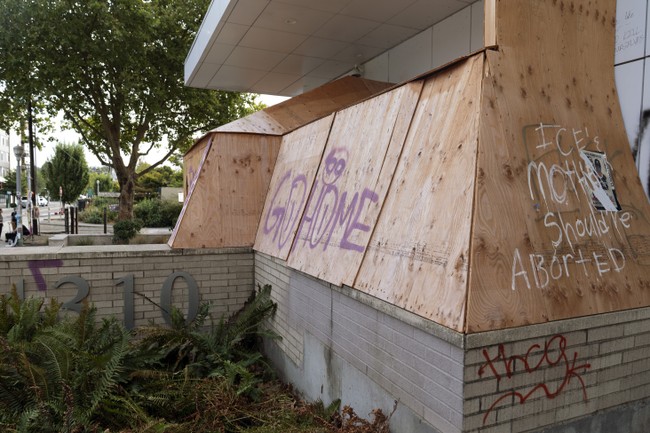
The Portland Police Bureau finally moved against the anti-ICE encampment near the federal facility, triggering confrontations and a new posture from law enforcement that could change how protests are handled in the city.
The Trump administration and local conservatives pressed for action after repeated disruptions at the ICE site drew national attention. For weeks, protesters occupied sidewalks and supply tents, using tactics like “beaming spotlights” into the eyes of federal agents and creating persistent public disturbances. Pressure built through court battles over the Oregon National Guard and public criticism of the Portland Police Bureau’s earlier responses. That pressure appears to have produced a police sweep of supply tents and an announcement of stricter enforcement.
Police actions included clearing one supply tent and telling protesters they could no longer block the sidewalk, and officers cited ordinances on jaywalking and disorderly conduct. Voices supportive of law enforcement responded at the scene with chants of “USA, USA” as officers moved in. Conservative observers and some local reporters noted the PPB took at least one person in black bloc into custody during the operation. The police said they would now enforce traffic and sidewalk rules more aggressively to prevent obstruction and safety hazards.
Those on scene reacted angrily to the enforcement changes, with some protesters melting down as officials warned that blocking traffic could be treated as a disorderly persons offense. The crowd’s frustration was visible as officers made clear that normal public-right-of-way rules would be applied. A few protesters pleaded with officers to help move belongings so they could leave, showing the chaotic mix of defiance and disorder at the encampment. The increased willingness to cite and arrest for ordinances signals a shift from permissiveness toward active crowd management.
Warning for graphic language in the following videos:
Local reporting also flagged incidents involving journalists and alleged assaults, including the case Brandi Kruse described where she says she was hit by someone in the anti-ICE crowd. That incident—along with repeated harassment of federal personnel—helped justify tougher action in the eyes of many officials. The decision to enforce municipal code aimed at jaywalking and blocking sidewalks gives police a more straightforward legal basis to break up groups that impede public movement. For conservatives and residents fed up with lawlessness, it’s a welcome change of course.
The scene included visible disorder: tents, fires, and people occupying walkways in ways that disrupted normal commerce and public access. One protester asked the police for physical help moving items to leave the area, underscoring how the occupation created its own logistical problems. Police said they would not tolerate sidewalk blockage or actions that create safety hazards for the public and emergency services. That stance seems designed to deter future encampments and restore basic civic order.
Frontlines and other on-the-ground outlets reported that enforcement would extend beyond mere warnings, with jaywalking and blocking traffic subject to criminal charges if necessary. Portlanders and business owners voiced relief at seeing police take steps to protect sidewalks and streets used by everyone. Critics of previous PPB inaction say this response was overdue and long needed to stop targeted harassment of federal agents and everyday citizens. The message from authorities is now clearer: public spaces are for the public, not permanent protest camps that obstruct and intimidate.
The Post Millennial’s coverage noted the arrest of an individual associated with black bloc tactics, raising concerns about more organized anti-government behavior at the encampment. Police now appear prepared to use misdemeanor statutes as a practical enforcement tool to dismantle disruptive occupations. That approach avoids the legal morass of broader political fights while addressing concrete violations of law and order. For conservative voices, it represents a pragmatic way to restore normalcy without overreaching into constitutional disputes about protest rights.
Despite the sweep and the stricter posture, protesters remain present and vocal in the area, though with fewer freedoms to create a continuous obstruction. The PPB’s new enforcement strategy may lead to more dispersals and citations, and it puts protesters on notice that occupying sidewalks and blocking traffic will not be tolerated. This development could be the turning point in how Portland treats sustained anti-ICE demonstrations and similar encampments. Watch how enforcement unfolds, because a more assertive police posture is likely to change the dynamics on the ground.
Editor’s Note: The Schumer Shutdown is here. Rather than put the American people first, Chuck Schumer and the radical Democrats forced a government shutdown for healthcare for illegals. They own this.



Add comment