
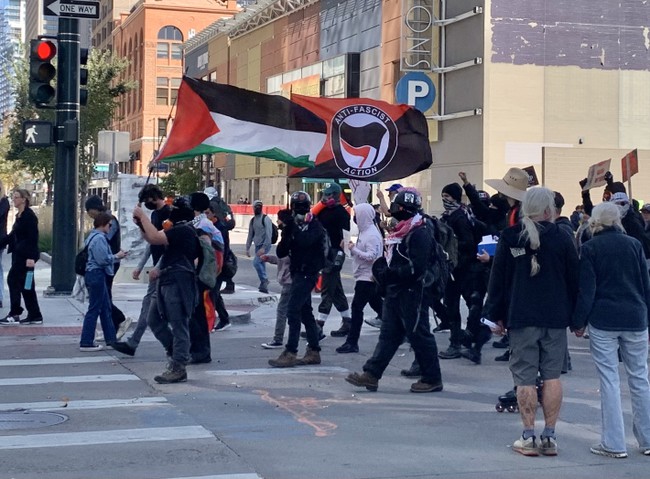
This article reports on a federal jury’s convictions of nine people tied to an Antifa cell in North Texas for a coordinated July Fourth attack on the Prairieland ICE Detention Facility in Alvarado, detailing the charges, key guilty verdicts, official reactions, and potential sentences.
A federal jury found nine members of an Antifa-affiliated group guilty for their roles in a violent ambush on the Prairieland ICE Detention Facility in Alvarado. The attack involved fireworks used as weapons, property damage, gunfire, and an officer wounded during the chaos. Authorities treated the incident as a coordinated, terrorism-related assault on law enforcement and federal property.
All nine defendants were convicted on multiple counts, and eight—including Benjamin Song—were found guilty of providing material support to terrorists, rioting, conspiring to use and carry explosives, and using explosives. Song was additionally convicted of attempted murder after opening fire on Alvarado Police Lt. Thomas Gross, wounding the officer in the neck. The convictions represent a notable application of federal terrorism statutes to individuals aligned with Antifa activity.
The jury’s verdicts sent a clear message that coordinated violent action against federal facilities and officers will be pursued as terrorism when evidence supports it. Prosecutors argued the defendants operated as a network that planned and executed an attack, not as disconnected protesters. Those arguments convinced jurors to return multiple guilty findings across serious federal counts.
For conservatives who have long warned Antifa is more than rhetoric, the verdicts confirm what they argued: violent organized activity targeting law enforcement and government facilities demands a strong legal response. Officials emphasized that networks promoting or aiding such groups will face federal tools designed to dismantle violent operations. That view framed public statements following the verdicts as more than political spin.
Patel touted the convictions and warned that any network promoting, aiding, or abetting Antifa will be pursued. “The guilty verdicts in today’s case go to show this FBI’s 24/7 commitment to identifying, locating, and dismantling ANTIFA members and their networks,” he told Fox News Digital. “If you attack federal law enforcement, this FBI will use every resource at our disposal to hunt you down.”
Attorney General Pam Bondi praised the jury’s decision and predicted additional prosecutions tied to similar activity. “Antifa is a domestic terrorist organization that has been allowed to flourish in Democrat-led cities — not under President Trump,” she said. “Today’s verdict on terrorism charges will not be the last as the Trump administration systematically dismantles Antifa and finally halts their violence on America’s streets.”
President Trump previously issued an executive order in September designating Antifa as a domestic terrorist organization and establishing a framework for federal disruption and prosecution. The administration also released a fact sheet that described Antifa as a militarist, anarchist enterprise using illegal means, including violence and terrorism, to achieve its goals. Those policy moves set expectations that coordinated violent actors would be treated as domestic terrorists when appropriate.
The executive order states that the federal government should investigate, disrupt, and dismantle illegal operations conducted by Antifa or those claiming to act on its behalf. It also directs inquiries into funding sources supporting those operations, signaling a whole-of-government approach to countering organized violence. That strategy aligns legal tools with investigatory and financial disruption measures.
Biden, in a 2020 presidential debate, declared Antifa “is an idea, not an organization, not militias.” Trump responded at the time, “Well, ideas don’t assault cops, and they don’t burn down buildings. Antifa is a domestic terrorist organization.” These competing lines remain part of the national debate over how to define and respond to politically motivated violence.
Sentencing exposure for the convicted defendants is steep. Song faces a minimum of 20 years and a maximum of life in prison for his convictions, including attempted murder. Another defendant, Daniel Rolando Sanchez-Estrada, faces up to 40 years, while the remaining seven defendants face federal sentences ranging from 10 to 60 years each, depending on their specific convictions and roles.
The verdicts will likely shape how prosecutors approach future cases involving coordinated violent protests and attacks on federal targets. Federal law now has another precedent for applying terrorism statutes to domestic groups accused of orchestrating violent campaigns. For those watching legal and policy outcomes, these convictions reinforce the federal government’s capacity and willingness to treat organized violent action as terrorism.
Public reactions predictably split along political lines, but the legal outcomes rest on the evidence jurors heard and the charges brought by prosecutors. The convictions mark a significant moment in how domestic political violence is prosecuted and how federal authorities prioritize dismantling violent networks that target law enforcement and government facilities.



Add comment