
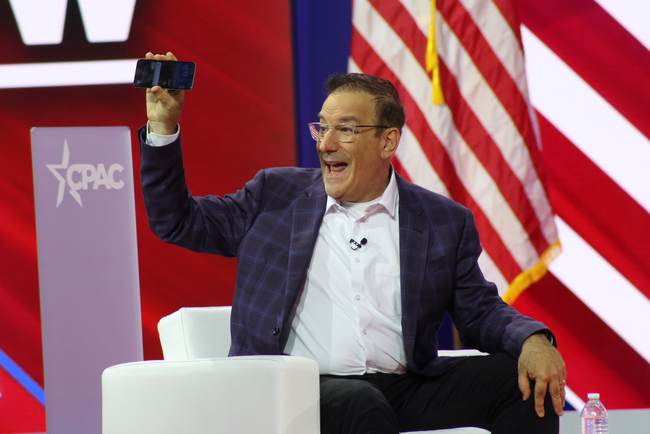
At CPAC 2026, a lively panel called “The President Will Sue You Now” highlighted how conservative voices are using new media to bypass legacy outlets, hold them accountable in court, and build direct relationships with voters. Panelists Larry O’Connor, ALX, and Xaviaer DuRousseau discussed the practical and psychological reasons old media lost its monopoly and why authentic, unfiltered conversations now win the day. They argued that courts, podcasts, X Spaces, and platform-based interaction have reshaped political communications and empowered citizen journalism. This conversation showed how Republicans can meet audiences where they are and win hearts and minds without begging for legacy media approval.
CPAC Day 2 opened with Townhall Managing Editor Larry O’Connor framing the conversation about how President Trump used the courts and new media to push back on false narratives. Larry put the issue plainly: legacy outlets lied and are now facing consequences for that behavior. He pointed to legal wins as a turning point in media accountability and set the tone for a panel focused on strategy and impact.
First, guys, the title of the panel, which is kind of funny: “The President Will Sue You Now,” that’s because the media lied about Donald Trump. We know that, right? But Donald Trump did something that no other politician has done. He sued ABC News and George Stephanopoulos and won a settlement.
He sued CBS News and “60 Minutes,” and won a settlement. And he’s now threatening like a billion-dollar lawsuit against the BBC, and we’ll see how that goes.
ALX and Xaviaer joined Larry to explain how direct media and platform-native tactics changed political outreach forever. ALX emphasized that Trump’s early mastery of social media and his willingness to sue dishonest outlets combined to strip legacy news of the final-word privilege. That mix of legal action and platform savvy, ALX argued, created a playbook for conservatives to expose errors and spread their message efficiently.
And part of the reason why all those Gen Z or young people in your lives are no longer getting the news from George Stephanopoulos, or Jake Tapper — not that they were ever getting news from them in the first place. But the reason why they don’t go to cable news or broadcast news anymore is pretty much because of these guys and what they’ve been able to do. And we’re going to spend some time exploring that.
When Larry asked ALX about the importance of Trump leading by example, ALX described how social media virality and courtroom victories intersect. He referenced the BBC controversy over January 6 as a clear example of legacy outlets manufacturing narratives and the value of legal remedies. ALX also stressed that new media doesn’t just amplify messages — it changes the rules of accountability.
Yeah, one of the biggest things about Donald Trump is, despite being one of our oldest presidents, he is very social media savvy. So, if you remember back in 2016 and even before, 2015, he went viral all the time for his tweets. And he’s well-known for his tweets. So taking that same energy to holding the media accountable, not only calling them out online, but then taking them to court and winning. Like, one of the best examples, is one that you’ve mentioned, the BBC. They lied about January 6. They said that, he said,”oh, they’re going to the Capitol” or whatever, and they spliced together something that he never even said, and they cut out, like the “peacefully and patriotically,” and everything, and I think they spliced in, something like, “fight” or something like that. And it was completely BS.
https://x.com/prageru/status/2037713283159875873?s=20
Xaviaer DuRousseau told a compelling conversion story that underlines the PragerU model’s effectiveness: a former leftist activist who dismantled his own assumptions and now fights propaganda. He credited Dennis Prager and the platform’s educational method for turning skeptics into advocates. The crowd response at CPAC made clear that personal journeys from left to right resonate deeply with attendees and with younger audiences generally.
Yes, you know, Dennis Prager is a huge hero to me. And, you know, he’s really the OG of knowing that the media is going to lie to us, and trying and doing everything that he could to get the truth out there. And now with PragerU, we’re continuing his legacy. And, you know, shout out to the CEO of PragerU, Marissa Streit. She’s always saying that education is how we got in this mess. So, education is how we are going to get out of this mess. And my entire story is a testament and proof that the PragerU system works. I’m so embarrassed to say this…
The panel also dug into why podcasts and influencer interviews helped Trump beat not only political opponents but also narrative control. ALX noted that skipping traditional debate theater for X Spaces and long-form conversations allowed Trump to speak directly and unfiltered. That authenticity, panelists argued, is what hooks Gen Z — not slick polished appearances but messy, human conversations that feel real and relatable.
I really need people to understand the psychology that went into the success [of] President Trump’s podcast tour. Because, yes, the virality, and the views, and the clicks, were very important, but that really wasn’t what it was that won over Gen Z.
If you are comparing Gen Z to prior generations, and walk with me through this analogy: Before Gen Z had influencers, prior generations had socialites. For example, if you’re of a particular age, you might remember, Zsa Zsa Gabor, all the way to the Millennials who had Paris Hilton or Kim Kardashian. They were unrelatable, unattainable, they were always showcased with a flawless presentation, just like the politicians of that era. They were always over-the-top polished. They had to be perfect. They had the perfect, predetermined talking points, and they had to stick to that script because they had to be flawless. Then you compare that to nowadays, where Gen Z and young people, we reject that, because we know that it’s artificial. We want to see people be as real and authentic as possible. If you look at the type of influencers that gain notoriety now, it’s because, oh, we like watching your morning coffee routine and your “Get Ready with Me”‘s. We like to see you yap for 10 minutes about some niche personal experience in your life, because it feels real. And when you look at someone like President Trump and he goes on these podcasts, what we’re able to see is that, oh, wow, he’s that authentic, that he can spend two hours elaborating on the principles and the values that he stands for.
You compare that to Kamala Harris, “Kamala Jong Un,” as I like to call her. If she doesn’t have her script in front of her, she’s a babbling idiot because she is soaking in artificial mediocrity.
Panelists also highlighted the rise of citizen journalism and rapid-response feedback loops as tools conservatives use to force legacy outlets to pay attention. ALX pointed to examples where local investigators exposed fraud and national outlets had to follow. The takeaway: real-time engagement, court action, and unfiltered platforms are now essential components of conservative media strategy.
Finally, the panel connected these media shifts to current policy fights, noting that senators and activists are using X Spaces and other platforms to mobilize support for legislation like the SAVE America Act. That practical use of new media ties messaging directly to votes and accountability, making the conversation more than theory and turning platforms into political power instruments.



Add comment