
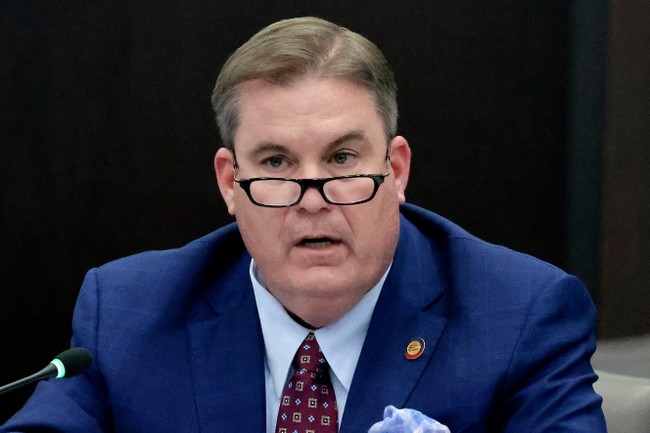
The North Carolina hearing turned into a blunt confrontation over parental rights, with GOP leaders publicly confronting Chapel Hill‑Carrboro school officials for apparent defiance of the 2023 parental rights law; House Majority Leader Brenden Jones produced books, video clips, and pointed questions to show what he called deliberate resistance to state law and parents’ expectations.
Republican lawmakers framed the hearing as a fight for basic accountability in education, arguing that school leaders who promote age-inappropriate materials and ignore clear statute obligations must face consequences. The exchanges were energetic and pointed, and at times featured dramatic moments meant to make a principle simple: parents deserve to know what their children encounter in school. That message animated the hearing and the public reaction that followed.
Jones did not mince words as he addressed district officials, calling their actions a choice to break with the law and to mislead the community. He repeatedly emphasized that the legislature passed clear requirements to protect young students and to keep parents informed about sensitive matters like pronoun policies. His remarks turned on the claim that some district leaders had chosen defiance instead of compliance.
“You’re here today because you chose to wage war against the law,” Jones said. “You chose to deceive the public, and now you’re here because you got caught.”
“This wasn’t passive resistance,” he added. “It was a coordinated middle finger to this legislature and every parent in your district.”
As part of his presentation Jones physically displayed several books and held them up for the committee, calling out titles he said were promoted by the district to younger students. He named “Santa’s Husband” specifically, describing how the book presents “the true story of Mr. and Mr. Claus” and features “a Black Santa, his White husband and their life at the North Pole.” Jones said the district had marketed that material as a top pick for elementary students, which inflamed the hearing.
There was video evidence and public-record material aired during the session, and members pressed district leaders on prior statements and meeting footage. School Board Chairman George Griffin repeatedly denied an intent to violate state law, but lawmakers played clips they said undercut that defense. The back‑and‑forth highlighted a deeper dispute about intent versus interpretation of the statute.
Watch as Jones reads off some of the books during the hearing, and throws them behind him as he goes to the next one (content warning):
Jones also shared selections on social platforms to accompany his public testimony, turning the hearing into both an official inquiry and a wider communications moment for concerned parents. The visual element of books being displayed and set aside was intended to crystallize the lawmakers’ argument for viewers beyond the hearing room. That tactic aimed to translate legislative concern into a plain, emotional appeal to families.
Griffin faced particular heat when lawmakers played a clip of him saying the board intended to resist certain parts of the law, and he argued at the hearing that the district had acted in good faith. Guitaring evidence into the hearing record, Republicans sought to show that words in meetings did not match the board’s public claims of compliance. The discrepancy became central to the argument for oversight.
As are other officials:
Superintendent Rodney Trice was questioned about compliance claims and the district’s financial reliance on state funding when lawmakers pressed for accountability. Rep. Jeff McNeely bluntly asked whether the district treated the law as optional, underscoring the legislative view that statutes are not suggestions. Fiscal dependence, lawmakers argued, complicates any claim that the district can ignore legislative requirements without consequence.
“That evening [during a January 2024 meeting], we enacted seven parts of the bill—all the parts—except for putting in policy the one clause on pronouns,” Griffin said. “It was our understanding that the board should direct staff to develop written guidance for that issue, and that is what we did. ‘In our judgment, that is in complete compliance with the law, and that’s where we left things at the end of the night.”
Rep. Jeff McNeely (R-Iredell) asked, “So you thought the law that we gave you was multiple choice? You could kind of choose what you liked?” he asked.
McNeely also questioned Trice about the district’s finances and reliance on state funding. “So y’all don’t have the money to be able to educate these kids with your own money, you’re going to need some help, aren’t you?”
Republicans framed the hearing as part of a larger effort to protect children from what they see as ideological overreach and to restore parental authority in education. Jones closed by warning that the General Assembly would use all available legal tools to enforce the law and to make sure schools comply. That promise set the stage for possible follow-up measures from the legislature.
While immediate penalties were not finalized during the session, the hearing clearly signaled a tougher posture from state Republicans toward districts that stray from statute text. For conservative voters and officials who back the parental rights law, the hearing was a test of whether lawmakers will translate rhetoric into enforcement. The exchanges will likely influence both local school policy debates and the broader state political conversation going forward.



I just came across this amazing way to earn $6,000-$8,000 a m0nth 0nline! No selling, no struggle—just a simple system that anyone can follow. Kelly Richards did it, and so can you! Don’t miss out on this life-changing 0pportunity.
Here is I started_______ EarnApp1.Com