
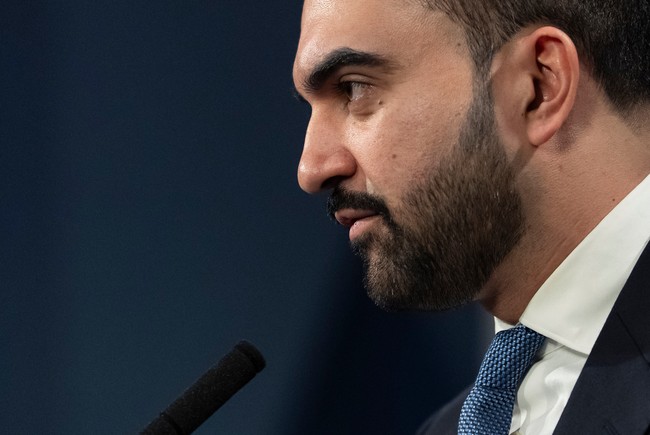
The piece critiques New York City Mayor Zohran Mamdani for repeatedly steering unrelated public events toward the Israel-Hamas conflict, highlighting a St. Patrick’s Day appearance where he invoked the word “genocide” and praised Mary Robinson, prompting strong backlash from Jewish leaders, conservative politicians, and local residents who saw the remarks as inappropriate and divisive for a holiday event.
Zohran Mamdani has become known for using public occasions to spotlight the Palestinian cause, and critics say he does so to the exclusion of context and nuance. Observers note a pattern where any event, even those with clear cultural or local significance, gets redirected into commentary about Israel and Gaza. This tactic frustrates many residents who expect local leaders to prioritize municipal concerns over international rhetoric.
Earlier in March his initial response to a violent incident outside Gracie Mansion drew sharp scrutiny because his first comments framed the episode as an instance of Islamophobia. That response came after two teens reportedly inspired by ISIS threw IEDs at a protest, yet his focus shifted to condemning anti-Muslim bigotry instead of centering the attempted attack. Those remarks left critics arguing he was minimizing a violent act while indulging in political messaging.
On St. Patrick’s Day, Mamdani hosted Ireland’s former president Mary Robinson at Gracie Mansion and used the moment to compare Irish suffering to what he called “genocide” in Palestine. He said, “I say this as over the past few years, as we’ve witnessed a genocide unfold before our eyes, there has been deafening silence from so many.” He praised Robinson for allegedly never being silent on Palestinian human rights, which prompted immediate pushback from holiday-goers and community leaders.
The timing and venue mattered to critics who felt a cultural celebration was the wrong place for a charged international accusation. Many asked, “what does any of this have to do with St. Patrick’s Day?”—a reasonable question given that the event is traditionally about Irish heritage and local camaraderie. Turning a municipal celebration into a platform for geopolitical condemnation struck many as tone-deaf and politically opportunistic.
Reaction was swift from both local and national figures. “70% of New York Jews didn’t vote for Zohran Mamdani. Now the rest of the city is living with a mayor who turns every holiday into a platform for attacking the Jewish state in the city with the largest Jewish community outside Israel,” Samantha Ettus observed, pointing to deep unease among Jewish New Yorkers. Other commentators went further, calling the decision to equate the situation in Gaza with genocide at a civic event an antisemitic attack.
Religious leaders weighed in as well, with Rabbi Elchanan Poupko condemning the rhetoric and demanding accountability. He wrote that “Resistance” is the same word he and his friends use for the monstrous baby kidnappers and baby killers of Gaza who carried out the atrocities of October 7th, adding that Mamdani owes an apology to both the Irish and Jewish community of New York. Those words intensified the controversy and framed the mayor’s remarks as not only misplaced but harmful to communal relations.
Sen. Rick Scott went public with a blistering critique, saying, “Leave it to the New York City mayor to turn St. Patrick’s Day into an antisemitic attack.” Such comments underline how a mayor’s words can resonate well beyond the parade route and affect perceptions of the city nationally. For critics who prioritize public safety and neighborhood cohesion, this episode reinforced worries about leadership priorities in New York.
Local residents and leaders expressed concern that constant internationalizing of local events distracts from pressing municipal problems. Issues like public safety, homelessness, transit, and education require steady attention from city leadership, not repeated detours into polarizing foreign policy statements. The pattern is maddening to those who want their mayor to focus on running the city effectively rather than courting controversy.
There is a broader political angle to consider: opponents see Mamdani’s approach as symptomatic of a leftward shift in city governance that favors ideology over practical administration. The mayor’s defenders might call this principled advocacy, but many ordinary New Yorkers just want practical solutions and civic harmony. Using city platforms to amplify divisive international rhetoric, critics argue, undermines both.
Whatever one’s view of the Israel-Hamas conflict, the controversy over the St. Patrick’s Day remarks highlights how local leadership decisions about tone and venue can inflame community tensions. For now, calls for apologies and clearer priorities are coming from a range of voices in the city who say holidays should celebrate community, not spotlight polarizing foreign disputes.
Watch:
Needless to say, his remarks did not go over well.
“70% of New York Jews didn’t vote for Zohran Mamdani. Now the rest of the city is living with a mayor who turns every holiday into a platform for attacking the Jewish state in the city with the largest Jewish community outside Israel,” author/Substacker Samantha Ettus pointed out.
“New Yorkers are left wondering—what does any of this have to do with St. Patrick’s Day?” another X user wondered:
Rabbi Elchanan Poupko was also not amused:
“Resistance” is the same word he and his friends use for the monstrous baby kidnappers and baby killers of Gaza who carried out the atrocities of October 7th.
Mamdani owes [an apology] to both the Irish and Jewish community of New York.



Add comment