
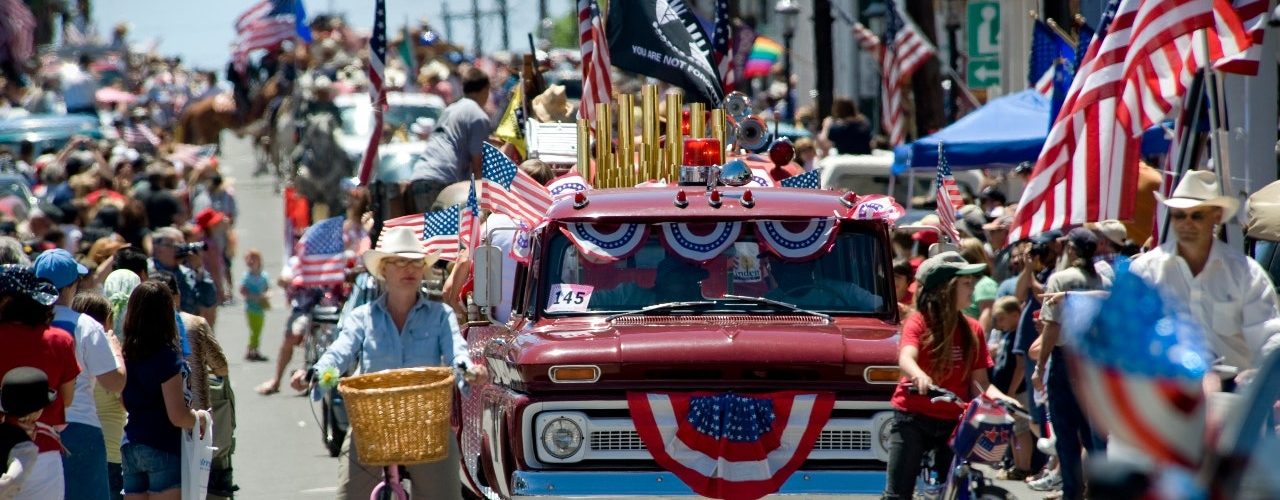
Authorities across the nation are gearing up for potential threats during the upcoming Fourth of July celebrations. These preparations come amid rising tensions between the United States and the Middle East, highlighted by recent military actions. On June 22, the U.S. military conducted airstrikes on three significant nuclear sites in Iran, as confirmed by Trump administration officials.
The Department of Homeland Security (DHS) has responded to these events by elevating the National Threat Advisory System. “Due to the Iran conflict, the Department of Homeland Security has a National Threat Advisory System, and as of June 22, we are at a heightened threat environment,” said Michael Verden of The Lake Forest Group. This alert level is expected to remain until at least September 22, with the possibility of extension depending on developments.
Michael Verden, a former U.S. Secret Service agent, cautions that some Fourth of July events might face increased security measures. He points out that the heightened threat is taken seriously by both local and federal law enforcement. “Because of this heightened threat environment,” he notes, “certain 4th of July activities and travel will see increased security and precautionary measures.”
The DHS bulletin from June 22 warns of Iran’s longstanding threat to target U.S. government officials. This is in response to the killing of an Iranian military leader in January 2020. The bulletin states that the likelihood of violent extremists independently mobilizing in response to the Iran conflict could rise if Iranian leaders call for retaliatory violence.
Recent terrorist attacks on U.S. soil have been driven by anti-Semitic or anti-Israel sentiments. The ongoing Israel-Iran conflict could potentially lead to plots against U.S. targets. Experts have even suggested that college campuses might be vulnerable to Iranian sleeper cells planning attacks.
Reflecting on past events, Verden recalls the tragic mass shooting during a Fourth of July parade in Highland Park, Illinois, in 2022. While not labeled terrorism, the incident drew attention to the vulnerability of open-air events. Verden warns that urban settings and places like subways or waterfronts could also be potential targets.
Public and private events during the holiday will need to coordinate closely with law enforcement. Local agencies will be key in ensuring safety at gatherings. Federal intelligence will also play a role in identifying any emerging threats linked to the holiday.
Verden emphasizes the importance of “access control” at events. This includes verifying credentials, checking bags, and monitoring for suspicious activities. Law enforcement will be on the lookout for any potential threats, from unattended packages to suspicious groups.
High vantage points will also be closely monitored by law enforcement. This follows incidents where shooters have used rooftops to target crowds. Such measures are part of a broader strategy to prevent similar acts of violence.
Event attendees are advised to familiarize themselves with venue layouts. Knowing the setup and having a plan in case of emergencies, like meeting points, is crucial. This is particularly important if communication networks become overloaded during an incident.
Law enforcement is encouraged to adopt a “three-step approach” for emergency preparedness. This includes assessing the space, having a designated incident commander, and training first responders. Such preparation is vital for ensuring public safety during large gatherings.
Verden highlights the symbolic significance of the Fourth of July, which could make it a target for adversaries. “There’s always a little bit of a heightened risk level when it comes to these patriotic [events],” he explains. This underscores the need for vigilance and preparedness.
A recent report by the Institute for Science and International Security assessed the impact of U.S. and Israeli strikes on Iran. The strikes have significantly damaged Iran’s nuclear and missile capabilities. However, remnants of Iran’s nuclear program could still pose a future threat.
The report confirms extensive damage to Iran’s key facilities, including uranium enrichment sites. Despite the damage, residual materials could be used to develop weapon-grade uranium. This remains a concern for both U.S. and Israeli security analysts.
The ongoing situation emphasizes the need for continued vigilance and strategic planning. As the Fourth of July approaches, both authorities and the public are urged to stay informed. Such awareness is vital for maintaining safety during national celebrations.
I get paid over $220 per hour working from home with 2 kids at home. I never thought I would be able to do it but my best friend earns over $35,000 a month doing this and she convinced me to try. it was all true and has totally changed my life… This is what I do, check it out by Visiting Following Link.
🙂 AND GOOD LUCK. 🙂
.
COPY HERE →→ → HighProfit1.Com