
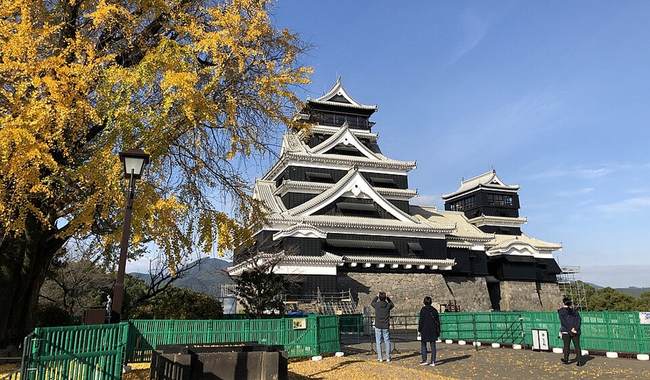
A powerful earthquake struck Kyushu in southwestern Japan on Tuesday afternoon, collapsing part of a shopping mall, damaging historic Kumamoto Castle, and leaving dozens unaccounted for as aftershocks rattled the region and a tsunami advisory was briefly issued then lifted.
The tremor, reported at magnitude 7.1 by some agencies and 6.8 by others, hit at 4:27 PM local time and produced dramatic scenes of shaking across the southern main island of Kyushu. Emergency teams raced to search collapsed structures as local officials scrambled to assess damage and account for residents and workers. Eyewitness videos showed buildings swaying violently and people rushing into streets as power flickered in multiple areas.
https://x.com/NHKWORLD_News/status/2082055301755498626
One of the most alarming reports came from the Aeon Mall in Kashima Town, where the entire second floor collapsed and trapped people beneath rubble. Authorities initially reported that around 20 to 30 employees were missing, while other people were rescued and taken to hospitals for treatment. The uncertainty about how many remained inside the ruined shopping center has made rescue efforts urgent and chaotic.
The second floor of the Aeon Mall shopping center in Kashima Town collapsed, trapping an unknown number of people. Around 20 to 30 employees were missing while several other people were dug out and taken to a hospital, Kyodo News agency reported, quoting local police.
The affected area is about 900 kilometers (540 miles) southwest of Tokyo. A tsunami advisory for the Ariake and Yatsushiro Seas on the western coasts of Kumamoto prefecture and three neighboring prefectures was lifted within two hours, the Japan Meteorological Agency said.
Officials explained that the affected area sits roughly 900 kilometers southwest of Tokyo, a reminder of how widespread the impact felt. A tsunami advisory for the Ariake and Yatsushiro Seas was issued immediately after the quake but authorities lifted that advisory within about two hours after monitoring sea levels. That quick response reduced the immediate risk to coastal communities, but inland damage and structural collapses remained the primary concern.
Early assessment from emergency services suggested no catastrophic failures at the region’s nuclear facilities, a critical relief given Japan’s history with the 2011 disaster. Local reports indicated that the three nuclear plants in the broader area showed no obvious damage in initial inspections. Even so, regulators and plant operators continued close monitoring to ensure reactor safety and public reassurance.
Kumamoto Castle, an iconic structure completed in 1607, suffered partial damage when a stone wall collapsed amid the shaking. The castle has survived centuries of earthquakes and restorations, but this event caused renewed anxiety for preservationists and residents who consider the site a cultural treasure. Damage to historical buildings also complicates recovery, since repairs must balance structural safety and careful historical restoration.
Across the region, aftershocks followed the main temblor and kept people on edge as search-and-rescue teams worked through unstable debris. Local responders and volunteer groups mobilized quickly to support extraction efforts and medical care for the injured. Roads, utility lines, and small bridges sustained varying degrees of damage, which hampered access to some affected neighborhoods and slowed operations.
Images and firsthand accounts from the shaking highlighted how modern engineering held up in many places while older structures fared worse. Observers said it was astonishing that many buildings remained standing given the intense motion, underscoring the strength of Japan’s seismic design and construction standards. Still, collapsed commercial spaces and damaged historical sites make the human toll and recovery needs painfully visible.
Medical facilities in nearby towns reported treating numerous injuries, and ambulances ferried people to hospitals throughout the evening and into the night. Authorities prioritized stabilizing trapped victims and shoring up structures that could collapse further during aftershocks. Local officials asked residents to remain vigilant, avoid unnecessary travel to damaged areas, and follow instructions from emergency services.
The quake has reignited attention on preparedness, building resilience, and emergency training across Japan and beyond. While the nuclear plants in the region appear intact for now, the focus remains on rescuing those trapped, tending to the injured, and restoring essential services. As teams continue search operations, communities and responders face a long stretch of recovery and repair in the quake’s wake.



Add comment