
Irving Berlin’s “God Bless America” began as a World War I–era tune and became a defining American anthem in 1938 when Kate Smith brought a revised version to radio, later appearing in the 1943 film This Is the Army; the song’s history weaves together wartime gratitude, national celebration, controversy over performances, and ongoing debates about how we remember cultural figures.
Holiday music and patriot anthems are part of how Americans mark the nation’s milestones, and few songs have matched the staying power of “God Bless America.” Written by Irving Berlin in 1918, the simple one-verse hymn sat mostly unused until a revised rendition reemerged two decades later and struck a chord with listeners facing a tense world.
November 9, 1938
In [a] remarkable letter, songwriter Irving Berlin writes to fellow composer Harry Ruby on the eve of “God Bless America’s” reintroduction to the world. The timing is chilling as the letter was written on the eve of the Kristallnacht program (Nov. 9–10, 1938) in Nazi Germany. Berlin reveals that Kate Smith will sing it the next night on national radio—reviving a forgotten WWI-era tune that would become a defining American anthem. This letter, written just one day before Smith’s Armistice Day broadcast, captures the quiet beginnings of what would become one of the most patriotic songs in U.S. history.
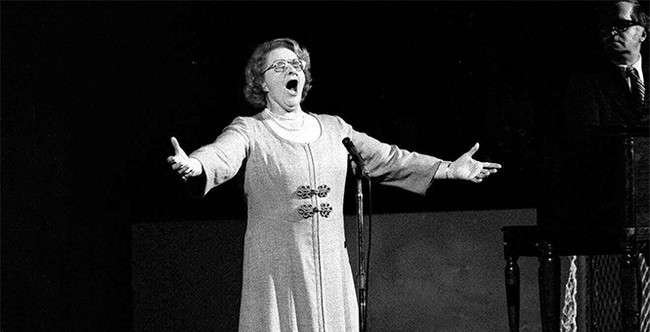
The public reintroduction happened on Armistice Day in 1938, and Kate Smith’s voice carried the song into millions of homes across the nation. Her radio rendition transformed Irving Berlin’s private reflection into something communal, a musical pause that asked Americans to feel gratitude for what the country meant to them as war clouds gathered overseas.
Kate Smith later performed the song in the 1943 Warner Bros. film This Is the Army, where a large orchestra and choir backed her, and the piece took on an even grander, cinematic scale. In the movie clip you can spot not only the spectacle of a wartime production but also the era’s inclination to blend entertainment with national purpose.
This simple one-verse song became an overnight hit, and a hopeful song as war threatened. “It’s not a patriotic song,” composer Irving Berlin said in a 1940 interview, “but an expression of gratitude for what this country has done for its citizens, of what home really means.” Today, many Americans consider “God Bless America” an unofficial national anthem of the United States.
For decades Smith’s recording of the song became a stadium and civic staple, and Americans associated her version with big crowds and public rituals. It showed how a single performance can become a cultural touchstone, stitched into the soundtrack of civic life from ballparks to broadcast events.
https://x.com/curatorWH/status/2072387892413165625
That prominence made Smith and her recording targets when cultural movements began reassessing historical figures and their repertoires. In 2019 her recordings were scrutinized, and teams stopped playing her voice after controversial lines from much older material resurfaced; the decision removed a familiar element from Yankees and Flyers games and sparked a fierce reaction from fans who saw the move as erasure.
Supporters of Smith pushed back, pointing out context and intent for some of the older material, and reminding critics that she had publicly called for racial tolerance in 1945. The debate around her legacy highlighted the tension between judging historical figures by modern standards and preserving a shared cultural memory.
Smith called for racial tolerance in 1945 in an address on CBS Radio, declaring, “Race hatreds, social prejudices, religious bigotry, they are the diseases that eat away the fibers of peace”. She went on to state “it is up to us to tolerate one another in order to achieve peace”.
Even as conversations about monuments and memory continue, the song itself endures on playlists and in people’s hearts, separate from the controversies that swirl around performers. “God Bless America” remains a short, earnest plea tied to gratitude and homeland, and it continues to be sung by crowds who want a moment of communal pride.
Americans keep returning to songs that express what home means, and this tune’s survival through wars, cultural shifts, and debates shows how music can anchor national feeling. Whether played at a ballgame, sung in a choir, or heard on the radio, the melody and words still invite listeners to reflect on the country and what they owe to one another as fellow citizens.


Add comment