
This article explains the Department of Justice lawsuit against Virginia over two recent state laws that limit federal immigration enforcement, outlines the administration’s legal arguments, highlights the named state officials, and places these events in the context of the governor’s broader policy record and recent court setbacks.
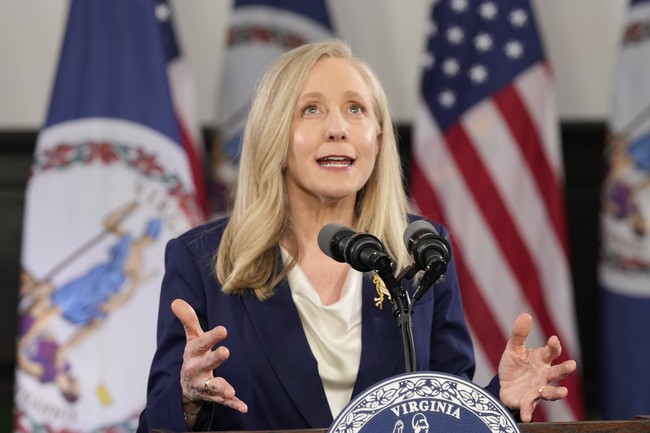
Virginia Governor Abigail Spanberger signed two laws on May 20 that alter how federal law enforcement may operate in the state. One measure restricts law enforcement from wearing facial coverings while on duty and requires visible identifiers, and the other places conditions on federal agency operations inside Virginia. The moves were presented by the governor as a push for transparency and local control.
The Department of Justice has responded by filing suit, telling Virginia state officials that the statutes are unconstitutional and cannot stand. The DOJ argues these state laws overstep and attempt to regulate federal officers, which the federal government says is preempted by the Constitution. This conflict sets up a classic federalism clash over who controls enforcement of immigration laws.
You don’t have a say in this, Abigail:
The lawsuit specifically names Virginia Attorney General Jay Jones and Fairfax County Commonwealth Attorney Steve Descano as defendants in the state-level effort. The complaint asserts that the mask rule and identifier requirement are efforts to dictate “what federal officers may and may not wear” and to expose agents in ways that increase their risks. The DOJ frames the statutes as more than symbolic, calling them real threats to officers’ safety and to federal operations.
https://x.com/TheJusticeDept/status/2065208712109658483
The lawsuit names Virginia Attorney General Jay Jones and left-wing Fairfax County Commonwealth Attorney Steve Descano — who was previously backed by groups connected to George Soros.
The suit claims Virginia’s mask ban is “blatantly unconstitutional” because it attempts to regulate “what federal officers may and may not wear” while carrying out their duties, exposing agents’ identities and increasing risks to them and their families.
Justice Department lawyers say these laws could chill enforcement by penalizing routine protective measures used by agents. Federal filings stress a record of targeted harassment, doxing, and even violence against officers, arguing that criminal penalties for masking would expose employees and their families to danger. The DOJ warns that local criminal exposure of identifying information could undermine sensitive investigations.
These concerns were echoed by D.C. newscaster Scott Thuman, who summarized the DOJ action in blunt terms and listed the challenged provisions. His report outlined the three central disputes: mask bans for federal officers, requirements to display individual identifiers, and local refusals to cooperate on immigration enforcement. The DOJ frames the case as defending the ability of federal agents to operate securely across state lines.
Spanberger’s suit now sits alongside a string of legal and political setbacks she has faced since taking office in January. Courts have pushed back on several of her policy initiatives, including rulings related to background check measures and redistricting that favored other legal interpretations. Critics point to those decisions as evidence her administration has overreached and misread constitutional limits.
On guns, the governor advanced legislation described by opponents as an “assault weapons” ban, and some local prosecutors publicly declined to enforce parts of the new law on Second Amendment grounds. That refusal by prosecutors to implement state policy has become a flashpoint, underscoring tensions between elected statewide leadership and county-level law enforcement priorities. The dispute over immigration enforcement adds another layer to those statewide tensions.
For Republicans and other critics, the DOJ suit is confirmation that state-level efforts to obstruct federal immigration enforcement will trigger a federal legal response. They argue the case is not just about masks or identifiers but about preserving the constitutional boundary that keeps federal law enforcement decisions at the national level. The litigation promises to be a key test of how far states may go in restricting federal agency action without colliding with supremacy clause principles.
As the courts consider the challenge, the dispute between Virginia officials and the federal government will shape how similar state laws are viewed elsewhere. The outcome could either reinforce federal authority over immigration enforcement or embolden additional state-level statutes that limit cooperation with federal agencies. Either way, the case underscores the legal and political stakes of balancing local priorities with national immigration policy.



Add comment