
Checklist: highlight the main stories and their political implications; report key quotes and developments exactly; note actions on Capitol Hill and White House schedule; summarize court developments and upcoming Supreme Court activity; include embedded media tokens where present.
Monday, April 13, 2026. The headlines right now center on a scandal that has blown up for a California politician, mounting tensions around a U.S.-enforced blockade of Iranian ports, and a busy week ahead in Washington with hearings, funding fights, and court news making the rounds. The political fallout is fast, and the Beltway will be watching how both allies and opponents react. Expect a parade of hearings, press statements, and legal filings as the week unfolds.
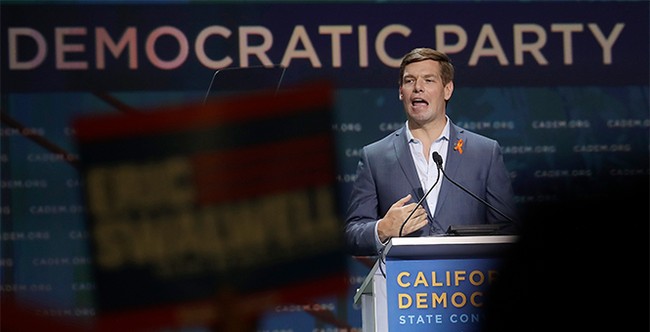
The most immediate shock to the political landscape is the sudden collapse of one campaign amid circulating allegations. “There are of Swalwell’s alleged sexual exploits circulating on social media Sunday night, and it cannot be immediately confirmed whether all of them are legitimate. That being said, it would appear his political career has seen a sudden and utterly brutal demise, and that even his “friends” are jumping ship.” That quote reflects the brutal speed at which public careers can implode when serious allegations surface.
Meanwhile, U.S. naval operations are taking center stage overseas as CENTCOM implements a blockade of Iranian ports in the Arabian Gulf and the Gulf of Oman starting at 10 a.m. Monday. The move is framed as a necessary enforcement action, and it has already prompted heated rhetoric and diplomatic maneuvering. Iran’s response appears aimed at saving face, even as Washington tightens its posture in the region.
President Trump is active on the schedule, and his remarks continue to be a focal point. “I told my people, I want everything. I don’t want 90%, I don’t want 95%. I told them, I want everything. They have no cards,” Trump told Sunday Morning Futures’ Maria Bartiromo. That line underscores the administration’s posture and the uncompromising tone coming from the top as tensions escalate.
Back on domestic turf, conservative outlets and commentators are parsing the politics of the moment, from Second Amendment debates to critiques of media figures and left-leaning pundits. One recurring theme is that exposing weaknesses and inconsistencies in opponents tends to shift narratives quickly, especially when a story combines scandal and policy failures. That dynamic often benefits those who can press an advantage without being distracted by it.
On Capitol Hill this week, hearings will resume in earnest with committees returning and a raft of issues on the docket. The Joint Commission on Security and Cooperation in Europe will take a briefing on Vatican diplomacy amid global instability, and appropriations debates continue over DHS funding alongside various legislative priorities like the SAVE America Act and other bills. The calendar promises long days and sharp exchanges.
The White House schedule is packed, with the President allotting time for executive duties, signing events, policy meetings, and a state dinner with the King and Queen of the Netherlands. Those public appearances are being coordinated alongside more discreet policy work, and the combination of ceremony and governance reflects the administration’s dual focus on diplomacy and domestic action. What happens in those rooms often shapes headlines for days.
Court activity remains important, especially as federal litigation touches high-profile White House projects. The D.C. Circuit extended an administrative stay and remanded a case regarding construction related to the White House ballroom to the district court for clarification in National Trust for Historic Preservation in the U.S. v. National Park Service. Judicial decisions like that one can slow or reshape executive plans and become a focal point for both legal and political debate.
The Supreme Court will resume oral arguments next Monday on remaining 2025 Term cases, and observers are already picking through the docket for consequential rulings. Those decisions have a long tail, affecting policy across regulatory, administrative, and constitutional areas. Expect the usual mix of legal complexity and political signaling as cases progress through the system.
Inevitably, the human element keeps reasserting itself in politics: people make choices, and some of those choices have consequences that extend beyond the individuals involved. Even with smartphones and cameras everywhere, lapses in judgment still happen, and political survival increasingly depends on both damage control and the broader narrative that allies and rivals shape. Don’t be like Eric, the reminder goes, because the public and political cost can be steep.
Light moments are scattered amid the serious coverage, and occasionally a short diversion breaks up the news cycle. Utterly .


Add comment