
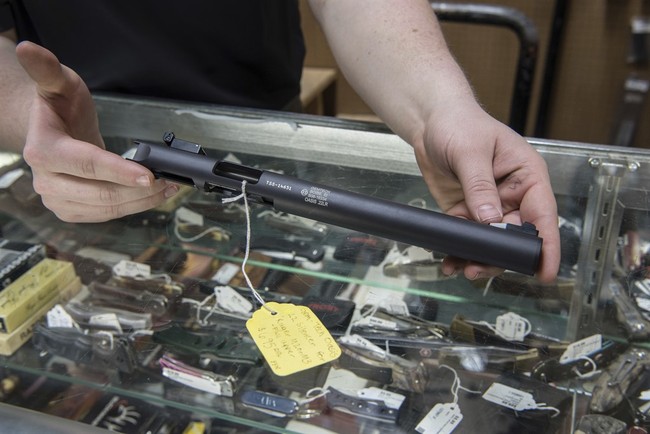
The Department of Justice let a deadline pass, and gun-rights advocates moved fast: at 12:01 a.m., two Gun Owners of America members completed suppressor transfers in Texas without completing the federal National Firearms Act registration steps, a moment their supporters call the first lawful unregistered suppressor transactions since 1934. A federal judge struck down key portions of the NFA after Congress removed the transfer tax that had grounded the law’s recordkeeping and registration regime, and the DOJ opted not to appeal the injunction, creating a narrow window for plaintiffs and their associates to act. The transfers took place at a Leander, Texas store and were recorded on video, with prominent conservative voices present as witnesses. This development is being framed by Republicans and gun-rights groups as a major Second Amendment win and a sign that long-standing federal restrictions are crumbling.
An email that circulated among activists touted a midnight “2A Victory Party” and declared “No Feds Allowed,” reflecting the celebratory tone among those who see the court decision as vindication. The two men who completed the transaction, identified as members of Gun Owners of America, entered Silencer Shop just after midnight Central Time and accepted suppressors without filling out federal forms that had been required for decades. Observers noted that the timing—12:01 a.m.—was intentional, intended to mark the exact moment the injunction took effect and the federal appeal window closed. Supporters filmed the exchange and shared the footage widely.
Gun Owners of America issued a statement that contained this exact sentence: “This marks the first time since the NFA was enacted on June 26, 1934, that Americans can lawfully acquire suppressors without complying with the federal registration scheme. Our victory went into effect at 12:01 A.M. CT and we notified ATF and DOJ that we intended to conduct the first unregistered suppressor transfer in 92 years.” That quote is being cited as historic by activists and allied elected officials. GOA described the event as both symbolic and practical, turning a courtroom ruling into a real-world change within hours.
Federal court action set the stage: a judge in Texas found that large portions of the National Firearms Act were unconstitutional after Congress eliminated the transfer tax that had provided the government’s asserted taxing authority for registration and recordkeeping. The decision targeted provisions that regulated suppressors, short-barreled rifles, and short-barreled shotguns, concluding the statutory basis for those mandates had been upended by legislative changes. Republicans and conservative legal advocates praised the ruling as a logical consequence of removing the original tax that justified the NFA’s structure. Critics warn that the fallout may be complicated and limited to those covered by the lawsuit’s injunction.
The court injunction was written to apply to “the plaintiffs and, where applicable, the plaintiffs’ agencies, political subdivisions, members, and customers—both current and future,” which means the relief is not necessarily universal. That caveat matters because it suggests the immediate ability to acquire suppressors without NFA registration may be restricted to people connected to the plaintiffs and the organizations they represent. Legal scholars and activists are already parsing the language to determine how broadly the injunction can be applied and whether future litigation or legislative fixes will alter the picture. For now, the moment was seized by GOA and its supporters as a concrete demonstration of the ruling’s effect.
https://x.com/GunOwners/status/2087766483531112908
Video of the transaction exists and was publicized by those involved, showing two GOA members completing the transfers at Silencer Shop with witnesses present. The organization emphasized that its senior leaders and certain members were on hand to document the milestone and to notify federal agencies of their intent. Supporters argued the visible, recorded nature of the transfers underlines their confidence that the court’s injunction protects those actions. Opponents warned of legal uncertainty and possible further litigation or regulatory responses.
Republican Rep. Andrew Clyde publicly noted that the Department of Justice would not appeal the injunction and would let the midnight deadline pass, a detail that reassured many conservatives who favor less federal interference in firearms ownership. That announcement, shared on social platforms and echoed by allied commentators, signaled the federal government would not immediately contest the court’s finding. Conservative lawmakers and activists framed the DOJ’s decision as a tacit recognition that the legal basis for the NFA’s current enforcement had evaporated. Still, the broader legal landscape remains unsettled.
There is pushback to consider: opponents of the transfers and some legal analysts point out the decision’s limited scope and worry about public safety implications, arguing that narrow judicial victories should not be treated as blanket policy wins. Supporters counter that the court’s reasoning exposes structural problems in how the federal government has justified firearms registration for decades and that those problems deserve correction. The issue will likely travel through courts and Congress as stakeholders on both sides press their cases. For now, the 12:01 a.m. transfers are being celebrated by many conservatives as proof that legal strategy, not raw politics, can deliver tangible changes for Second Amendment rights.
Editor’s Note: President Trump and Republicans across the country are doing everything they can to protect our Second Amendment rights and right to self-defense.

Add comment