
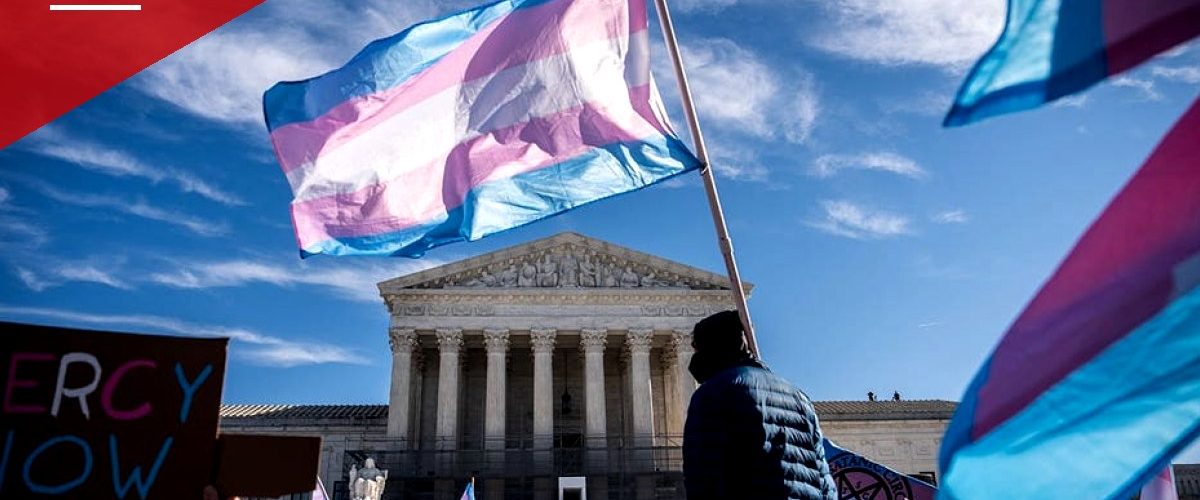
As the 2026 midterms approach, Senate candidates in at least nine states are being pressed on where they stand on transgender athletes competing in girls’ and women’s sports — an issue that has split Democratic candidates internally while Republicans have largely unified around restrictions.
In Texas, Democratic nominee James Talarico voted against House Bill 25 in 2021, a state law requiring public-school athletes to compete based on the sex listed on their birth certificate at or near birth. The bill passed anyway. In a September Fox News interview, Talarico said he would oppose transgender athletes in girls’ sports when it threatens safety or fairness, and his campaign says he favors leaving eligibility decisions to local communities. His campaign has not said whether he would support the federal Protection of Women and Girls in Sports Act. His Republican opponent, Attorney General Ken Paxton, sued the NCAA in December 2024 over its marketing of women’s competitions that include male athletes.
In Michigan, Democrat Abdul El-Sayed previously called for protecting transgender students’ access to “sports teams of choice,” arguing in a 2018 interview with Pride Source that exclusion worsens bullying and mental-health harm. Asked about the issue in August 2026, he said eligibility should be “decided by the people who govern sports” and steered the conversation toward healthcare and affordability. His Republican opponent, former Rep. Mike Rogers, signed a pledge stating, “Biological men should not be competing with our daughters, period.”
North Carolina Democrat Roy Cooper vetoed the state’s Fairness in Women’s Sports Act as governor in July 2023, writing that lawmakers shouldn’t be “inflaming their political culture wars” over “an extremely small number of vulnerable children.” The GOP-controlled legislature overrode his veto the following month. His Republican opponent, Michael Whatley, has praised the law and criticized Cooper’s veto.
In Georgia, Democratic Sen. Jon Ossoff voted against advancing the Protection of Women and Girls in Sports Act in March 2025 and again opposed a similar measure in March 2026, telling the Atlanta Journal-Constitution the federal bill amounted to overreach that could subject children to intrusive investigations. His Republican opponent, Rep. Mike Collins, voted for the House version of the bill in January 2025 and has made opposition to transgender participation in women’s sports a theme of his campaign.
Minnesota Democrat Peggy Flanagan has committed to supporting the nonbinding Transgender Bill of Rights, which calls for federal protections covering school athletics, according to the Christopher Street Project. Her Republican opponent, former NFL sideline reporter Michele Tafoya, has built her campaign in part around a pledge to “keep men out of women’s sports and locker rooms.”
Maine Democrat Troy Jackson voted in 2023 to reject a bill that would have limited girls’ secondary-school sports teams to female students. In an April 2026 questionnaire, he answered “No” to a combined question on banning transgender athletes and rolling back other Maine Human Rights Act protections, and later won EqualityMaine’s endorsement. Republican Sen. Susan Collins has taken the opposite position, voting to advance restrictions in both March 2025 and March 2026 and stating that “transgender athletes should not compete in girls’ and women’s athletics.”
New Hampshire Democrat Chris Pappas has twice voted against the Protection of Women and Girls in Sports Act, calling it part of “bigoted, harmful attacks on the transgender community” after his 2023 vote. His Republican opponent, former Sen. John E. Sununu, welcomed the Supreme Court’s ruling allowing state-level restrictions and has criticized Pappas’s votes.
In Ohio’s special Senate election, Democrat Sherrod Brown voted in 2021 and 2024 against measures that would have withheld federal education funding from schools permitting transgender athletes on female teams, with his campaign saying he backs leaving eligibility decisions to local leagues. Republican Sen. Jon Husted backed Ohio’s House Bill 68 restricting transgender participation and said, “Men should not compete in women’s sports.”
In Iowa, Democrat Josh Turek, a two-time Paralympic gold medalist, told The New York Times in July that he does not “believe that biological males should compete against females in sports,” but has said eligibility should be decided by sports governing bodies rather than Congress or the courts. His Republican opponent, Rep. Ashley Hinson, voted for the Protection of Women and Girls in Sports Act in January 2025.
Several Democratic campaigns, including Talarico’s, El-Sayed’s, Cooper’s, Ossoff’s, Flanagan’s, Jackson’s, Pappas’s, Brown’s and Turek’s, either did not respond to requests for comment or did not clarify specific eligibility restrictions their candidates would support in Congress.



Home-based job that pays more than 12,000 Dollar per month by doing simple tasks on a laptop or mobile device part-time. Last month, I earned 24,863 Dollar from this job by working 4 hours per day online. Very simple jobs to do, and the earnings are insane. Everyone can now make more money online by joining the website listed below…..
𝒋𝒖𝒔𝒕 𝒖𝒔𝒊𝒏𝒈 𝒕𝒉𝒊𝒔 𝒔𝒊𝒕𝒆.. Www.PayAtHome1.Com