
The U.S. military has lost or sustained damage to at least 81 aircraft since the war with Iran began, according to a new Congressional Research Service analysis — nearly double the 42 aircraft identified in a similar count five months ago.
CRS, the nonpartisan research arm of the Library of Congress, said the jump partly reflects newly public information rather than a sudden doubling of combat losses since the last tally. But the scale of the damage, spanning some of the Pentagon’s most advanced and most essential aircraft, is drawing fresh scrutiny in Washington.
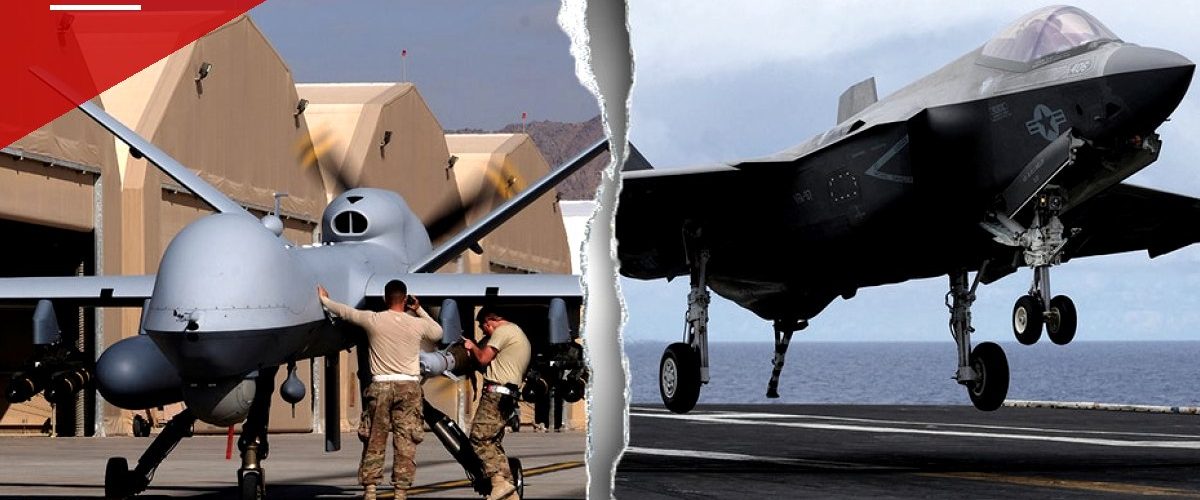
Among the aircraft identified as lost or damaged since Operation Epic Fury began on Feb. 28, 2026: 12 F-15E Strike Eagles, one F-35A Lightning II, seven KC-135 refueling tankers, one E-3 Sentry airborne warning-and-control aircraft, and 45 MQ-9 Reaper drones.
CRS warned that losses concentrated in older, high-demand aircraft fleets could leave gaps in U.S. capability or raise risks for forces stationed elsewhere in the world, particularly as production bottlenecks and competing military priorities slow the pace of replacement.
The 81 aircraft were lost or damaged through a combination of Iranian attacks, enemy fire, friendly fire, accidents, and aircraft that American forces deliberately destroyed during rescue missions. Some damaged aircraft have since returned to service.
A Department of War official declined to confirm the specifics of the report, telling Fox News Digital: “We do not comment on reports from outside organizations or non-DOW battle damage assessments.”
CRS cautioned that the final count remains uncertain given classification restrictions, ongoing combat, and unresolved questions about which side caused certain losses.
A costly, drawn-out fight
The accounting arrives more than eight months into a war that has already put heavy strain on American weapons stockpiles. A Pentagon inspector general report last month estimated the U.S. had spent roughly $22.3 billion on munitions through June alone, and separately warned of “strategic inventory shortfalls.”
The Congressional Budget Office estimated in September that simply replacing equipment lost through Aug. 1 could cost between $1.9 billion and $3.3 billion, depending on how the Department of War chooses to rebuild its fleet.
Drones make up the bulk of the raw number of lost aircraft. CRS counted at least 45 MQ-9 Reapers destroyed in operations against Iran, along with three MQ-1 drones and one MQ-4C Triton. But the report emphasizes that the losses of scarcer, harder-to-replace aircraft carry outsized consequences.
An E-3 Sentry was damaged — reportedly taking a “direct hit” — during an Iranian attack on Prince Sultan Air Base in Saudi Arabia in March. CRS singled out the aging and limited E-3 fleet as a case study in how the loss of even one high-demand aircraft can create capability gaps for U.S. forces elsewhere.
Ground-based damage has also piled up. Five KC-135 tankers were reportedly damaged at Prince Sultan Air Base in March, and eight F-15Es sustained light damage during an Iranian strike on Muwaffaq Salti Air Base in Jordan in September; those eight fighters were later returned to service.
At least 18 U.S. service members have died since the war began, a toll the Pentagon splits between the initial Operation Epic Fury and a separate category tracking renewed fighting that began in July.
Dangers of rescue operations
Several losses stemmed directly from efforts to recover downed American personnel. Two MC-130J Commando II special operations aircraft were intentionally destroyed while supporting the rescue of a downed F-15E crew, and an HH-60W Jolly Green II helicopter was damaged in the same operation. Four AH-6 Little Bird helicopters were later destroyed by U.S. forces during separate rescue missions, according to the Defense Department inspector general.
Not all losses came from Iranian action. Three F-15Es were destroyed by friendly fire over Kuwait in the war’s opening days, and an F-35A was later damaged by Iranian ground fire over Iranian territory.
CRS said the growing toll should prompt Congress to examine whether the American defense industrial base can replace aircraft fast enough to meet military demands — and whether the losses signal that Iran’s capabilities have evolved in ways that require the U.S. to rethink its equipment, tactics, or basing strategy across the region.



Add comment