
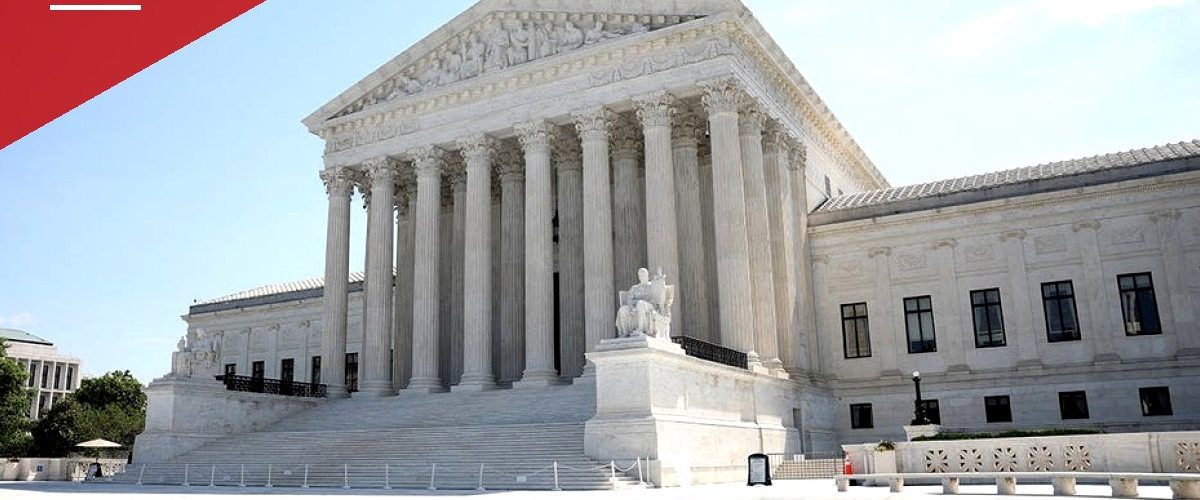
The Supreme Court opened its new term on Monday with a docket that touches climate litigation, religious liberty, gun rights, voter registration rules and parental rights. The justices have granted review in a handful of major cases so far, with more cert grants expected as the term continues.
Boulder’s climate lawsuit against Suncor and Exxon
The term’s first major argument involves Suncor Energy v. Commissioners of Boulder County. Boulder, Colorado is suing Suncor Energy and ExxonMobil in state court under Colorado tort law, seeking damages tied to the effects of global climate change. Dozens of other states and cities have filed similar suits against energy companies.
An outside counsel for Boulder’s legal team has publicly described this kind of climate litigation as functioning like a ‘carbon tax,’ acknowledging it could raise fossil-fuel prices and potentially push energy companies toward bankruptcy.
The justices will decide whether federal law bars these state-law claims, and whether the Court has statutory and Article III jurisdiction to hear the case at all. The Clean Air Act allows states to regulate pollution sources within their own borders, and the Court has previously applied similar reasoning to nearly identical provisions of the Clean Water Act in a case involving out-of-state pollution sources.
Colorado preschool funding dispute
In St. Mary Catholic Parish v. Roy, the Court will examine a Colorado universal preschool program that promised free preschool to every family at the public or private school of their choice, but excluded Catholic preschools over their adherence to Church teaching on sex and gender. According to testimony highlighted by the Catholic schools challenging the program, its director said a participating preschool could hypothetically seek preferences for ‘gender-nonconforming children’ or members of ‘the LGBTQ community,’ so long as those preferences complied with the program’s nondiscrimination rules.
The Court has ruled three times since 2017 — in cases from Missouri, Montana and Maine — that government cannot exclude people of faith from public benefit programs because of their religion. Colorado itself previously lost three major First Amendment cases: Masterpiece Cakeshop v. Colorado Civil Rights Commission (2018), 303 Creative LLC v. Elenis (2023), and Chiles v. Salazar (2026).
Second Amendment challenges from Illinois and Connecticut
The Court has consolidated two cases, Viramontes v. Cook County and Grant v. Higgins, to consider whether the Second and Fourteenth Amendments protect the right to own an AR-15. Viramontes challenges Cook County, Illinois’ ban on what the county classifies as ‘assault weapons,’ while Grant challenges a similar law in Connecticut.
Under District of Columbia v. Heller (2008) and New York State Rifle & Pistol Association v. Bruen (2022), the Second Amendment protects arms in common use for lawful purposes, and a weapons ban can only survive if the state identifies historical analogues fitting the nation’s tradition of firearm regulation. The cases give the Court an opportunity to clarify how courts should determine which weapons qualify as protected ‘arms.’
Arizona’s voter registration and citizenship requirements
In Republican National Committee v. Mi Familia Vota, the Court will review Arizona laws passed in 2022 that require documentary proof of citizenship for people registering to vote using the state’s form, and that allow officials to remove confirmed noncitizens from voter rolls ahead of a federal election.
The Ninth Circuit blocked both provisions, ruling they are preempted by the National Voter Registration Act. The appeals court also found the proof-of-citizenship requirement barred by a 2018 consent decree, which settled a lawsuit brought by advocacy groups and in which a former Arizona secretary of state agreed to register applicants who submitted no proof of citizenship as ‘federal-only’ voters.
Parental notification in Washington’s runaway-youth shelters
International Partners for Ethical Care v. Ferguson concerns a Washington state law governing runaway-youth shelters. The amended law provides that when a minor seeks ‘gender-affirming’ services, shelters are no longer required to notify the minor’s parents — instead, they notify only the state. The state may then restrict parents from locating their child and delay reunification until the parents accept the state’s approach.
The immediate legal question before the Court is standing: whether the parents challenging the law can sue, given that their children have not run away. The Ninth Circuit dismissed the parents’ claimed harm as speculative. The parents argue they are already affected, since they know the state would side against them if their child ran away seeking these services.
What’s next
The Court is expected to grant additional cases for argument as the term progresses, continuing to build out a docket that already spans disputes over state power, religious liberty, gun rights, election administration and family law.

Add comment