
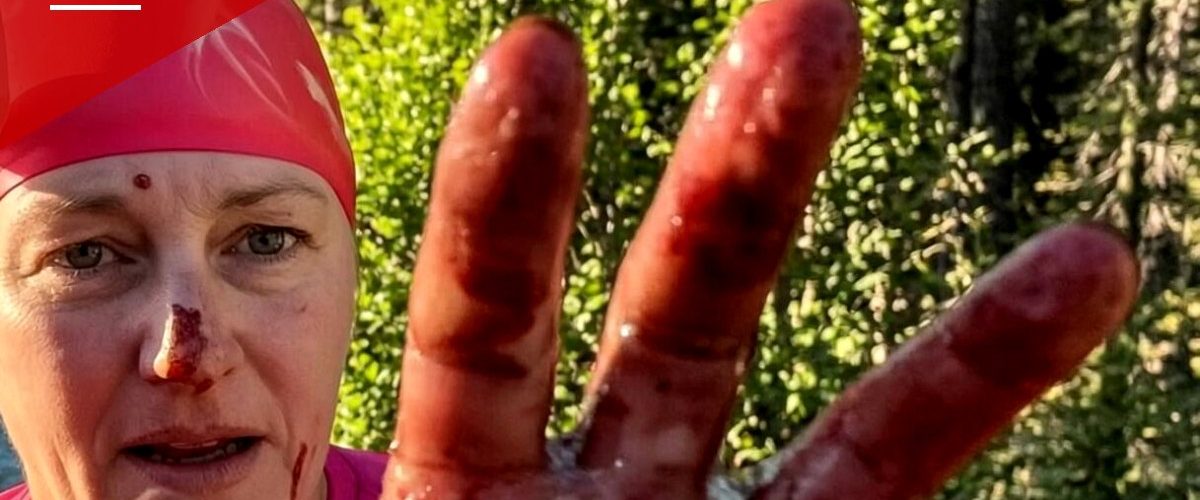
A longtime Reno swimming instructor is recovering after a river otter attacked her repeatedly during an open-water swim in Lake Tahoe, leaving her with 38 stitches, including 22 in her foot.
Lynnette Bellin, 51, owner of ISR Reno Tahoe and a 25-year veteran of swimming in the lake, was near Hidden Beach on Aug. 30 when the animal struck.
“Something grabbed my leg and pulled me under,” Bellin told CBS News. “And it was so powerful I thought it was a human.”
She said the otter then began “biting and scratching” in what she described as a sustained, aggressive encounter. Speaking separately to NBC affiliate KRNV, Bellin said the animal kept coming back even as she tried to fend it off.
“It was teeth and claws, and it was a very long attack,” she said. “It just kept coming after me. I kept pushing it away, and it kept coming back.”
Bellin called for help and made her way to nearby boulders, according to the Reno Gazette Journal, though she said the rocks were slippery and difficult to climb onto. Even after getting out of the water, she said she could see the otter lingering close by.
“I even watched, and it was just circling the rocks,” she said, calling the animal “very menacing.”
Bellin, who grew up in Albuquerque, New Mexico, has treated Lake Tahoe as a place of peace for a quarter century. The attack has shaken that sense of safety, at least for now.
“I feel like that was robbed from me after the otter attack,” she wrote online.
Still, Bellin said she hopes to return to the lake eventually, even if it means changing her habits.
“Perhaps I will just pick different beaches to swim at,” she said.
The attack near Hidden Beach, a popular spot on the lake, is a reminder that encounters with wildlife, while rare, can turn dangerous even in areas well-traveled by swimmers and visitors.

Add comment