
I’ll highlight how President Trump honored military heroes at the State of the Union, who received Medals of Honor and Purple Hearts, outline the three upcoming Medal of Honor recipients and their actions, preserve the exact quoted citations of their deeds, and place the original embed markers where they appeared.
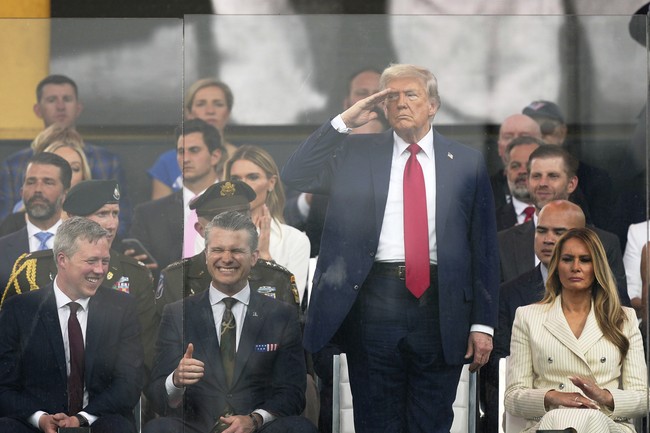
Tuesday’s State of the Union had a solemn, patriotic tone as President Trump used the moment to salute servicemembers and veterans for extraordinary courage. Two Medals of Honor were presented live, a moving recognition that underscored respect for sacrifice and valor. The ceremony put real people and irreplaceable acts of bravery at the center of the evening.
Among those honored was 100-year-old Navy Captain Royce Williams, whose long record of service spans World War II, Korea, and Vietnam. First Lady Melania Trump helped present his recognition, a moment that connected generations and reminded viewers of the heavy price of freedom. The Medal of Honor remains our nation’s highest military decoration.
Watch:
Another moment that stood out was the award to Chief Warrant Officer Eric Slover, recognized for his role as lead helicopter pilot in Operation Absolute Resolve. That raid, which captured Nicolás Maduro, was framed by the administration as a decisive action against tyranny and a demonstration of American capability. The award highlighted direct action by U.S. forces and the personal courage required in such missions.
The president also awarded Purple Hearts to two West Virginia National Guard members who were ambushed in Washington, D.C., in November 2025, including a posthumous award to Spc. Sarah Beckstrom. Those recognitions echoed a familiar theme: leaders honoring the wounded and fallen while signaling that service and sacrifice will not be forgotten. The administration presented these medals as proof of its commitment to veterans and active duty personnel alike.
Shortly after the address, the White House announced that three more Congressional Medals of Honor would be awarded in March to U.S. Army soldiers. The names released reflect different wars and different kinds of heroism, but each story points to a willingness to risk everything for others. The following citations tell those stories in their own words.
Nearly 75 years in the making, retired Navy Capt. Royce Williams was also awarded the Medal of Honor. Williams served in World War II, the Korean War and the Vietnam War, the president said. His combat actions in Korea earned him the Medal of Honor.
The first of the upcoming honorees is Command Sergeant Major Terry P. Richardson, U.S. Army (Retired), whose leadership and bravery in Vietnam saved dozens of lives. His actions on September 14, 1968, included multiple rescues under heavy machine gun fire and directing tactical air strikes from a dangerously exposed position. He fought through wounds and stayed with his men, actions credited with sparing 85 fellow soldiers.
Command Sergeant Major Terry P. Richardson, U.S. Army (Retired).
Two of the awards will be given posthumously. Master Sergeant Roderick W. Edmonds, known as Roddie, is recognized for an act of moral and physical courage while a prisoner of war in Germany during World War II. He confronted a Nazi commandant who demanded Jewish prisoners be singled out, standing firm and invoking the Geneva Convention to protect more than 200 Jewish-American POWs from segregation and likely death. His defiance and leadership kept 1,200 American prisoners together and ultimately contributed to their survival.
Master Sergeant Roderick (Roddie) W. Edmonds, U.S. Army will receive the Medal of Honor posthumously for his acts of gallantry and intrepidity above and beyond the call of duty from January 27, 1945, to March 30, 1945, as a prisoner of war in Germany, while assigned to Headquarters and Headquarters Company, 422d Infantry Regiment, 106th Infantry Division.
Upon arrival at Stalag IXA in Ziegenhain, Germany, he was soon put to the test as Senior Non-Commissioned Officer. On the evening of January 26, 1945, the Germans announced that only Jewish-American prisoners would fall out for roll call the following morning, at the threat of execution. Master Sergeant Edmonds quickly understood that segregating more than 200 Jewish-American POWs would likely result in their persecution and possible death, so he directed his senior leaders to have all 1,200 American prisoners present themselves for roll call.
The following morning, the Nazi Commandant became incredulous after realizing that so many Americans were standing in formation. Master Sergeant Edmonds bravely resisted his fury, while also recounting the rights afforded to all prisoners under the Geneva Convention.
Still enraged, the Commandant removed his pistol, pressed it hard against Master Sergeant Edmonds’ forehead between his eyes and demanded that he order all Jewish-American prisoners to step forward, or he would be shot. With unwavering courage at the risk of his life, above and beyond the call of duty, Master Sergeant Edmonds fearlessly held his ground, refusing to concede and verbally warned the Commandant that if he executed him, he would be prosecuted for war crimes once the war was over.
Finally, the Commandant, who was visibly reddened with anger, lowered his weapon and returned to his office without further attempts to segregate the Jewish-American prisoners. Master Sergeant Edmonds’ actions inspired his fellow POWs. Several weeks later, in March 1945, as Allied forces were rapidly advancing toward the area, the Germans ordered all prisoners to assemble outside the barracks for evacuation farther east to another camp.
Fully intending to undermine his enemy captors, Master Sergeant Edmonds ordered all American prisoners to form in front of the barracks, and when the enemy transports arrived, they would break ranks and rush back to their barracks. Without regard for his own life Master Sergeant Edmonds gallantly led these prisoners in a relentless pursuit of opposition and resistance, forcing the Germans to abandon the camp leaving the 1,200 American prisoners behind.
The second posthumous recipient is Staff Sergeant Michael H. Ollis, whose selfless actions during a complex attack at Forward Operating Base Ghazni in Afghanistan saved comrades at the cost of his life. He exposed himself to repeated direct fire while rescuing and defending wounded coalition members, ultimately succumbing after confronting an insurgent who detonated a suicide vest. His citation details a soldier who put others first under the harshest conditions.
Staff Sergeant Michael H. Ollis will receive the Medal of Honor posthumously for acts of gallantry and intrepidity above and beyond the call of duty, while serving as an Infantryman to Company B, 2d Battalion, 22d Infantry Regiment at Forward Operating Base Ghazni, Afghanistan.
On August 28, 2013, a complex enemy attack involving vehicle-borne improvised explosive devices, suicide vests, indirect fire and small arms fire was launched against the FOB. In response, he ordered his fellow Soldiers inside a building to move to bunkers for refuge from the enemy fire.
After accounting for his Soldiers, he reentered the building to check for any casualties, moving toward the enemy force who had penetrated the FOB perimeter. He located a Coalition Forces Officer, and together they moved toward the point of attack without their personal protection equipment and armed only with rifles.
Upon reaching the attack point, Staff Sergeant Ollis and his comrade linked up with other friendly forces and began a coordinated effort to repulse the enemy from the airfield and adjacent buildings. While under continuous small arms, indirect, and rocket-propelled grenade fires, Staff Sergeant Ollis and his comrades moved from position to position engaging the enemy with accurate and effective fire.
While fighting alongside the FOB perimeter, an insurgent came around a corner and immediately engaged them with small arms fire. With complete disregard for his own safety, he positioned himself between the insurgent and the Coalition Forces Officer, who had been wounded and unable to walk. Staff Sergeant Ollis fired on the insurgent and incapacitated him, but as he approached the insurgent, the latter’s suicide vest was denotated, mortally wounding him.
These honors, awarded in March, will mark another moment where the nation publicly affirms a simple principle: bravery and sacrifice matter and will be remembered. The ceremonies will celebrate courageous acts across decades, reaffirming respect for those who answered the call to serve.


Add comment