
This article examines the diplomatic fallout after Ontario released an ad that repurposed audio of Ronald Reagan to criticize tariffs, President Trump’s reaction that halted trade talks, and the Reagan Foundation’s objection to the ad’s editing and use without permission.
Trump-Canada Love Story Over After Fake Reagan Ad
President Donald Trump reacted sharply after Ontario ran an ad that repurposed Ronald Reagan’s 1987 remarks about trade, prompting an abrupt freeze in tariff negotiations. The ad used excerpts that framed tariffs as harmful, and it aired in U.S. markets, drawing immediate attention and criticism from multiple sides. Once the ad circulated, Washington and Ottawa found themselves trading statements instead of bargaining chips at the negotiating table.
The ad presented edited audio and visuals of workers and families amid messaging that framed tariffs as damaging to American citizens. Ontario’s government said the campaign aimed to spark discussion about the economic effects of protectionist measures, and the province acknowledged the spots were targeting U.S. viewers. That publicity goal collided with the reality that repurposing a former president’s words for a modern political ad would provoke pushback from U.S. leaders and institutions.
President Trump publicly condemned the ad and declared that trade talks with Canada were effectively over, framing the use of Reagan’s voice as a fraudulent intervention. His statement accused the province of interfering with U.S. judicial and national security matters and cited a reported ad buy figure to underline the scale of the campaign. The move signaled that Canada’s messaging misstep had immediate real-world consequences for bilateral trade diplomacy.
The official response from the Ronald Reagan Presidential Foundation and Institute was unequivocal and focused on the ad’s editing and lack of permission. The Foundation said the ad misrepresented Reagan’s 1987 radio address and made clear that Ontario had not sought authorization to use or alter the recorded remarks. They also noted they were considering legal options and directed people to view Reagan’s unedited speech material hosted on their channel.
“The Ronald Reagan Presidential Foundation and Institute learned that the Government of Ontario, Canada, created an ad campaign using selective audio and video of President Ronald Reagan delivering his ‘Radio Address to the Nation on Free and Fair Trade,’ dated April 25, 1987,” the statement read. “The ad misrepresents the Presidential Radio Address, and the Government of Ontario did not seek nor receive permission to use and edit the remarks.”
In response to the backlash, Ontario’s premier said the province would pause the advertising run and try to de-escalate the situation while discussing next steps with national government officials. The province framed its decision as a tactical pause to allow conversations to continue and to prevent further deterioration of trade talks. Officials emphasized the ad’s intent was to reach U.S. audiences with a message about workers and economic priorities rather than to provoke a diplomatic rupture.
Doug Ford explained that the campaign was meant to open debate about what kind of economy people want and to highlight how tariffs affect businesses and jobs. He asserted that Ontario had achieved a communications goal by reaching U.S. audiences and said he had instructed his team to continue promoting the message during high-profile broadcasts. Even so, the diplomatic cost became visible as Washington responded and trade discussions were put on hold.
The episode also reopened broader questions about how archival material is used in modern political communication and where lines should be drawn. Using a past president’s audio in a current ad raises legal and ethical issues, particularly when the content is edited to fit a modern narrative. Institutions that steward presidential records and legacies may push back when footage or audio is repurposed without consent.
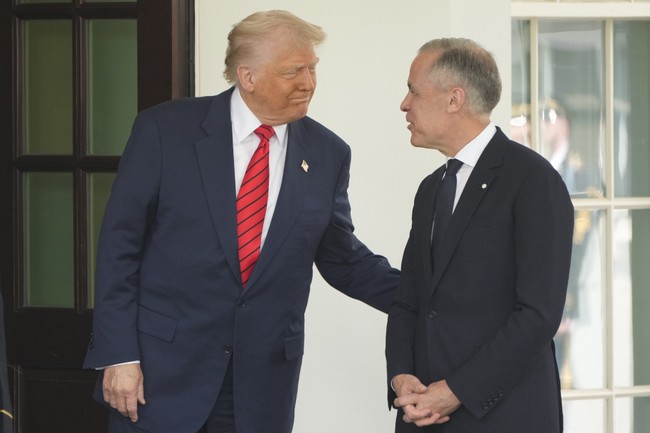
Video of the ad and the full, unedited address remain points of comparison for observers trying to assess the degree of alteration. Officials from the Reagan Foundation encouraged viewers to examine the original speech to judge whether the ad accurately reflected its tone and context. The debate over editing and intent now sits alongside the immediate political fallout: stalled negotiations and a chill in relations between leaders who had recently met and appeared congenial.
What began as a policy debate about tariffs has become a diplomatic incident driven by media strategy and contested representations of history. For now, trade talks remain paused while both sides weigh optics, legal claims, and the political implications of how one government used the words of a former American president. The incident underscores how quickly communications choices can reshape negotiations and public perceptions.
The Ronald Reagan Foundation has just announced that Canada has fraudulently used an advertisement which is fake, featuring Ronald Reagan speaking negatively about Tariffs. The ad was for $75,000,000.
They only did this to interfere with the decision of the U.S. Supreme Court and other courts. Tariffs are very important to National Security and economy of the U.S.A. Based on their egregious behavior, all trade negotiations with Canada are hereby terminated. Thank you for your attention to this matter. President DJT.
“The Ronald Reagan Presidential Foundation and Institute is reviewing its legal options in this matter,” it added. “We encourage you to watch President Reagan’s unedited video on our YouTube channel.”


Add comment