
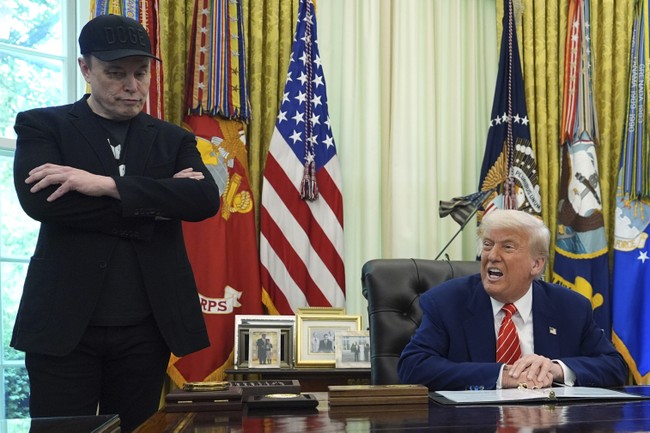
Elon Musk predicts a conservative stretch of leadership: a second Trump term followed by two terms of JD Vance, and he frames it as the start of a “great 12-year span” tied to his work on the Department of Government Efficiency. This piece walks through Musk’s prediction, why Republicans might welcome a Vance presidency, the historical hurdles to extended single-party control, and what it would take for that prediction to become reality.
Elon Musk does not make timid forecasts, and his recent comments about the next decade-plus of American politics are bold and unapologetic. He referenced his role with the Department of Government Efficiency and used that as a springboard to project continued conservative governance. For many on the right, the idea of prolonged GOP control is exciting and feels like a chance to lock in policy gains on economics, national security, and deregulation.
The public report of his remarks describes a striking scenario: a Trump second term followed by two Vance terms, amounting to a long conservative run in the White House. Musk reportedly called it a “great 12-year span,” and he tied his optimism to the reforms he saw while working with a cost-cutting team. That kind of projection suggests more than wishful thinking; it implies a strategic view of political momentum and institutional change.
Billionaire Elon Musk predicts that President Donald Trump‘s administration will be followed by two terms of a JD Vance presidency.
Musk placed the bet during a video appearance at a reunion of his DOGE cost-cutting team last month, saying the U.S. is at the beginning of a “great 12-year span,” Politico reported Tuesday. Musk reportedly told attendees that he opted to join the event virtually because news of it was public, and he rated himself among the top assassination targets in the country, behind only Trump and Vance.
Attendees at the event had their phones placed in pouches for the duration, and they only got them back when boarding buses leaving the venue.
There are political reasons to take the prediction seriously and practical reasons to doubt it. On the positive side, JD Vance aligns with Trump-style populism while offering a calmer, more disciplined public persona. To many conservatives, Vance represents a capable standard-bearer who could consolidate policy wins while avoiding some of the public volatility associated with his predecessor.
Republicans can point to real strengths in the scenario: coherence on trade, immigration, and judicial appointments, plus the chance to push structural reforms that last beyond a single presidency. Vance’s background and rhetorical style appeal to voters who want firm leadership without performative chaos. A Vance administration could use lessons learned from the DOGE-era efficiency push to streamline government spending and regulation.
Still, history pushes back hard against extended single-party control of the White House. Only rare stretches, such as the Reagan-Bush stretch, have produced more than two consecutive terms for one party since Franklin Roosevelt. Winning back-to-back presidential contests across three election cycles requires near-perfect strategy, unity inside the party, and a weak or divided opposition.
Democrats’ capacity to rally around a candidate who can mobilize anti-Trump energy should not be dismissed. The author’s take is blunt: Democrats are highly motivated to oppose anything tied to Trump, and that kind of ferocity can flip close races. If the GOP wants to make Musk’s prediction come true, the party must translate enthusiasm into turnout, avoid factional infighting, and present policies that extend beyond personality politics.
There is also the unpredictable variable of the electorate itself. Voter priorities can shift rapidly when the economy sours or when foreign crises demand fresh leadership choices. What looks like a likely path in one moment can change with a few headlines, real-world events, or an unexpected primary upset. Republicans should plan for contingencies while building toward the kind of bench that can sustain two Vance terms.
From a conservative view, the ideal ticket might combine Vance’s intellect and message discipline with a running mate who broadens appeal, such as a senator or governor who can turn out suburban and independent voters. That balance would aim to preserve populist policy wins while neutralizing cultural attacks that Democrats use to rally base turnout. Effective messaging and an operational ground game will be essential.
Elon Musk’s prediction is provocative by design, but it also functions as a challenge. Conservatives are being handed a vision of long-term governance that promises sweeping efficiency and policy continuity. Whether it happens will depend on campaign execution, unity on the right, and the opposition’s ability to seize on whatever vulnerabilities appear between now and the ballots.
There is no guarantee that history will bend the way any of us hope, but the idea of a “great 12-year span” gives Republicans a clear objective: build the institutions, choose reliable leaders, and win the contests that matter. Achieving that will be the test of whether Musk’s forecast is prophecy or wishful thinking.



Start now generating extra home based cash by doing very easy and simple job from home. Last month i have earned $19753 from this job in my part time. This job is just awesome and its earning are greater than 9 to 5 office job.
Here is I started_______ EarnApp1.Com