
This piece lays out the growing trash crisis created by large-scale wind and solar deployment, the economics that make recycling futile, the practical challenges of handling fragile panels and giant turbine blades, and why relying on more mandates and subsidies will only make energy more expensive while failing to solve the mounting waste problem.
America is facing a real, measurable waste problem tied directly to wind and solar. Many panels and turbines are reaching the end of their useful lives or are being replaced early as newer, more efficient models arrive, creating mountains of decommissioned equipment that must be managed.
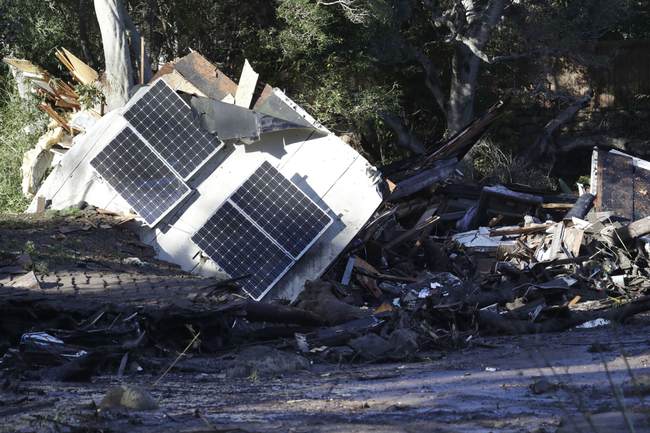
Damage from storms has accelerated that waste stream, leaving communities to deal with shattered panels and the risk of chemicals leaching into the environment after events such as major hailstorms in Texas in 2024 and recent severe storms in Indiana and Illinois. Local residents are increasingly worried about the cleanup and potential contamination from broken panels and failed installations.
Recycling solar panels turns out to be expensive and uncompetitive. It costs $30 to recycle a solar panel to recover between $3 and $8 in materials, while sending a panel to a landfill costs about $1 per unit and shipping used panels overseas for reuse costs only slightly more. Given that math, recycling rates are tragically low — less than one in 10 panels gets recycled — even as millions more panels are installed each year.
“If early replacements occur as predicted by our statistical model, they can produce 50 times more waste in just four years than IRENA anticipates,” the HBR article notes. “The industry’s current circular capacity is woefully unprepared for the deluge of waste that is likely to come.
“While panels contain small amounts of valuable materials such as silver, they are mostly made of glass, an extremely low-value material.” HBR continues. “The direct cost of recycling is only part of the end-of-life burden, however.
Panels are fragile, often mounted on rooftops, and require specialized labor to detach and remove without shattering them before they reach a truck. Some jurisdictions may even classify panels as hazardous waste because of trace heavy metals, which triggers costly handling, restricted transport routes, and administrative burdens that further raise disposal costs.
The looming waste from industrial wind adds a whole new scale of trouble. While the steel and copper in towers and gearboxes can be recycled, turbine blades are made from composites that are extremely hard to reuse. The practical options are limited to shredding or crushing blades for niche uses, a process that is costly and carbon-intensive.
It can cost $440,000 to $675,000 to decommission and dispose of each onshore wind turbine from base to blade, with offshore units costing over $1 million each to dismantle. The recoverable value in tower metal and gearboxes is roughly $28,000 per turbine, less than a tenth of dismantling costs, meaning most material ends up in landfills despite the apparent recyclability of some components.
Logistics compound the problem: removing blades often requires separate tractor-trailer loads and powerful cutting gear. “A separate tractor-trailer is needed to haul each blade to a landfill, and cutting them up requires powerful specialized equipment,” Flanakin wrote. “With some 8,000 blades a year already being removed from service just in the United States, that’s 32,000 truckloads over the next four years; in a few years, the numbers will be five times higher.
“Over the next 20 years, the U.S. alone could have to dispose of 720,000 tons of waste blade material,” said Flanakin. “Yet a 2018 report predicted a 15% drop in U.S. landfill capacity by 2021, with only some 15 years’ capacity remaining [meaning] [w]e will have to permit entirely new landfills simply to handle wind turbine waste—on top of mountains of solar and battery waste.”
Not every landfill will accept wind or solar waste, and many have refused because the space demands are too great. Closing sites early or permitting new landfills is costly for communities and diverts public land from other uses, creating political and fiscal pressure at local levels.
Where regulated disposal is too expensive, some operators have resorted to piling decommissioned turbines and panels on open land, effectively creating sprawling junkyards. Those unregulated piles can sit for years, taking up acres and raising concerns over visual blight and unknown environmental impacts as composite blades and broken panels slowly break down.
Proposals to make manufacturers take back and recycle all their waste sound reasonable, but the economics are stark: forcing industry to cover massive recycling costs will simply shift bills to consumers. More mandates and subsidies will raise energy prices while doing little to make recycling cheaper or more effective, worsening the affordability crisis Americans already face.
The waste problem did not emerge by accident; government subsidies and mandates played a central role in creating the market dynamics that led to rapid deployment without sufficient end-of-life planning. Ending or rolling back incentives and mandates would remove the perverse economics that make landfilling or stockpiling cheaper than recycling, and it would force a more realistic market-driven approach to energy choices.



Add comment