
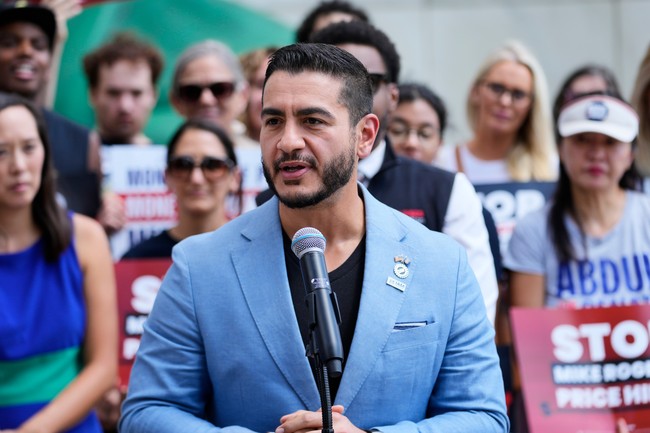
The Michigan Senate primary produced a surprising result, a narrow victory for Abdul El-Sayed, and a recent campaign moment has raised questions about his outreach to Black voters, the role of staged confrontations, and how Democrats handle identity politics heading into November.
Two weeks after the Michigan Democratic primary, the race that looked decided in polls turned out much tighter than expected. Abdul El-Sayed edged out Rep. Haley Stevens by fewer than 5,000 votes out of more than 1.5 million cast, a result that has conservative observers asking why polling seemed so off and what the outcome means for November. Republicans see opportunity in those discrepancies and are already planning to press advantages where Democratic support is shaky.
One immediate vulnerability for El-Sayed is his standing with key Democratic constituencies, notably Jewish and Black voters who matter in a statewide contest. His opponent, backed by former President Trump, has begun outreach aimed at peeling away disaffected Democrats to consolidate a path to victory in the fall. That dynamic makes any public misstep by El-Sayed more consequential than it might otherwise be.
During a campaign stop, El-Sayed tried to answer a question about older Black voters and responded by stressing his background, saying, “I am Arab,” and adding, “I’m also African.” His shorthand was meant as a bridge, but it landed awkwardly in a context where identity terminology carries heavy political baggage. For many voters, declarations like that are less persuasive than concrete policy outreach.
When initial clips of the exchange circulated, reactions ranged from bemusement to outright criticism, especially from people who recalled past instances where claiming an African identity sparked controversy. That reaction is predictable: identity labels can be credible or they can read as tone-deaf depending on timing and delivery. Context matters, and raw clips rarely capture the full setting or intent.
Fortunately for observers, a longer angle surfaced showing more context: a person in the crowd repeatedly yelled that El-Sayed was Arab and “don’t care about black folks,” and appeared to be blocked by staffers after persistent shouting. Seeing the fuller scene makes clear there was an adversarial element in the audience that shaped the interaction. Whether that interference was organic or orchestrated is now part of the debate.
Minutes after that scuffle, El-Sayed delivered a measured reply about divisions and offered to speak with the heckler to better understand his concerns. That portion of the clip looked scripted to some, the kind of carefully worded olive branch candidates use when they expect viral fallout. The timing of the gesture, coming straight on the heels of the disruption, made it seem convenient and raised skepticism among critics about authenticity.
From a Republican viewpoint, the scene checks several boxes of concern: a candidate whose campaign emphasizes identity narratives, a hostile audience member amplifying division, and a polished response that smells like damage control. Campaign veterans know how much staging and message discipline matter, and when those elements line up, voters can rightly wonder who is driving the moment. Skepticism is healthy when the optics seem engineered to soothe a particular voting bloc.
https://x.com/RNCResearch/status/2090137825429581886
Beyond optics, there’s a substantive problem. Voters want evidence of outreach that produces results, not symbolic gestures that read as PR. El-Sayed’s career and policy positions are under scrutiny, and statements about heritage won’t substitute for detailed plans that address crime, education, and economic concerns in Black communities. Republicans argue that grounded policy proposals and real engagement—not identity proclamations—win trust at the ballot box.
Critics also point out the broader pattern in Democratic politics of grouping voters into categories and relying on identity-based appeals. That strategy can work in the short term, but it risks alienating voters who feel treated as checkboxes rather than citizens with specific needs. Republicans say real persuasion requires listening and offering practical solutions that respect voters as individuals.
If the crowd incident was staged, it would be a blunt reminder that theatrical moments can backfire. Manufactured confrontations can look cynical, and when they do, they play into narratives about politicians prioritizing image over substance. That helps opponents who can frame the candidate as out of touch and more focused on optics than outcomes.
Whatever explanations emerge, the episode underscores the vulnerability El-Sayed faces with swing constituencies that could decide the race. Republicans are ready to exploit missteps, and independent or disaffected Democratic voters will respond to what they see as sincerity versus spin. In a close general election, small moments like this can matter as much as big policy fights.
Editor’s Note: The 2026 Midterms will determine the fate of President Trump’s America First agenda. Republicans must maintain control of both chambers of Congress.



Add comment