
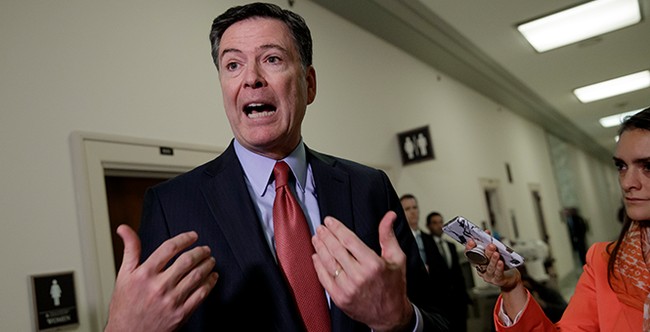
Former FBI Director James Comey was hit with a second indictment after an Instagram post, but the Justice Department says there is more behind the charge than the photo alone; this article lays out the sequence, the legal context, the reactions, and why the announced evidence likely reaches beyond a seashell image allegedly arranged to spell “86 47.”
Last Tuesday, prosecutors returned an indictment tied to a May 2025 Instagram post that showed seashells on a beach arranged to read “86 47.” The image went viral and sparked immediate speculation about intent, meaning, and whether social media symbolism can cross the line into criminal conduct. Almost everyone saw the photo; few saw what prosecutors say lies beneath the surface of that single frame. The timing and choice to indict on that post has raised eyebrows across the political spectrum.
Acting Attorney General Todd Blanche told NBC News’ “Meet the Press” that investigators did not rest on the image alone when making their case. Blanche emphasized that career prosecutors and agents spent months examining this matter before presenting evidence to a grand jury. That public assurance matters because it pushes back on claims that the indictment is purely a political hit job aimed at a high-profile figure. The department wants to show process and depth, not a snap judgment based on a meme-like photo.
Understanding the legal question here requires looking at how a casual post might be viewed as a threat. The indictment alleges that a “reasonable recipient who is familiar with the circumstances would interpret [the post] as a serious expression of an intent to do harm to the President of the United States.” Whether a jury accepts that framing depends on context, surrounding communications, and any corroborating actions investigators can document. That context is exactly what Blanche hinted at during the interview.
The public has already seen part of the story and jumped to conclusions about motives, but indictment decisions typically reflect more than optics. If the grand jury was presented with emails, messages, travel records, or witness testimony tying the post to preparatory steps, that would change how the case is perceived. Conversely, if the evidence is thin and centered on interpretation alone, free speech concerns will dominate the defense narrative. Either way, the legal fight will turn on facts that haven’t been fully aired in public.
Comey is no stranger to legal trouble: he faced a prior indictment in the Eastern District of Virginia for alleged false statements to Congress and obstruction tied to his 2020 testimony. That earlier case was dismissed without prejudice after questions arose about the appointed U.S. attorney’s authority, and that dismissal is currently under appeal. Those procedural twists add another layer to public skepticism about how these matters are brought and whether timing reflects broader political forces at play.
Critics of the new indictment immediately described it as political retaliation and flagged First Amendment implications that could form a strong defense. Social media posts often sit at the intersection of protected speech and potential threats, and courts must weigh speaker intent, audience perception, and the surrounding facts. As Blanche noted, the investigation here lasted close to a year, which suggests prosecutors believe they have more than a provocative photo to present to a grand jury.
The controversy also raises practical questions about law enforcement priorities and consistency. If symbolic social posts become grounds for criminal charges, how will prosecutors draw bright-line rules that don’t chill legitimate political expression? At the same time, the state has an interest in protecting officials from credible threats, and courts have long allowed restrictions when a true, imminent danger is shown. Sorting that balance will be central to whatever comes next for this case.
Public reaction has been immediate and polarized, with some commentators treating the indictment as overdue accountability and others seeing selective enforcement. That polarization mirrors broader distrust of institutions and the belief among many that legal actions are sometimes used as political devices. The best remedy in such charged cases is transparency about the evidence and a fair, open courtroom process where claims are tested under rule of law standards.
For now, the official line from the Justice Department is straightforward: the Instagram post was part of a larger investigative puzzle and did not stand alone as the sole basis for the indictment. Observers should expect legal briefs, filings, and possibly additional disclosures that will clarify what the grand jury heard. Until that record is made public, much of the noise will remain speculation, but the stakes for free speech and the criminal justice system are clear and important.
WELKER: Let’s move on to former FBI Director James Comey. A grand jury has indicted the former FBI director for this Instagram post. I wanna put it up; I think a lot of folks have seen at this point: 8647 in seashells, which the indictment says, quote, “a reasonable recipient who is familiar with the circumstances would interpret as a serious expression of an intent to do harm to the President of the United States.”
How does that image of seashells amount to a serious threat against the president’s life?
BLANCHE: Well, every case requires an investigation, and what you just showed is one part of that investigation. What you just showed is the Instagram post.
Rest assured that the career Assistant United States Attorneys in North Carolina, the career FBI agents, the career Secret Service agents that investigated this case didn’t just look at the Instagram post and walk away.
That’s why you saw an indictment last week, notwithstanding the fact that it was last May that the post was made. So I am not permitted to get into details of what the grand jury heard or found, as you know, but rest assured that it’s not just the Instagram post that leads somebody to get indicted.
Comey is an absolute evil criminal and Traitor who must face the full force of the Justice System preferably at GITMO before a Military Tribunal where he will be found Guilty on ll counts for High Treason and Conspiracy to assassinate by proxy a sitting US President; for which he will them be summarily executed!!! This lying evil bastard served the vile and totally evil Clinton’s criminal agendas making sure to insulate them from all criminal prosecution, so he is also guilty of everything they are guilty of!!!