
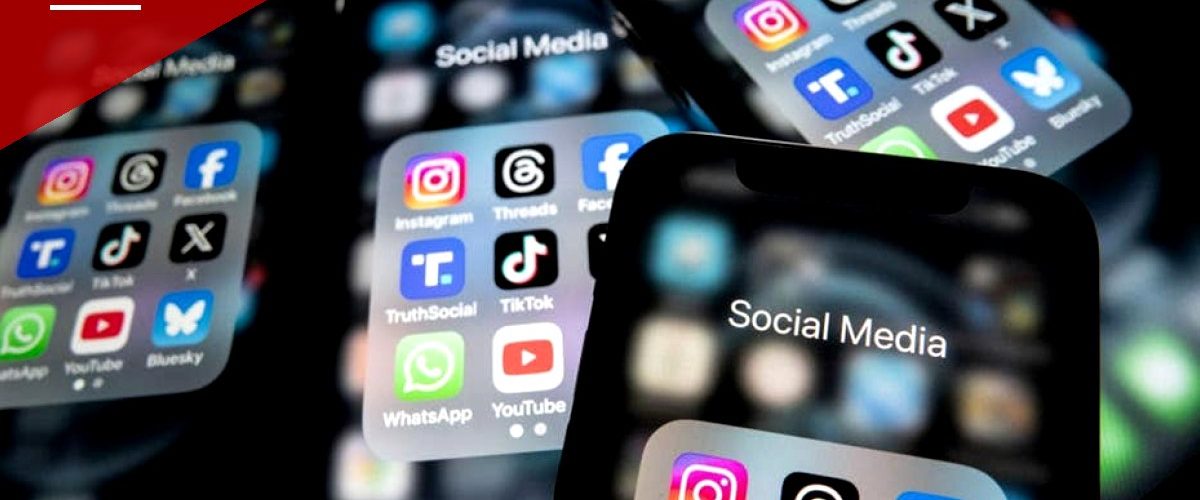
ESPN commentator Pat McAfee said last week that he felt unsafe appearing at a Utah college campus, citing a stream of online remarks, lies and death threats directed at him. McAfee said people frequently tell him they want to “Kirk” him, a reference to the assassination of political activist Charlie Kirk.
OutKick founder Clay Travis has said he receives similar messages almost every day. Both men are far from alone. Anyone with a public platform, or simply a controversial opinion, is likely to face repeated waves of online abuse.
What the research shows
University of Minnesota researchers found that people are nearly twice as likely to post something negative about a person online as something positive. A 2025 experiment involving 128 adults found that participants exposed to negative social media comments recorded anxiety scores of 2.42, compared with 1.77 for those who saw neutral comments and 1.55 for those who saw positive comments. Pleasant mood scores in the same study fell to 2.37 after negative comments, versus 3.05 after neutral comments and 3.25 after positive ones.
A separate meta-analysis found that adolescents who experienced cyberbullying had 2.73 times the odds of developing depression compared with those who had not.
A doctor steps away
Jesse Morse, M.D., built an X following of more than 200,000 people providing injury analysis on NFL players, generating enough engagement to qualify for monetization. Last week he said he had “retired” from the role because of the relentless negativity directed at him.
“My reputation is not worth it. I get so much hate. It’s just not worth it anymore,” Morse wrote.
Studies cited in discussions of the issue show negative content is overrepresented on social platforms because it draws more engagement, while positive reactions tend to be quieter and less visible. The result is an online response that does not reflect a representative sample of public opinion.
For McAfee, Travis, Morse and countless ordinary users, the pattern is the same: platforms built to connect people are, by the numbers, more likely to deliver hostility than praise, with measurable effects on mood and mental health.
I am making a real GOOD MONEY (80$ to 92$ / hr. )online from my laptop. Last month I GOT a check of nearly 21,000$, this online work is simple and straightforward, I don’t have to go to the OFFICE. At that point this work opportunity is for you. If you are interested. Simply give it a shot on the accompanying site link… mub.me/yg1