
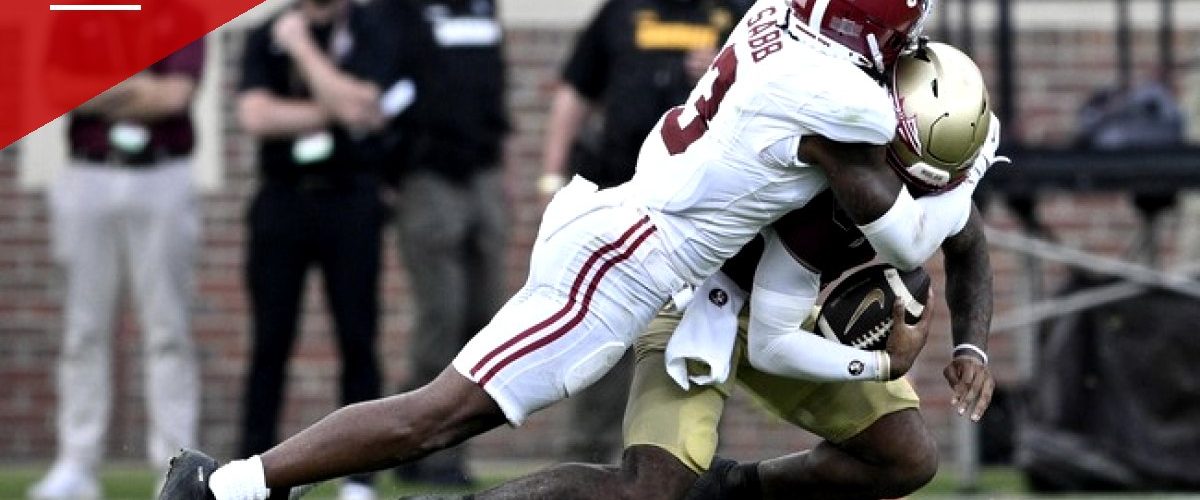
A proposal in Congress called the Protect College Sports Act is drawing criticism from figures who argue it would strip states of authority over college athletics and hand sweeping regulatory power to Washington instead.
The bill would override existing state laws governing college sports and replace them with a single federal framework. Its backers include Sen. Bernie Sanders (I-VT), along with some conservatives and prominent coaches, a coalition that critics say is unusual given the bill’s centralizing approach.
Among the coaches who have voiced support is Nick Saban, who is credited as one of the most successful coaches in college football history and is estimated to have earned roughly $150 million over his coaching career. Critics of the bill have questioned why a coach who thrived under the current system would now push for greater federal control over it.
Private equity firm Smash Capital has also been lobbying on the legislation, according to critics of the bill, who argue that the interests aligned behind the measure raise questions about who would actually benefit from it.
The federalism argument
Opponents of the bill point to the vast differences between college athletic programs as a core problem with imposing one national rulebook. They note that a program like the University of Georgia’s football team operates on a different financial scale than programs at schools such as UMass or Appalachian State, and that Texas A&M’s resources bear little resemblance to Tulane’s. A single federal standard, they argue, cannot reasonably apply to programs with such disparate budgets, media contracts and athletic priorities.
Supporters of the bill have argued that federal intervention is needed to preserve competitive balance, since wealthier programs can leverage larger donor networks and media exposure to offer more lucrative NIL deals to recruits. Critics counter that Congress should not legislate away competitive advantages built over decades of investment in coaching, facilities, recruiting and alumni networks.
Concerns over women’s sports protections
Some conservatives have separately warned that the bill’s broad federal framework could, over time, undermine state laws that reserve women’s sports for biological females. While current supporters of the bill maintain those state protections would remain intact, critics say a future administration could interpret the bill’s eligibility provisions differently, leaving states dependent on the discretion of whoever holds the presidency, or facing prolonged litigation, to defend laws their own voters passed.
The debate reflects a broader argument over federalism, with critics of the Protect College Sports Act contending that college athletics grew into a major American institution without a federal rulebook and should continue to develop through state and institutional decision-making rather than a new Washington bureaucracy.
This account draws on commentary from conservative radio host Edward Woodson, who has argued against the bill in published remarks.


Add comment