
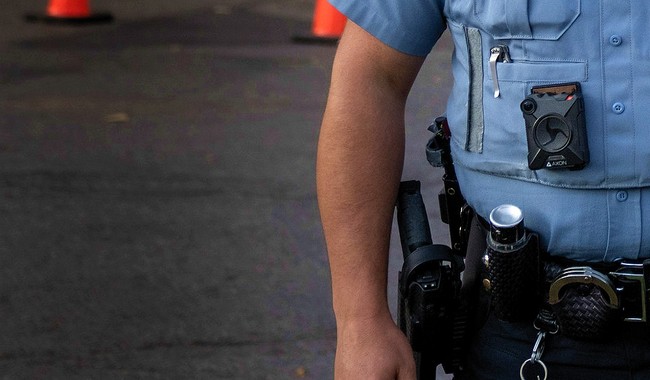
A Volusia County deputy survived a close-range ambush in Deltona when a round struck his body-worn camera and likely prevented a fatal wound; released bodycam footage shows the attack, the aftermath, and the suspect’s admission that he was not taking his medication for schizophrenia at the time.
Body-worn cameras give us an unvarnished look at violent encounters and the split-second reality officers face. In this incident, the footage does more than document procedure or misconduct — it captures a life-or-death moment that might have ended very differently without that tiny piece of equipment. The released clips make it plain how precarious these confrontations can be and how little separates survival from tragedy.
The event took place in Deltona in March, and only recently did officials make the footage public. Deputies were responding to a reported assault and battery and encountered a suspect at a residence, which began like many routine calls. Within seconds, the situation escalated into a violent ambush.
A Volusia County sheriff’s deputy in Deltona, Florida survived a close-range shooting last month after his body camera deflected a bullet aimed at his chest, according to newly released footage and law enforcement officials. The incident occurred on Sunday (March 1) as Jose Rivera and a deputy trainee responded to a call for an assault and battery investigation.
As reported by the Volusia County Sheriff’s Office and shown in body camera video, Rivera and his partner attempted to speak with a suspect at a residence. The suspect, identified as Luis Diaz Polanco, initially ran back inside the house, then quickly returned and opened fire at close range on the deputies.
One of the bullets struck Rivera’s body-worn camera, likely preventing a fatal injury.
The bodycam shows Rivera speaking with a neighbor before approaching the suspect’s door, and everything reads as normal up until the violent burst of action. At about the 39-second mark the suspect charges out and fires point-blank at the deputies. One shot hits the camera, and other rounds hit Rivera’s arm and thigh.
The footage is stark and immediate; it ends the debate over what happened by letting viewers see the moment for themselves. Medical reports later indicated Rivera suffered three gunshot wounds, rather than the initial belief of two. The camera’s impact likely changed the outcome, turning a fatal hit into a survivable one.
One of the bullets struck Rivera’s body-worn camera, likely preventing a fatal injury. Sheriff Mike Chitwood said, “There is no doubt in my mind he had every intention when those deputies knocked on that door to kill them.” Additional shots hit Rivera in the arm and thigh. He was initially believed to have suffered two gunshot wounds, but medical assessments now indicate he was hit three times.
Investigators say Polanco confessed to the attack and admitted he was not taking his medication for schizophrenia at the time. Authorities had been warned by Polanco’s mother about his violent tendencies and history of missing medication. The full bodycam footage documents the moment Rivera was shot and his immediate reaction before the camera was disabled by the impact.
Investigators report that the suspect, identified as Luis Diaz Polanco, later confessed and said he had stopped taking prescribed medication. Family members had reportedly warned authorities about his history of violent behavior and missed doses, a detail that adds a tragic layer to what otherwise looks like a preventable breakdown. Polanco has pleaded not guilty to charges that include attempted murder and is awaiting court proceedings.
Deputy Rivera is now recovering at home and receiving medical care, and law enforcement officials are treating the case as a sober example of the dangers officers face daily. The bodycam, designed chiefly for transparency and accountability, played an unexpected role in saving a life in this instance. For the public, the recording underscores how close these encounters can be and why professional training and protective gear matter.
While these videos often spark debate about policing, this clip simply shows the raw consequences when violence erupts at the doorstep of those who answer calls for help. The footage cuts through rhetoric by presenting events exactly as they unfolded, and viewers can see why officers say split-second moments define outcomes. Rivera’s survival highlights both the peril of the job and the practical value of equipment meant to document interactions.
The case will move through the courts, and more details will emerge as legal proceedings unfold. Meanwhile, the released footage stands as a clear record of the attack and the fortunate, if unsettling, role a body camera played in preventing a worse outcome.

Add comment