
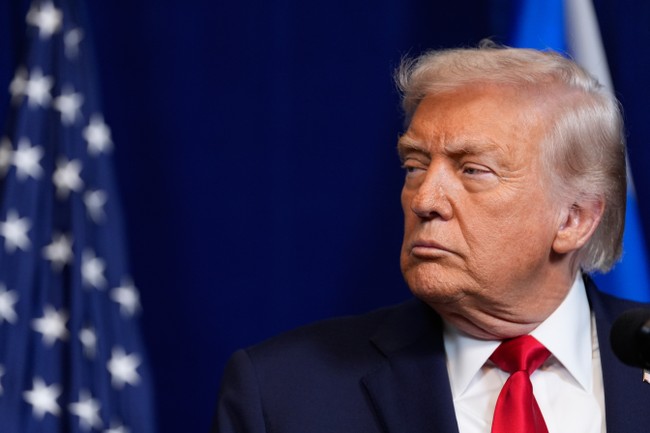
President Trump announced a temporary change to how the administration is using National Guard troops in certain Democratic-run cities, citing improvements in safety and promising a future return if crime spikes again; the move follows a recent Supreme Court order that limits federal deployments in at least one state and has sparked debate among legal experts and state officials.
President Trump said his administration will alter National Guard deployments in some blue cities as the nation heads into 2026, framing the change as temporary and tied to crime trends and local cooperation. He presented the decision as a response to shifting conditions on the ground and to recent legal developments affecting federal authority to send troops to states that resist federal control. This announcement underscores a high-stakes clash between federal power and local political leadership in several major cities.
In a post to his Truth Social followers, the president stressed both the results achieved by the Guardsmen and the conditional nature of the withdrawal. He framed the Guard presence as a decisive factor in reducing criminal activity and signaled the possibility of a stronger return if local crime surges again. The message made clear that the administration considers federal intervention an effective tool when local officials will not act.
“We are removing the National Guard from Chicago, Los Angeles, and Portland, despite the fact that CRIME has been greatly reduced by having these great Patriots in those cities,” he wrote in the new post, “and ONLY by that fact. Portland, Los Angeles, and Chicago were GONE if it weren’t for the Federal Government stepping in.”
He continued with a warning that federal support could resume in a different and more forceful form should conditions deteriorate. That tone reinforced the administration’s view of the Guard as both a stabilizing presence and a lever the White House can use to push cities toward shoring up law enforcement. The president also criticized local Democratic officials for opposing federal action even as the administration claims it produced tangible safety gains.
“We will come back, perhaps in a much different and stronger form,” he continued, “when crime begins to soar again – Only a question of time!”
The announcement arrives against the background of a recent Supreme Court decision that kept a temporary restraining order in place and declined to stay lower-court rulings for now. The unsigned per curiam order denied the federal government’s request for a stay, effectively preventing immediate federalization of the National Guard in at least one state under the authority cited. That judicial development is central to the administration’s recalibration of deployments.
In an unsigned, per curiam order, the Supreme Court denied the federal government’s request for a stay, meaning it will not intervene at this stage to override the lower court’s ruling.
As a result, the National Guard cannot be federalized or deployed in Illinois for now under the authority cited by the administration.
…
The Court’s decision keeps a temporary restraining order in effect while the case continues in the lower courts.
Legal observers and former officials have offered differing takes on what the high court’s action actually means for future federal moves, and the debate has played out publicly. One prominent attorney suggested the ruling may not foreclose all federal options, urging caution before celebrating a permanent bar on deployments. Those competing interpretations have fueled political posturing on both sides.
With that in mind, John Yoo, attorney and former Deputy Assistant Attorney General under the George W. Bush administration, had a possibly different interpretation of this SCOTUS decision. Yoo appeared on Fox News’ America Reports and surmised that the decision may not mean what Pritzker and others think it means.
State officials in places affected by the president’s announcement reacted strongly, some calling the initial federal moves an overreach and others warning of political theater. One state attorney general framed the deployment as an unlawful assertion of executive power and vowed continued challenges in court. At the same time, supporters of the president’s approach emphasized public safety benefits and the need for federal backup when local administrations decline to act.
From the moment the White House ordered Guard units into cities to address crime and secure borders, the policy drew lawsuits and pushback from mayors, governors, and other local leaders. That resistance has included litigation in several states and heated public statements from officials who see federal intervention as a violation of local authority. The legal battles ensure this will remain a contested issue as litigation advances through the courts.
The president did not specify whether deployments to other locations, such as Washington, D.C., or New Orleans, would be affected by this change, leaving questions about the broader footprint of federal security operations. Decisions about Guard assignments in the capital and elsewhere involve different authorities and considerations, including local relationships and statutory powers. Observers will be watching closely to see whether the administration narrows its footprint or maintains a selective presence where it believes it can still act.
As courts continue to weigh the competing claims and political leaders trade public criticism, the issue of federal versus local control over security forces remains a live national debate. The interaction of executive decisions, judicial rulings, and state reactions will shape how federal deployments are used in the months ahead and how lawmakers and voters assess those choices.


Add comment