
I’ll explain what happened in the Strait of Hormuz, outline the U.S. response, quote the president’s tough language, describe the targeting and surveillance claims, and note the current state the Iranian regime faces.
President Donald Trump has taken a direct and forceful approach after recent attacks on commercial shipping in the Strait of Hormuz. U.S. military action has resumed against Iranian targets, restarting operations that had previously focused on protecting maritime traffic and deterring aggression. Washington says the aim is to prevent further interference with international trade routes.
U.S. Central Command reported additional strikes early Wednesday, describing them as designed to degrade the military capabilities Iran has used against commercial ships. The stepped-up operations follow a pattern of interdiction and targeted pressure meant to limit Tehran’s ability to threaten vessels transiting the waterway. The administration frames these moves as a return to clear, decisive military deterrence.
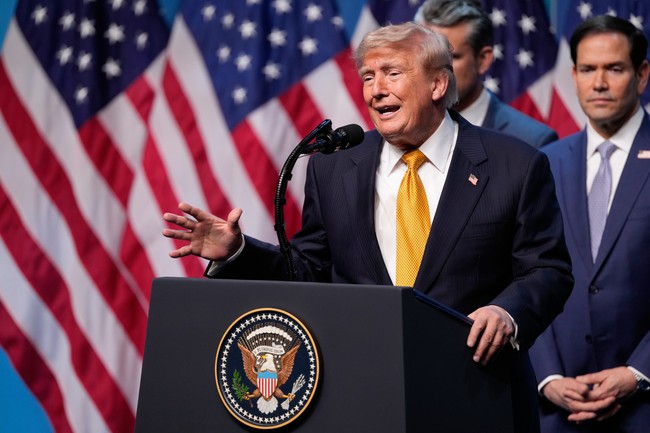
Trump told Fox’s Trey Yingst that the U.S. is operating from a position of strength and that military force is the core of any credible negotiating posture with the Iranian regime. He insisted that pressure will continue until he decides it is enough, signaling a prolonged campaign rather than a one-off show of force. The message is designed to make Tehran understand the limits of confrontation with American power.
https://x.com/CENTCOM/status/2077338021733478617?ref_src=twsrc%5Etfw
When pressed about specific targets, the president declined to comment on the possible strike list, including whether critical Iranian infrastructure like major oil terminals would be hit. He also emphasized constant monitoring of key sites that could indicate escalation, pointing to high-resolution surveillance assets in orbit. That surveillance, he said, provides certainty about Iranian movements and intentions.
Trump repeated a claim about Space Force capabilities in stark, informal language to underscore U.S. technical superiority. He said the imagery is so detailed that it could read a name badge, and he used a casual reference to drive the point home. The tone mixes bravado with a clear warning about the limits Tehran faces when detected making moves.
After surveillance confirms hostile actions or preparations, the administration says it will strike where necessary to protect shipping and U.S. interests. The president spelled out a pattern of strikes intended to progressively weaken Iran’s capacity to threaten maritime traffic and infrastructure. U.S. officials describe the operations as targeted and calibrated, but intense enough to create real consequences for continued aggression.
In the interview, the president used blunt, repeated language to describe the tempo of operations, making clear the campaign would be sustained. “We’re going to hit them very hard tonight. We’re going to hit them very hard tomorrow night. We’re going to hit them very hard the night after, and then next week, it gets really bad for them because next week comes the power plants, next week comes the bridges.” That passage was delivered as a clear deterrent and a warning that consequences will escalate.
The administration has framed the current posture as a necessary response to protect commercial shipping lanes and to deter further Iranian provocations. U.S. naval assets and coalition partners are conducting patrols to keep the Strait of Hormuz open, while strike operations are focused on degrading the tools Iran uses in attacks. Officials say the combination of presence and precision strikes is meant to restore order and reduce the risk to neutral shipping.
For its part, the Iranian regime appears to be in a phase where it must decide whether to further test U.S. resolve. American leaders are signaling that continued harassment will bring increasingly costly responses, including strikes on infrastructure that matter to Iran’s economy and logistics. The message is straightforward: provocative actions will be met with sustained, escalating pressure until Tehran alters its behavior.
This episode underscores a return to a more traditional use of military power to secure global commons, rather than relying solely on diplomatic or economic tools. Officials emphasize that negotiating from a position of strength is the most reliable method to deter aggression in contested choke points like the Strait of Hormuz. For now, that posture will define U.S. policy in the region as long as attacks on commercial shipping continue.


Add comment