
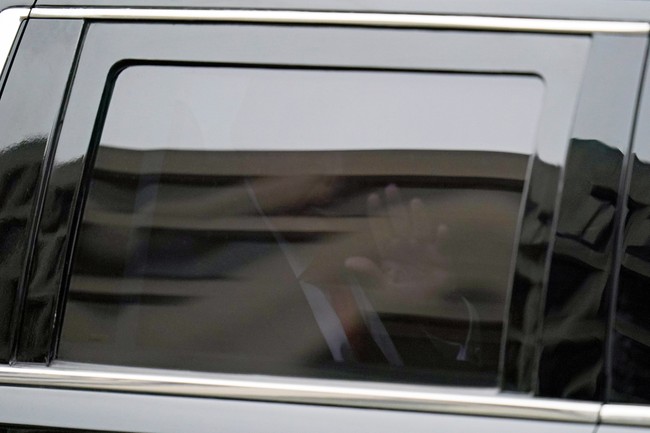
The Secret Service rerouted President Trump’s motorcade after a suspicious object was found near Palm Beach International Airport, prompting swift protective moves and heightened Air Force One precautions. Officials called the change a standard safety measure while investigators examined the object, and press accounts noted extra steps were taken to shield the president from potential threats. This event follows other security scares in the area, underscoring ongoing risks around presidential travel and public exposure.
The Secret Service discovered the item during routine advance sweeps, and agents acted to keep the president safe without disrupting his schedule. White House Press Secretary Karoline Leavitt confirmed the motorcade route was altered while authorities probed what had been found. Officials emphasized the adjustment was precautionary and intended to minimize any exposure to possible danger.
Leavitt said, “During advance sweeps of PBI Airport, a suspicious object was discovered by USSS.” That exact wording came from the White House spokesman and was widely reported. The decision to reroute the motorcade was based on after-the-fact judgment by professional security teams who prioritize minimizing risk above all else.
Reporters noted that several extra moves were made around Air Force One while agents investigated, with the president boarding quickly and the plane moved to a less visible spot on the ramp. Those operational steps reflect tactics used to deny potential attackers a clear line of sight and predictable patterns. In volatile times, changing the approach to a short, secure boarding minimizes the chance of a targeted attempt.
Media coverage varied, with some outlets focusing on the procedural nature of the response and others spinning broader narratives about the president’s recent rhetoric and actions. One reporter wrote, “Last weekend, Trump approved an operation to capture Nicolas Maduro, he suggested defying NATO with military force in Greenland, and now he’s threatening escalated U.S. intervention in Iran,” and argued that this makes threats more consequential. That view links foreign policy statements to domestic security concerns, but it does not change the fact that protective services must assume the worst and act accordingly.
Security officials stressed there were no disruptions to the president’s broader travel plans, and agents returned to normal procedures once the scene was cleared. Secret Service spokesman Anthony Guglielmi described the secondary route as “standard protocol.” Those words underline that the agency trains for unpredictable situations and will reroute motorcades whenever anything unusual appears in advance sweeps.
The episode at Palm Beach follows earlier incidents that raised alarms about possible targeting in the same area, including discovery last fall of a hunting stand within sight of the Air Force One landing zone. “Prior to the President’s return to West Palm Beach, USSS discovered what appeared to be an elevated hunting stand within sight line of the Air Force One landing zone,” FBI Director Kash Patel said at the time. Investigators found no people there, but the stand itself prompted the FBI to take over the inquiry and deploy technical resources to collect evidence.
Authorities noted that the hunting stand may have been in place for months before it drew attention, which shows how persistent and stealthy certain threats can be. Another case from the area involved a defendant who was convicted for bringing a rifle near a golf club the president frequents, demonstrating that danger can be both planned and opportunistic. The sentencing for that conviction is scheduled for February 2026, a reminder that criminal prosecutions are part of deterrence but not a substitute for live protective measures.
From a practical standpoint, the Secret Service response was textbook: reroute, secure the perimeter, move the aircraft, and let investigators examine the scene. That choreography is designed to keep the president out of predictable patterns while evidence is gathered and risks are assessed. Professionals on the ground get seconds to decide, so conservative emphasis on law and order and robust security resources supports their capacity to act fast.
Public conversation about these incidents often veers into politicized territory, with commentators tying threats to public statements or media coverage. Still, the central reality is straightforward: the president faces ongoing, credible risks that require constant vigilance and resources. Ensuring effective protection for national leaders should be a bipartisan priority, even if commentary on the causes of threats remains divided.
Local law enforcement and federal agencies continue to coordinate after each discovery, sharing evidence and digital leads to track down whatever or whoever is responsible. Technology, from cell phone analytics to surveillance footage, plays a crucial role in following the trail those responsible may leave. The aim remains simple and uncompromising: identify threats fast, neutralize them where possible, and prevent further danger to public officials and the communities that host them.

Add comment