
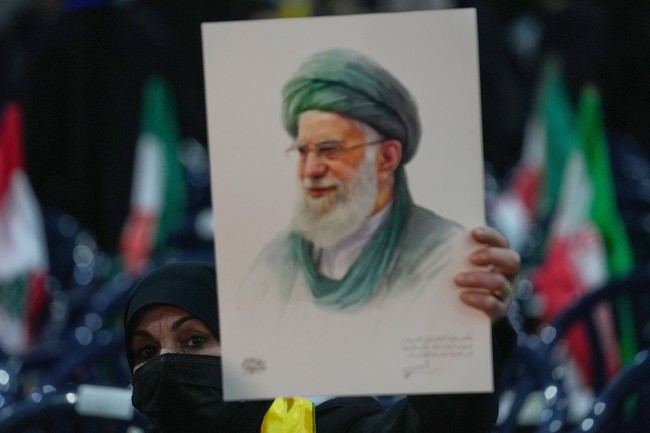
The Michigan contest has a new twist: a Democratic Senate candidate warned staffers to stay quiet about Ayatollah Ali Khamenei’s death because some voters might be “sad,” and that remark is now fueling conservative criticism about the party’s priorities and loyalties. This article examines the comment, the reaction it has stirred in Michigan politics, and what it could mean for a statewide race where cultural and security concerns are front and center.
The recorded moment at the center of this controversy is straightforward and politically potent. Abdul El-Sayed, a Democrat running statewide in Michigan, warned staffers not to speak openly about the death of Ayatollah Ali Khamenei, suggesting that many Michigan Democrats feel “sad” about the development. In politics, tone and framing matter as much as policy, and telling campaign workers to silence themselves sends a signal opponents can exploit.
Republicans have seized on that signal because it feeds into a larger narrative about the modern Democratic Party’s priorities. Voters who are worried about national security, support for America-first policy, or simply expect their parties to stand firmly against foreign dictatorships will find the idea that a candidate wants to avoid criticizing a hostile theocratic leader alarming. The remark opens an easy line of attack: question whose side the candidate is on, and whether his instincts align with mainstream Michigan concerns.
Michigan is not a single-issue electorate, but local dynamics are vivid and varied across the state. Urban precincts and immigrant communities can have distinct perspectives, while blue-collar suburbs and rural areas often respond differently to national-security cues. El-Sayed’s comment will land differently in Dearborn than it will in Macomb County, and Republicans see an opportunity to turn that split into votes where it matters most on Election Day.
Timing is another factor that benefits a quick and pointed opposition response. The revelation arrived well before the fall campaign window when voters traditionally sharpen their focus, which gives the GOP time to shape the story and run ad campaigns that define El-Sayed by this moment. Early control of the narrative is a common GOP strategy: take an opponent’s words, frame them sharply, and force the other side to play defense on terrain of your choosing.
What makes this particularly effective for Republicans is that it ties into cultural critiques already leveled against Democrats. Conservatives argue the party has drifted toward identity-driven politics and empathy for groups that many voters view as hostile or at odds with American values. That line of argument resonates with swing voters who are sensitive to perceived softness on adversaries and insist on clear support for American interests and allies.
Campaigns are practical operations, and staff instructions like the ones reported can be damaging regardless of intent. Telling staffers to avoid discussion appears to prioritize political calculation over transparent leadership. Voters expect candidates to confront uncomfortable topics head-on rather than sheltering them from conversation because some factions might feel awkward or offended.
That said, the situation also reflects the complicated reality of running in diverse constituencies. Candidates often must navigate between communities with very different loyalties and emotional responses, and a single offhand instruction can be misread or weaponized. Still, in a statewide race, the safer route usually is to articulate a clear stance and accept that not everyone will agree with it, rather than trying to suppress debate within the campaign.
El-Sayed’s camp may argue the comment was tactical, meant to avoid inflaming tensions or alienating segments of the electorate during a volatile moment. But political opponents do not need nuance to make their case. A simple ad or social post that repeats the phrase about being “sad” will stick in many voters’ minds, and that stickiness can be decisive in tight races where turnout and perception matter more than policy minutiae.
For Republicans in Michigan, this offers a practical playbook: amplify the remark, contrast it with clear stances on national security and support for American interests, and push the narrative that the Democratic candidate is out of step with mainstream voters. The goal is to translate cultural unease into electoral advantage, and the timing allows for a sustained campaign effort before attention sharpens later in the year.
Democrats who worry about the fallout should recognize the test here is both tactical and substantive. A candidate who wants to win statewide must reconcile the demands of diverse communities while communicating firmness on core security issues. Avoiding the topic entirely is a weak defense when an opponent is willing to define the frame for voters across the state.
Editor’s Note: This article was updated post-publication for clarity.
Editor’s Note: The 2026 Midterms will determine the fate of President Trump’s America First agenda. Republicans must maintain control of both chambers of Congress.



Add comment