
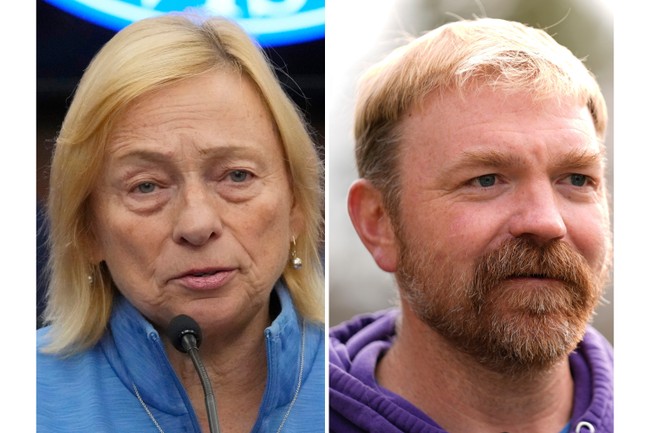
The Maine Senate Democratic primary produced a surprise shake-up that undercuts Chuck Schumer’s influence, as newcomer Graham Platner surged to the top while Governor Janet Mills withdrew citing a lack of funds despite high-profile backing; the exit reshapes the general election matchup with Sen. Susan Collins and leaves Democrats scrambling to defend a vulnerable seat.
The primary outcome is a political headache for national Democrats who hoped to control the narrative in Maine. Governor Janet Mills had been the establishment favorite, backed by Sen. Minority Leader Chuck Schumer and the Democrat Senatorial Campaign Committee, but the dynamics on the ground favored an insurgent candidate. Graham Platner, running as an outsider with a working-class image, managed to hold a lead even after a series of damaging revelations about his past. That steady support signaled trouble for party leaders who expected Mills’ popularity and profile to carry the day.
Mills announced she was suspending her campaign and made clear the immediate reason: “I very simply do not have the one thing that political campaigns unfortunately require today: the financial resources,” while also praising Mainers in heartfelt terms. Her statement emphasized admiration for the people of Maine, but stopped short of naming a successor or formally endorsing Platner. The departure left the DSCC and other national groups to choose how to proceed against an incumbent Republican who has long held the seat.
The DSCC moved to support Platner after Mills bowed out, issuing a tempered message that reflected both urgency and caution. In a lukewarm the DSCC said, “After years of allowing Trump’s abuses of power, Senator Collins has never been more vulnerable and we will work with the presumptive Democratic nominee Graham Platner to defeat her.” That phrasing makes clear Democrats see opportunity, but it also reveals they expect a tough fight against a well-known Republican incumbent.
Susan Collins didn’t wait for national Democrats to get their act together; she pivoted quickly to the general election and seized on Platner’s vulnerabilities. Campaign opposition research and negative ads highlighted controversies from Platner’s past, including a widely publicized tattoo he sought to conceal after it was identified. Collins used that narrative to frame Platner as not just inexperienced, but as someone with troubling baggage that voters should consider before the general election.
Susan Collins has also pivoted to the general election. Last week, the senator responded to negative ads from Schumer-aligned groups by referencing the chest tattoo Platner covered up after it was identified last year as a Nazi symbol.
Susan Collins: Chuck is trying to cover up Democrats’ bad ideas by attacking others. You know, when I think about it, his approach is like trying to cover up an outrageous tattoo. You can paint over it, but we all know what’s underneath.”
There’s a broad set of materials for Collins to use in the fall, and Republicans will be framing the race around competence, judgment, and national security instincts. Platner’s missteps give a seasoned incumbent plenty of ammunition, and Collins has consistently demonstrated skill at turning opposition attacks into broader lessons about leadership and experience. Expect the general election to focus less on partisan labels and more on character and readiness for the Senate.
Maine’s independent voters will be decisive in this matchup, and both campaigns recognize that the state’s electorate is far from locked into party lines. Independents make up a large share of the registration, which means Collins can remain competitive if she persuades swing voters that Platner’s controversies matter. Democrats, meanwhile, will try to nationalize the contest by tying Collins to broader Republican priorities and by framing Platner as a necessary counterweight to the national right.
The coming months are likely to be intense, with ad buys, debates, and targeted outreach aimed at the crucial independent bloc. Collins’ campaign will mine primary oppo material for general-election messages while national Democrats test whether Platner can survive sustained scrutiny. With the seat now clearly in play, Maine voters will decide whether experience or insurgent momentum matters more this cycle.
Editor’s Note: The 2026 Midterms will determine the fate of President Trump’s America First agenda. Republicans must maintain control of both chambers of Congress.



Add comment