
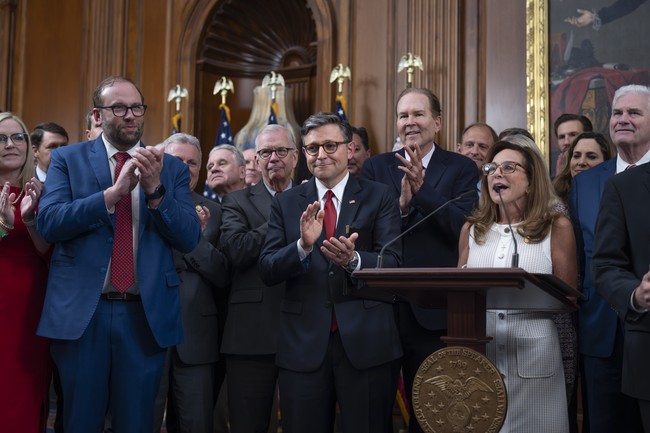
The latest NRSC polling suggests the Senate could tilt back toward Republicans if the campaign sticks to kitchen-table concerns: cost of living, prescription drug prices, housing, Social Security taxes, immigration impacts, and a renewed emphasis on skilled trades and American workers.
New Poll Shows GOP Senate Majority Within Reach on Kitchen-Table Issues
Midterm cycles tend to punish the party in power, and this trend has shaped national politics for decades. Voters who are unhappy with the ruling party come out, motivated and numerous, and that energy often swings seats away from incumbents.
The economy looms over every election as the decisive factor, and the NRSC shared polling that should make Republican strategists sit up. Those numbers point to a pathway where focusing on the cost of living and bread-and-butter issues could win back swing voters and infrequent Trump supporters who do not usually vote in off-year contests.
With the midterms approaching, Republicans are zeroing in on a targeted strategy to win back swing voters and Trump voters who don’t typically turn out in off-year elections. Those voters will be critical to maintaining a Republican majority in the Senate next year.
That message centers on the economy and cost of living, and the National Republican Senatorial Committee (NRSC) says new polling, exclusively provided to Townhall, shows a clear path to rebuilding a winning coalition after President Trump’s 2024 win.
That polling shows the cost of living is the overwhelming issue driving the midterms, with 92 percent of swing voters and 85 percent of infrequent Trump voters concerned about it. Of the cost-of-living issues, three major areas stand out: prescription drug prices, housing costs, and Social Security taxes.
Democrats have struggled on several of those fronts, especially housing in big cities where costs are exploding and local leadership has been slow to act. Voters are noticing how housing policy and zoning choices have made affordability worse, and that frustration is a real political opening.
Prescription drug costs are another sore spot for many households, and Social Security taxes remain a sensitive subject for seniors and near-retirees. These are the kinds of tangible, personal issues that change voting behavior when framed clearly.
Majorities in both groups say they are more likely to support candidates who “crack down” on Big Pharma to stop skyrocketing drug costs, prohibit investment firms and large corporations from purchasing residential housing and driving up costs, and eliminate taxes on Social Security.
The economic impact of illegal immigration is also a motivating issue, with a majority of voters in both groups saying that Americans shouldn’t be footing the bill for free housing, medical care, and education for illegal immigrants.
Voters also favor candidates who promote skilled trades — plumbers, HVAC techs, carpenters, and electricians — and protect American jobs from being replaced by artificial intelligence (AI) or stolen by the Chinese. Voters supported returning trade education to our schools and said that an increase in skilled trades would also help lower housing costs.
Those findings map directly onto classic Republican strengths: standing up for lower costs, protecting jobs, and promoting vocational training as a legitimate route to stable incomes. Emphasizing trades and blocking buyer-speculation that fuels housing prices plays well in both suburbs and smaller cities.
Immigration’s economic impact shows up here too, not as a flashpoint but as a budgetary and labor concern for many voters. Framing the debate around fairness for American taxpayers and workers, rather than mere rhetoric, gives Republicans a practical advantage.
Polling is useful, but translating it into legislation and clear campaign messages is crucial. One policy debate that’s been raised among Republicans centers on election integrity measures that would assure citizens their votes count, though turning legislative wins into immediate electoral boosts is never guaranteed.
Gas prices and everyday costs still worry people, and steady messaging on how Republican policies will ease those burdens matters. That means campaigns should act like every race is close, staying aggressive on outreach and making these economic connections explicit to voters up and down the ballot.
Editor’s Note: Thanks to President Trump’s leadership and bold policies, America’s economy is back on track.
Add comment