
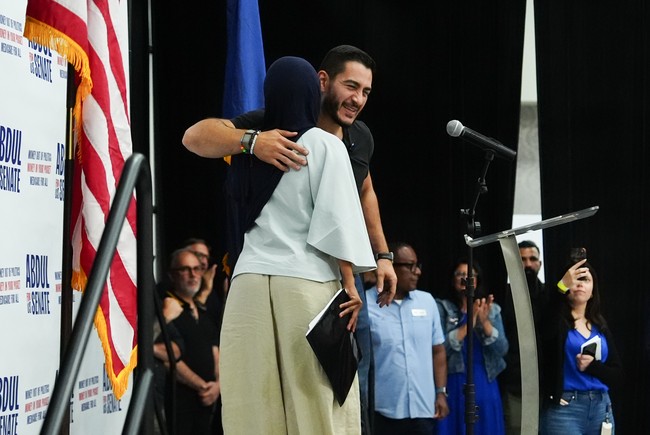
The piece examines newly surfaced reporting tying Michigan Senate candidate Abdul El-Sayed’s mother to more than $1.3 million in transfers connected to Iraq-era charities, lays out the potential political consequences, notes the charity’s federal shutdown, and highlights why voters should expect hard questions from the campaign.
There is an old saying about apples and trees that people like to use when a candidate’s relatives behave in ways that raise eyebrows. Normally family missteps are treated as separate from a candidate’s record, but when those actions line up with a candidate’s public positions and allies, voters deserve clarity. In this case, reporting compiled by a commentator points to substantial transfers linked to Saddam-era Iraq and a charity later shuttered by federal authorities.
The total at issue is significant: over a million dollars routed through the Islamic American Relief Agency (IARA-USA), an organization that was closed by federal authorities in 2016 for violating international sanctions related to Iraq. That kind of sum is not a trivial donation; it suggests sustained involvement, not a one-off contribution. It also raises questions about judgment and associations among people close to someone seeking high office.
Public reporting indicates that El-Sayed’s mother, identified in documents as having worked for IARA-USA starting in 1999, appears on transfer paperwork and correspondence tied to the charity’s operations in Iraq. The pattern, as described, is more than a casual link. If correct, it suggests long-term ties to an organization that attracted federal enforcement, and voters should want to know the full context and rationale for those transfers.
https://x.com/nataliegwinters/status/2089355161257074974?ref_src=twsrc%5Etfw
The commentary assembled in the thread includes what is presented as documentary evidence, and that evidence is what gives these claims weight. Determining whether transfers supported legitimate humanitarian work or crossed legal or ethical lines is a matter for investigators and for public scrutiny. Regardless of legal culpability, political accountability is different: campaigns should answer for connections, perception, and transparency.
Here’s the quote provided in the original reporting, left intact: “Elkomy’s link was not a one-time event or loose association. A contemporary report says she worked for IARA-USA beginning in 1999. A newly uncovered federal filing puts her name on transfer paperwork and correspondence involving the charity’s Iraq operations.” That passage frames the central allegation as more than rumor and points directly to filings and correspondence.
Abdul El-Sayed is the one on the ballot, not his mother, but voters often judge candidates by their networks and the company they keep. El-Sayed’s history of positions and public statements—criticisms of the Second Amendment, comments on cultural topics, and previous endorsements—make these revelations harder to dismiss for swing-state voters. In a close race, perception matters; patterns of association invite scrutiny.
There is a two-tier media reality at work: similar revelations about a Republican candidate’s family would likely trigger a sustained mainstream media feeding frenzy. When the subject is a Democratic candidate or someone from a minority background, reporting and follow-up tend to be patchy at best. That inconsistency is worth calling out because media pressure shapes whether facts get fully aired and vetted in the public square.
Beyond media dynamics, there are practical questions for the campaign: What exactly did the funds support? Was any federal law implicated? What did Ms. El-Sayed’s role at IARA-USA entail? Campaigns typically respond to serious allegations by providing documents, timelines, and interviews; voters should expect and demand that level of detail here. Transparency is the minimum people should expect before casting ballots in a closely contested state.
The timing matters. The general election is approaching, and Michigan voters need clarity as they decide who will represent them. Allegations involving large sums and an organization shut down by the federal government are the kind of matter that should be fully explained and documented. Campaigns that ignore or downplay those concerns may find themselves answering them under much harsher scrutiny later.
At the very least, Abdul El-Sayed owes voters straight answers about his family’s ties and any potential implications for his judgment or priorities. People have a right to know whether those connections influenced policy preferences or fundraising decisions, and whether any liabilities remain. An open and candid response from the campaign would help restore confidence; silence or obfuscation will only deepen suspicion.



Add comment