
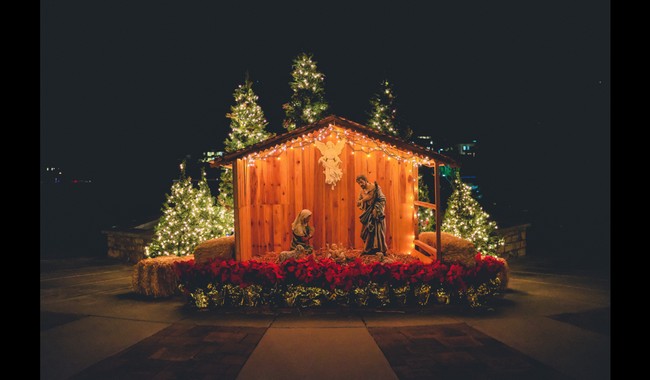
This piece examines a recent controversy at St. Susanna Catholic Church in Dedham, Massachusetts, where a Nativity display was altered to protest U.S. immigration enforcement, replacing the Holy Family with an “ICE was here” message and referral information for a local immigrant advocacy group, sparking criticism from conservatives who see it as politicizing sacred symbolism and evading law enforcement concerns.
The Christmas scene at St. Susanna drew attention when parishioners left the manger empty and posted a large sign reading “ICE was here” instead of placing figures of Mary, Joseph, and the Christ child. The parish framed the display as a way to reflect what they view as urgent moral concerns, and the pastor described the action as part of a tradition of using the crèche to “hold the mirror up to what’s happening.” Local residents and conservatives quickly reacted, saying the choice turns a sacred moment into a partisan statement.
Father Stephen Josoma told reporters the parish felt compelled to highlight local immigration enforcement actions and to provide help for immigrants through the parish’s outreach. He said the Holy Family was kept safe inside the sanctuary while the exterior scene called attention to federal immigration raids. For those who view immigration as a law-and-order issue, swapping the baby Jesus for a political placard crosses a line and undermines the church’s spiritual purpose.
The display and its messaging were organized by the parish Peace and Justice group, which has a history of using the Nativity as a platform to promote social causes. Critics point out a pattern: such provocative displays emerged during the prior presidential term, quieted during the four years of the Biden administration, and resurfaced during the current administration. That timing fuels accusations that the displays are politically motivated rather than purely pastoral gestures.
Responding to parish explanations, conservatives argue that churches should prioritize spiritual teaching over political activism, especially at a season centered on the birth of Christ. Many feel the faithful expect a manger scene to convey reverence and tradition, not serve as a billboard for advocacy groups. There is particular frustration over the inclusion of contact information directing people to an immigrant justice center, which opponents say encourages evasion of federal law.
Some commentators contrasted this display with other causes the parish has not highlighted, noting there was no similar focus on abortion or other issues that many parishioners consider central to Catholic social teaching. That omission, they say, suggests selective engagement with hot-button topics. Conservatives who follow church affairs see this as part of a broader culture war inside American Catholicism, where liturgical symbols are sometimes repurposed for political messaging.
The parish’s chosen imagery also reignited debate about the role of church leadership in guiding parish priorities. Critics expect clergy to steward sacred symbols thoughtfully, not to let those symbols become tools for contemporary protest. When religious spaces appear to take sides on contested public-policy questions, parishioners who disagree can feel alienated and question whether their church remains a place of worship for all.
At a time when immigration remains a top concern for many voters, the episode at St. Susanna taps into wider frustrations about border security and the enforcement of federal law. Conservative voices in the community argue it is appropriate to demand clear stances from bishops and pastors that align with respect for both compassion and legal order. They say church leaders should focus on pastoral care without undermining the rule of law or offering practical support that could hinder enforcement actions.
Meanwhile, the parish defended its choice as pastoral and protective, claiming the display was meant to raise awareness and offer assistance to vulnerable people facing deportation. Supporters of the display view it as an expression of solidarity with immigrants and a call for humane treatment. But for many on the right, this blend of sanctuary rhetoric and public protest at the manger is an unacceptable politicization of a sacred tradition and a misuse of parish property for advocacy purposes.
Public reaction has been swift and polarized, with social and traditional media amplifying both outrage and support. The debate at St. Susanna is a reminder that religious symbols carry deep meaning, and altering them for political ends can provoke strong responses across the political spectrum. As the holidays proceed, tensions over how churches express social teaching in public will likely keep this incident in conservative conversation.
“ICE was here,” a large sign accompanying the empty manger at St. Susanna Parish said. “The Holy Family is safe in the Sanctuary of our Church. If you see ICE, please call LUCE.”


Add comment