
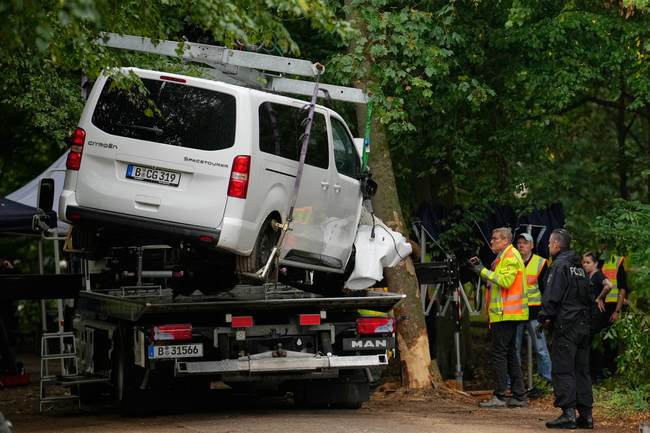
The Berlin Pride parade attack claimed a life and left scores injured, and German police say the suspect, identified as Abdul Ballout, was killed after a violent confrontation; this article lays out the sequence, the background tied to extremist activity, and concerns about media handling and public policy.
The suspect, named in official statements as Abdul Ballout, was shot dead by German police after officers say he rushed them with a knife. Authorities announced the end of a nationwide manhunt when they neutralized the immediate threat, following an incident that left one woman dead and dozens wounded.
Initial coverage included confusion over whether a vehicle had rammed into a crowd near the Pride event, with early reports referencing a van and then shifting as investigators released more details. As facts unfolded, German officials acknowledged a more disturbing picture, including allegations linking the suspect to Islamist networks.
German police say that they shot and killed Ballout after he had rushed toward them with a knife.
https://x.com/visegrad24/status/2081437182313509214
Investigators soon disclosed that Ballout had a track record of extremist activity and legal entanglements. Authorities and court records placed him in a timeline that shows repeated contact with Islamist propaganda and travel aimed at joining foreign extremist groups.
The documented timeline is stark and detailed, and reads as an alarm bell about failures in monitoring and enforcement. Citizens deserve straightforward reporting on the links between violent acts and ideological drives, especially when a suspect has prior convictions or deferred sentences.
June 16 and 24, 2024: Ballout publishes prohibited Islamic State propaganda on Instagram. Later, the prosecutor’s office says, he allegedly “developed the desire to join the armed struggle of ISIS”.
20 May 2025: He travels to Lebanon via Turkey, with the intention of heading to Syria and joining the Islamic State group.
24 July 2025: He is arrested in Lebanon and sentenced to three months in prison for incitement to religious and sectarian conflict.
17 November 2025: Ballout returns to Germany after being released, and is arrested at Berlin Brandenburg Airport.
12 May 2026: The Tiergarten District Court sentences him to one year and 10 months’ imprisonment for “preparing a serious act of violence endangering the state”. The decision is deferred for six months.
3 July 2026: His address in Berlin-Schöneberg is searched based on suspicion of a violation of Germany’s Weapons Act, but only a toy gun is found.
25 July 2026: Ballout allegedly seriously injures several people in a vehicle ramming attack in Berlin, and a number more “with a bladed weapon”.
The pattern in this case highlights a larger problem: offenders can be processed by courts, flagged by investigators, and still remain at liberty long enough to commit more harm. That reality deserves blunt scrutiny rather than euphemism or delay in reporting.
There is also growing distrust among the public about how media and officials describe these attacks. When initial accounts emphasize objects or vague causes instead of naming suspects, readers increasingly suspect intentional omission to avoid uncomfortable conclusions.
That skepticism has spread on social platforms and feeds a feedback loop: slow disclosure increases suspicion, and suspicion then pressures outlets to rush incomplete or misleading narratives. Neither result helps victims, nor does it aid policymakers trying to keep communities safe.
From a policy perspective, transparency and decisive enforcement matter. When individuals with documented extremist ties receive deferred sentences or fall through cracks, the risk to the public rises. Republicans argue that clear-eyed reporting and firmer law enforcement are essential to preventing repeat attacks.
Officials should also reexamine how immigration, criminal justice, and counterterrorism intersections are handled so prior convictions and foreign travel linked to extremist intent do not translate into open-ended risk. Practical fixes require accurate facts and accountability, not media spin or bureaucratic excuses.
The Editor’s Note: The radical Left will stop at nothing to enact their radical gun control agenda and strip us of our Second Amendment rights.
Reporting must return to plain, factual language. Victims and communities deserve better than obfuscation, and elected leaders must prioritize policies that protect citizens while preserving civil liberties. Honest coverage and firm action are the minimal standards after an attack like this.

Add comment