
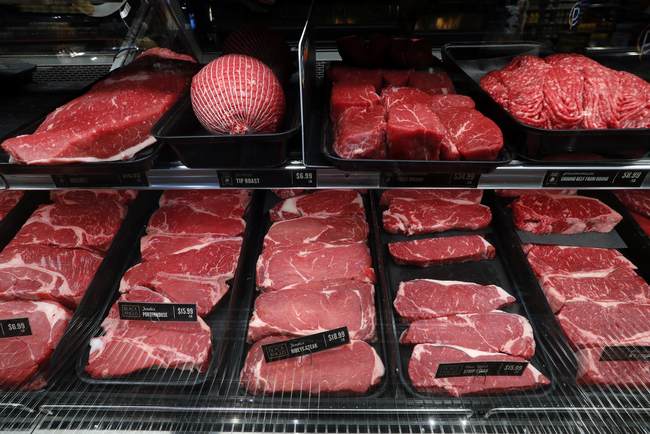
This article explains how a recent Trump-led trade agreement reopened Chinese markets to U.S. beef, what that means for ranchers and consumers, and the scale of the export drop that preceded the reopening.
President Trump’s trip to China resulted in an agreement that will allow U.S. beef back onto Chinese store shelves, and that has people in the industry paying attention. Secretary of Agriculture Brooke Rollins announced the move in a post that cheered the return of American beef and the economic boost it brings. The policy change is framed as a win for ranchers, trade negotiators, and the broader U.S. agricultural sector.
This development follows a significant decline in U.S. beef shipments to China after many plants lost their export permissions between 2020 and 2021. Those lapsed permissions knocked roughly 65% of once-registered U.S. beef facilities out of the China market, producing a sharp drop in both volume and value of exports. Restoring access to those facilities aims to reverse a painful downturn for producers who relied on China as a growth market.
The post reads:
Proud to confirm that our deal-maker-in-chief @POTUS has done it AGAIN! 🇺🇸🥩🤝
American beef — the best beef in the world! — will be back on the shelves in China soon. They are implementing beef commitments, including resuming imports from 17 states.
This means restoring up to $165 per head in added value for exports for our cattle ranchers. Mostly variety cuts like hoofs and tongues that Americans don’t prefer to consume.
This builds on our work @USDA and @Interior to provide the certainty that ranchers need to grow the domestic beef herd. This is critical because the herd size has given historic lows in recent years.
Thank you to our great President, alongside our amazing chief negotiators @USTradeRep and @SecScottBessent for putting our farmers and ranchers FIRST.
What a WIN-WIN for ranchers, and ultimately consumers.
Before the agreement, U.S. beef exports to China had plunged: volume fell nearly half from 2024 and dollar value dropped dramatically. Once a $1.7 billion peak in 2022, exports to China were down to about $500 million last year according to industry reporting. That collapse was driven less by a single ban than by a slow erosion of export permissions that left the sector unable to ship at previous levels.
Reopening the China market promises tangible gains for cattle producers, with estimates of up to $165 added value per head in export opportunities. The deals specifically allow resumption of imports from 17 states and the kinds of variety cuts that American consumers often skip. For ranchers operating on thin margins, recovering that export value can change the economics of herd expansion and long-term viability.
How that will affect domestic beef prices is the key question for shoppers who feel every grocery bill. If ranchers respond by increasing production, local supply should rise and exert downward pressure on retail prices. That outcome would be politically advantageous for an administration touting results for everyday Americans and rural producers alike.
Trade with China has always been a double-edged sword; economic engagement can smooth tensions but also creates dependency and leverage. Still, for U.S. cattle producers right now, access to a large overseas market is a straightforward economic benefit. Ranchers have reason to be cautiously optimistic as processing facilities regain certification and shipments resume.


Add comment