
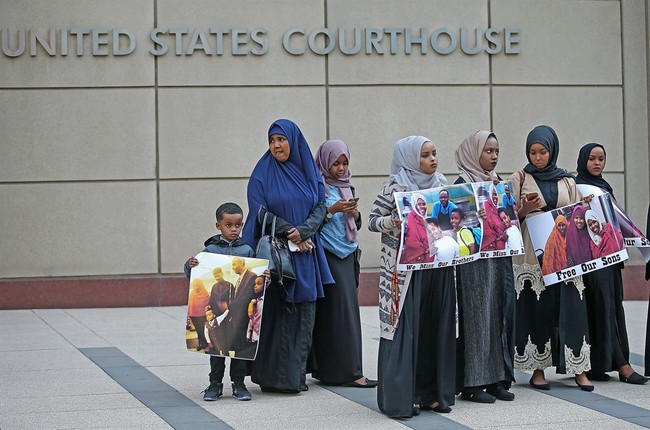
This article examines reports of fraud tied to remittances from Minnesota’s Somali community, evaluates President Trump’s move on Temporary Protected Status for Somalis, and argues that the issue is rooted in local criminal networks, cultural insularity, and institutional failures rather than border immigration alone.
President Trump publicly criticized remittances allegedly funding violence in Somalia and announced the end of Temporary Protected Status for Somalis in Minnesota. The move grabbed headlines and provoked sharp reactions, but it is important to separate dramatic rhetoric from practical effect. Ending TPS will not magically solve entrenched fraud schemes that have been operating inside U.S. institutions and communities for years.
The Somali population in Minnesota dates back to refugee resettlement waves beginning in the early 1990s and has grown into a sizable community concentrated in the Twin Cities. A majority of that population were born in the United States, and many are naturalized citizens. That demographic reality means enforcement and accountability must focus on residents and citizens, not just immigration status.
Minnesota, under Governor Waltz, is a hub of fraudulent money laundering activity. I am, as President of the United States, hereby terminating, effective immediately, the Temporary Protected Status (TPS Program) for Somalis in Minnesota. Somali gangs are terrorizing the people of that great State, and BILLIONS of Dollars are missing. Send them back to where they came from. It’s OVER! President DJT
High-profile prosecutions show that people arrested for providing material support to violent groups or running large-scale frauds were often U.S. citizens or naturalized Americans. Recent cases highlight naturalized citizens charged with support for violent extremist organizations and multi-million-dollar schemes defrauding federal programs. Those facts point to criminal behavior tied to individuals, families, and local networks more than to noncitizen status.
The numbers matter here. Only a very small fraction of Somali residents in the United States are in Temporary Protected Status, and TPS termination affects only a sliver of the broader Somali-American population. Even if TPS were revoked and enforced, it would not appreciably reduce the pool of people implicated in the reported frauds or terror support operations. Law enforcement and oversight need to aim at fraud where it occurs, not symbolic immigration gestures.
The concentration of refugees into tight-knit enclaves produced cultural and social dynamics that complicate assimilation and civic oversight. When a community reaches a critical mass and political actors reward loyalty along clan lines, local loyalties can trump civic responsibility. That environment can foster protection of bad actors and create barriers to reporting wrongdoing to authorities.
Local officials, nonprofits, and program administrators share responsibility for detecting and stopping fraud. Reports suggest that some public programs and charitable distributions were exploited through organized schemes that required inside knowledge and coordinated action. Those failures reflect weak oversight, complacent auditing, and sometimes political reluctance to confront misconduct within minority communities.
Cultural practices and social taboos can also hide criminal activity. Estimates point to widespread harmful practices among some Minnesota residents that should trigger deeper community engagement and legal enforcement, not excuses or inaction. When communities view outside institutions with suspicion, they become more likely to handle matters internally, often shielding criminal conduct.
Me and my clan against the world;
Me and my family against my clan;
Me and my brother against my family;
Me against my brother.
—The hierarchy of priorities, as ordered by a Somali proverb
— Derrick Evans (@DerrickEvans4WV)
Effective remedies require targeted federal and state investigations, sweeping audits of the programs that were abused, and prosecution of those who knowingly stole taxpayer funds or supported violence abroad. That means following the money, holding administrators and nonprofit officials to account, and restoring robust oversight to programs vulnerable to exploitation. It also means resisting the temptation to blame the problem solely on immigration policy.
There should be a focus on denaturalization only when legal standards are met and evidence proves that individuals fraudulently gained citizenship or actively supported terrorism. Comparisons to historical denaturalization cases raise complex legal and ethical questions, but citizenship should not shield people who broke the law or aided violent groups. The emphasis must be on fearless law enforcement applied equally.
Stopping future abuses also means rethinking refugee placement and integration strategies so newcomers do not form self-contained enclaves that resist assimilation and civic norms. Better vetting of nonprofit partners, continuous auditing of benefit programs, and community outreach that encourages reporting of crimes will reduce the chance that any demographic becomes a safe harbor for fraud. Fixing the problem requires practical enforcement and systemic reform, not only headline-grabbing policy moves.


time to ship these criminals back to Somalia. They have done nothind since arriving here but steal, scam and lie. send them back.